Page loaded successfully. Showing biography for Emile Munier.
Emile Munier BIOGRAPHY
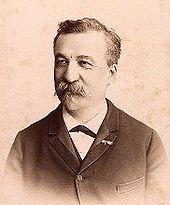
1840 Paris, France - 1895. Known for: Portrait, genre, and landscape paintings.
Emile Munier, French 1840-1895. French painters of the 19th century were known for their sense of color and enchanting interpretations of youthful forms. In Emile Munier we find the maturity and... Read full biography
Emile Munier, French 1840-1895. French painters of the 19th century were known for their sense of color and enchanting interpretations of youthful forms. In Emile Munier we find the maturity and appreciation of manhood and the sensitivity of the artist combined with the freshness and innocence of... Read full biography
Emile Munier, French 1840-1895. French painters of the 19th century were known for their sense of color and enchanting interpretations of youthful forms. In Emile Munier we find the maturity and appreciation of manhood and the sensitivity of the artist combined with the freshness and innocence of childhood. Born in Paris, Munier spent his life there surrounded by his family - including some of the delightful models whose pleasing images he portrayed in his art. He received instruction in art... Read full biography
Emile Munier, French 1840-1895. French painters of the 19th century were known for their sense of color and enchanting interpretations of youthful forms. In Emile Munier we find the maturity and appreciation of manhood and the sensitivity of the artist combined with the freshness and innocence of childhood. Born in Paris, Munier spent his life there surrounded by his family - including some of the delightful models whose pleasing images he portrayed in his art. He received instruction in art initially from Abel Lucas at the Gobelins Factory and later from William Adolphe Bouguereau. Bouguereau epitomized academic art in France and was one of the most financially successful of artists. From this master he acquired his sensitivity, style and... Read full biography
Emile Munier, French 1840-1895. French painters of the 19th century were known for their sense of color and enchanting interpretations of youthful forms. In Emile Munier we find the maturity and appreciation of manhood and the sensitivity of the artist combined with the freshness and innocence of childhood. Born in Paris, Munier spent his life there surrounded by his family - including some of the delightful models whose pleasing images he portrayed in his art. He received instruction in art initially from Abel Lucas at the Gobelins Factory and later from William Adolphe Bouguereau. Bouguereau epitomized academic art in France and was one of the most financially successful of artists. From this master he acquired his sensitivity, style and refine coloring. Beginning in 1869, the artist exhibited regularly at the annual Paris Salon.... Read full biography
Artist Biography
Biography page for Emile Munier ((1840 - 1895)), known for Portrait, genre, and landscape paintings. Showing 3 biographical entries and 0 sample artworks.
Emile Munier - Artist Info
About Emile Munier
Biography from the Archives of askART
 Emile Munier, French 1840-1895
French painters of the 19th century were known for their sense of color and enchanting interpretations of youthful forms. In Emile Munier we find the maturity and appreciation of manhood and the sensitivity of the artist combined with the freshness and innocence of childhood.
Born in Paris, Munier spent his life there surrounded by his family - including some of the delightful models whose pleasing images he portrayed in his art. He received instruction in art initially from Abel Lucas at the Gobelins Factory and later from William Adolphe Bouguereau. Bouguereau epitomized academic art in France and was one of the most financially successful of artists. From this master he acquired his sensitivity, style and refine coloring.
Beginning in 1869, the artist exhibited regularly at the annual Paris Salon. In 1882 he was awarded an Honorable Mention.
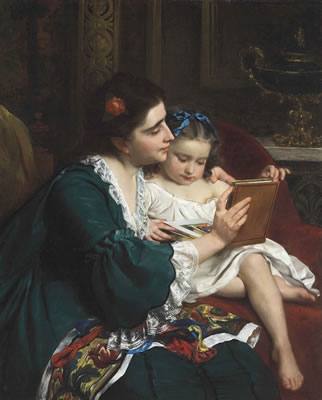
Munier was known as a genre painter and an excellent portraitist, but it was the glimpses of child life, so tender and beautiful in sentiment, that endeared him to the public.
Of his work with children one critic wrote: "Their fair forms, perfect in outline and fresh as flowers of Eden, appeal to every mother's heart, and their earnest faces mirror the purity and devotion of the soul within. Surely no painter of any age has put so much purity, peace and saintliness into children's faces as Munier. His brush is never soiled with turbid color, nor his canvas stained with an impure suggestion."
Biography excerpted from the unpublished catalog by Edward P. Bentley for the Haussner Restaurant in Baltimore, Maryland, titled: Haussner's, The Children.Biography from Rehs Galleries, Inc.
Emile Munier was a genre, landscape and portrait painter, born in Paris in 1840. Munier studied at l'Ecole des Beaux-Arts, and began his artistic career apprenticing for the Parisian stain glassmaker Emile Galle. Eventually, Munier worked with A. Lucas and William Adolphe Bouguereau helping to preserve the high standards of the Academy.
Along with these men, Munier worked to stop the negation, by the Impressionists, of what the Academicians considered to be solid draftsmanship.
Munier exhibited many of his works at the Paris Salon between 1865-1895, including genre pictures and portraits. In 1882 he received an honorable mention. In 1890, when Meissonier and his followers broke away from the Academy forming the Societe Nationale des Beaux Arts, Munier remained a supporter of the Ecole, and continued to exhibited at the Paris Salon which had become known as "le Salon Bouguereau.
This essay is copyrighted by Rehs Galleries, Inc. and may not be reproduced or transmitted without written permission from Rehs Galleries, Inc.Biography from Bonhams New York
Born into a modest working class family from Paris in 1840, Emile Munier and his two brothers followed into their father's footsteps as upholsterers at the Manufacture Nationale des Gobelins, where they started their artistic training under the tutelage of Abel Lucas.
Emile distinguished himself as a particularly gifted artist, exhibiting at the Salon from 1869 onwards. During the 1860s, Munier experienced tremendous challenges, sorrows and joys. His new wife, Henriette bore him a son, Emile Henri, and died six weeks later. During the same time, his artistic standing rose dramatically after receiving three medals at the Ècole des Beaux-Arts.
He also frequented the studio of William Bouguereau and adopted his academic teachings, which are quite apparent in his works executed after the early 1870s. A second marriage to a young painter, Sargine Augrand, produced a daughter, who became his most frequent sitter.
Munier's two children, Henri and Marie-Louise, were the artist's primary source of inspiration beginning in the early 1880s and they appear frequently in his work. Munier established himself as the most popular painter of children and their pets among French and American collectors.