Page loaded successfully. Showing biography for Eric William Ravilious.
Eric William Ravilious BIOGRAPHY
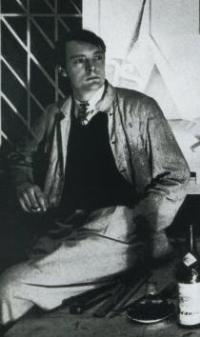
1903 Acton, London, England - 1942 Kaldames, Iceland. Known for: Folk art rural scene, landscape painting, design, book illustration, wood engraver.
Eric William Ravilious (22 July 1903 – 2 September 1942) was an English painter, designer, book illustrator and wood-engraver. He grew up in East Sussex, and is particularly known for his... Read full biography
Eric William Ravilious (22 July 1903 – 2 September 1942) was an English painter, designer, book illustrator and wood-engraver. He grew up in East Sussex, and is particularly known for his watercolours of the South Downs and other English landscapes, which examine English landscape and vernacular... Read full biography
Eric William Ravilious (22 July 1903 – 2 September 1942) was an English painter, designer, book illustrator and wood-engraver. He grew up in East Sussex, and is particularly known for his watercolours of the South Downs and other English landscapes, which examine English landscape and vernacular art with an off-kilter, modernist sensibility and clarity. He served as a war artist, and died when the aircraft he was in was lost off Iceland. Ravilious was born on 22 July 1903 in Churchfield Road,... Read full biography
Eric William Ravilious (22 July 1903 – 2 September 1942) was an English painter, designer, book illustrator and wood-engraver. He grew up in East Sussex, and is particularly known for his watercolours of the South Downs and other English landscapes, which examine English landscape and vernacular art with an off-kilter, modernist sensibility and clarity. He served as a war artist, and died when the aircraft he was in was lost off Iceland. Ravilious was born on 22 July 1903 in Churchfield Road, Acton, London, the son of Frank Ravilious and his wife Emma (née Ford). While he was still a small child the family moved to Eastbourne in Sussex, where his parents ran an antique shop. He was educated at Eastbourne Grammar School. In 1919 he won a... Read full biography
Eric William Ravilious (22 July 1903 – 2 September 1942) was an English painter, designer, book illustrator and wood-engraver. He grew up in East Sussex, and is particularly known for his watercolours of the South Downs and other English landscapes, which examine English landscape and vernacular art with an off-kilter, modernist sensibility and clarity. He served as a war artist, and died when the aircraft he was in was lost off Iceland. Ravilious was born on 22 July 1903 in Churchfield Road, Acton, London, the son of Frank Ravilious and his wife Emma (née Ford). While he was still a small child the family moved to Eastbourne in Sussex, where his parents ran an antique shop. He was educated at Eastbourne Grammar School. In 1919 he won a scholarship to Eastbourne School of Art and in 1922 another to study at the Design School at the Royal College of Art. There he became close fr... Read full biography
Artist Biography
Biography page for Eric William Ravilious ((1903 - 1942)), known for Folk art rural scene, landscape painting, design, book illustration, wood engraver. Showing 1 biographical entries and 0 sample artworks.
Eric William Ravilious - Artist Info
About Eric William Ravilious
Biography from Tate Modern
Eric William Ravilious (22 July 1903 – 2 September 1942) was an English painter, designer, book illustrator and wood-engraver. He grew up in East Sussex, and is particularly known for his watercolours of the South Downs and other English landscapes, which examine English landscape and vernacular art with an off-kilter, modernist sensibility and clarity. He served as a war artist, and died when the aircraft he was in was lost off Iceland.
Ravilious was born on 22 July 1903 in Churchfield Road, Acton, London, the son of Frank Ravilious and his wife Emma (née Ford). While he was still a small child the family moved to Eastbourne in Sussex, where his parents ran an antique shop.
He was educated at Eastbourne Grammar School. In 1919 he won a scholarship to Eastbourne School of Art and in 1922 another to study at the Design School at the Royal College of Art. There he became close friends with Edward Bawden (his 1930 painting of Bawden at work is in the collection of the College) and, from 1924, studied under Paul Nash.
Nash, an enthusiast for wood engraving, encouraged him in the technique, and was impressed enough by his work to propose him for membership of the Society of Wood Engravers in 1925, and helped him to get commissions.
In 1925 he received a travelling scholarship to Italy and visited Florence, Siena, and the hill towns of Tuscany. Following this he began teaching part-time at the Eastbourne School of Art, and from 1930 taught (also part-time) at the Royal College of Art.
In the same year he married Eileen Lucy "Tirzah" Garwood, also an artist and engraver. They would have three children together: John Ravilious; the photographer James Ravilious; and Anne Ullmann, editor of books on her parents and their work.
In 1928 Ravilious, Bawden and Charles Mahoney painted a series of murals at Morley College in South London on which they worked for a whole year. Their work was described by J. M. Richards as "sharp in detail, clean in colour, with an odd humour in their marionette-like figures" and "a striking departure from the conventions of mural painting at that time", but was destroyed by bombing in 1941.
Between 1930 and 1932 Ravilious and Garwood lived in Hammersmith, London, where there is a blue plaque on the wall of their house at the corner of Upper Mall and Weltje Road. When Ravilious and Bawden graduated from the RCA they began exploring the Essex countryside in search of rural subjects to paint.
Bawden rented Brick House in Great Bardfield as a base and when he married Charlotte Epton, his father bought it for him as a wedding present. Ravilious and Garwood lodged in Brick House with the Bawdens until 1934 when they purchased Bank House at Castle Hedingham, which is now also marked by a blue plaque.
There were eventually several other Great Bardfield Artists. In 1933 Ravilious and his wife painted murals at the Midland Hotel in Morecambe. In November 1933, Ravilious held his first solo exhibition at the Zwemmer Gallery in London and 20 of the 37 works displayed were sold.
Ravilious engraved more than 400 illustrations and drew over 40 lithographic designs for books and publications during his lifetime. His first commission, in 1926, was to illustrate a novel for Jonathan Cape. He went on to produce work both for large companies such as the Lanston Corporation and smaller, less commercial publishers, such as the Golden Cockerel Press(for whom he illustrated an edition of Twelfth Night), the Curwen Press and the Cresset Press.
His woodcut of two Victorian gentlemen playing cricket has appeared on the front cover of every edition of Wisden Cricketers' Almanack since 1938. His style of wood-engraving was greatly influenced by that of Thomas Bewick. He in turn influenced other wood engravers, such as Gwenda Morgan who also depicted scenes in the South Downs and was commissioned by the Golden Cockerel Press.
In the mid-1930s he took up lithography, making a print of Newhaven Harbour for the "Contemporary Lithographs" scheme, and a set of full-page lithographs, mostly of shop interiors, for a book called High Street, with text by J. M. Richards. Following a trip in a submarine in the war he produced Submarine Dream, a set of 11 lithographs.
He also undertook glass designs for Stuart Crystal in 1934, graphic advertisements for London Transport and furniture work for Dunbar Hay in 1936.[20] Ravilious and Bawden were both active in the campaign by the Artists' International Association to support the Republican cause in the Spanish Civil War. Throughout 1938 and 1939, Ravilious spent time working in Wales, the south of France and at Aldeburgh to prepare works for his third one-man show, which was held at the Arthur Tooth & Sons Gallery in 1939.
Apart from a brief experimentation with oils in 1930 – inspired by the works of Johan Zoffany – Ravilious painted almost entirely in watercolour. He was especially inspired by the landscape of the South Downs around Beddingham. He frequently returned to Furlongs, the cottage of Peggy Angus. He said that his time there "altered my whole outlook and way of painting, I think because the colour of the landscape was so lovely and the design so beautifully obvious ... that I simply had to abandon my tinted drawings". Some of his works, such as Tea at Furlongs, were painted there.
Ravilious was commissioned to paint murals on the walls of the tea room on Victoria Pier at Colwyn Bay in 1934. After the pier's partial collapse, these were thought unrecoverable, but, as of March 2018, one had been recovered in pieces and it was hoped that a second could also be saved, along with parts of another by Mary Adshead, from the pier's auditorium.
Ravilious was accepted as a full-time salaried artist by the War Artists' Advisory Committee in December 1939. He was given the rank of Honorary Captain in the Royal Marines and assigned to the Admiralty. In February 1940, he reported to the Royal Naval barracks at Chatham Dockyard. While based there he painted ships at the dockside, barrage balloons at Sheerness and other coastal defences.
On returning from Norway, Ravilious was posted to Portsmouth from where he painted submarine interiors at Gosport and coastal defences at Newhaven. After Ravilious's third child was born in April 1941, the family moved out of Bank House to Ironbridge Farm near Shalford, Essex.
In early 1942, Ravilious was posted to York but shortly afterwards was allowed to return home to Shalford when his wife was taken ill. There he worked on his York paintings and requested a posting to a nearby RAF base while Garwood recovered. He spent a short time at RAF Debden before moving to RAF Sawbridgeworth in Hertfordshire. At Sawbridgeworth he began flying regularly in the de Havilland Tiger Moths based at the flying school there and would sketch other planes in flight from the rear cockpit of the plane.
On 28 August 1942 Ravilious flew to Reykjavík and then travelled on to RAF Kaldadarnes. The day he arrived there, 1 September, a Lockheed Hudson aircraft had failed to return from a patrol. The next morning three planes were despatched at dawn to search for the missing plane and Ravilious opted to join one of the crews. The plane he was on also failed to return and after four days of further searching, the RAF declared Ravilious and the four-man crew lost in action. His body was not recovered, and he is commemorated on the Chatham Naval Memorial.
Source:"Eric Ravillious," Tate Modern and Wikipedia, 2018