Page loaded successfully. Showing biography for Eugène (Baron) Laermans.
Eugène (Baron) Laermans BIOGRAPHY
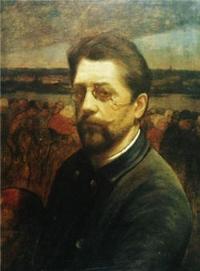
1864 Sint-Jans-Molenbeek, Belgium - 1940 Brussels, Belgium. Known for: Figure, genre, landscape painting and drawings.
Between 1887 and 1889, Eugene Laermans studied at the Academy of Arts in Brussels. His socially aware work was devoted to the lives of the unfortunate rural and urban poor and was often tragic in... Read full biography
Between 1887 and 1889, Eugene Laermans studied at the Academy of Arts in Brussels. His socially aware work was devoted to the lives of the unfortunate rural and urban poor and was often tragic in character. Examples of Laermans' work are the triptych The Emigrants (1896) and The Blind Man (1898),... Read full biography
Between 1887 and 1889, Eugene Laermans studied at the Academy of Arts in Brussels. His socially aware work was devoted to the lives of the unfortunate rural and urban poor and was often tragic in character. Examples of Laermans' work are the triptych The Emigrants (1896) and The Blind Man (1898), which are both in the Royal Museum of Fine Arts in Antwerp, and The Night of the Strike (1894), which is in the Museum of Modern Art in Brussels. The expressiveness of the silhouettes in his paintings... Read full biography
Between 1887 and 1889, Eugene Laermans studied at the Academy of Arts in Brussels. His socially aware work was devoted to the lives of the unfortunate rural and urban poor and was often tragic in character. Examples of Laermans' work are the triptych The Emigrants (1896) and The Blind Man (1898), which are both in the Royal Museum of Fine Arts in Antwerp, and The Night of the Strike (1894), which is in the Museum of Modern Art in Brussels. The expressiveness of the silhouettes in his paintings can be traced back to the tradition of Brueghel. Laermans' style, with its pessimistic and stylized elements, resembles those of symbolism and art nouveau. Source:. The Free Dictionary,. http://encyclopedia2.thefreedictionary.com/Eugene+Laermans... Read full biography
Between 1887 and 1889, Eugene Laermans studied at the Academy of Arts in Brussels. His socially aware work was devoted to the lives of the unfortunate rural and urban poor and was often tragic in character. Examples of Laermans' work are the triptych The Emigrants (1896) and The Blind Man (1898), which are both in the Royal Museum of Fine Arts in Antwerp, and The Night of the Strike (1894), which is in the Museum of Modern Art in Brussels. The expressiveness of the silhouettes in his paintings can be traced back to the tradition of Brueghel. Laermans' style, with its pessimistic and stylized elements, resembles those of symbolism and art nouveau. Source:. The Free Dictionary,. http://encyclopedia2.thefreedictionary.com/Eugene+Laermans
Artist Biography
Biography page for Eugène (Baron) Laermans ((1864 - 1940)), known for Figure, genre, landscape painting and drawings. Showing 1 biographical entries and 0 sample artworks.
Eugène (Baron) Laermans - Artist Info
About Eugène (Baron) Laermans
Biography
Between 1887 and 1889, Eugene Laermans studied at the Academy of Arts in Brussels. His socially aware work was devoted to the lives of the unfortunate rural and urban poor and was often tragic in character.
Examples of Laermans' work are the triptych The Emigrants (1896) and The Blind Man (1898), which are both in the Royal Museum of Fine Arts in Antwerp, and The Night of the Strike (1894), which is in the Museum of Modern Art in Brussels.
The expressiveness of the silhouettes in his paintings can be traced back to the tradition of Brueghel. Laermans' style, with its pessimistic and stylized elements, resembles those of symbolism and art nouveau.
Source:
The Free Dictionary,
http://encyclope...But wait, there's more...
Displaying 808 of 792 characters.
Subscriber Members, please Sign In for full artist biographies and all services.
For non-paying users, good news! Full text bios for all artists are available every Friday.
If you are not currently a member, please See Details about membership.