Page loaded successfully. Showing biography for Felrath Hines.
Felrath Hines BIOGRAPHY
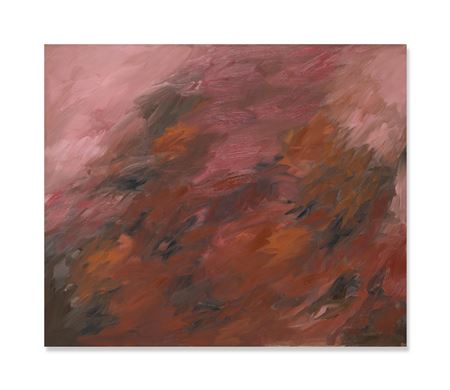
1913 Indianapolis, Indiana - 1993 Silver Spring, Maryland. Known for: Abstract-op art expressionist painting, art restoration and conservation.
An artist first and foremost, Felrath Hines (1913-1993) worked to create universal visual idioms from a place of complex personal experience, though known to be “color blind” in his relationships... Read full biography
An artist first and foremost, Felrath Hines (1913-1993) worked to create universal visual idioms from a place of complex personal experience, though known to be “color blind” in his relationships with friends and acquaintances,. Hines’s life in 20th century American society was as vibrant as his... Read full biography
An artist first and foremost, Felrath Hines (1913-1993) worked to create universal visual idioms from a place of complex personal experience, though known to be “color blind” in his relationships with friends and acquaintances,. Hines’s life in 20th century American society was as vibrant as his ever-more-subtle works of art. Hines’s figurative and cubist-style artwork morphed into soft-edged organic abstracts as he grappled with hues in his chosen oil medium. The New York art worldvwas small... Read full biography
An artist first and foremost, Felrath Hines (1913-1993) worked to create universal visual idioms from a place of complex personal experience, though known to be “color blind” in his relationships with friends and acquaintances,. Hines’s life in 20th century American society was as vibrant as his ever-more-subtle works of art. Hines’s figurative and cubist-style artwork morphed into soft-edged organic abstracts as he grappled with hues in his chosen oil medium. The New York art worldvwas small when he arrived there in the early 1960s, especially for African American artists, who were routinely marginalized by prestigious galleries and museums. Hines’s fellow artist Romare Bearden invited him to join as a founding member of Spiral, a group... Read full biography
An artist first and foremost, Felrath Hines (1913-1993) worked to create universal visual idioms from a place of complex personal experience, though known to be “color blind” in his relationships with friends and acquaintances,. Hines’s life in 20th century American society was as vibrant as his ever-more-subtle works of art. Hines’s figurative and cubist-style artwork morphed into soft-edged organic abstracts as he grappled with hues in his chosen oil medium. The New York art worldvwas small when he arrived there in the early 1960s, especially for African American artists, who were routinely marginalized by prestigious galleries and museums. Hines’s fellow artist Romare Bearden invited him to join as a founding member of Spiral, a group of African American visual artists who initially met in response to the civil rights movement in the early 1960s.... Read full biography
Artist Biography
Biography page for Felrath Hines ((1913 - 1993)), known for Abstract-op art expressionist painting, art restoration and conservation. Showing 3 biographical entries and 0 sample artworks.
Felrath Hines - Artist Info
About Felrath Hines
Biography from the Archives of askART
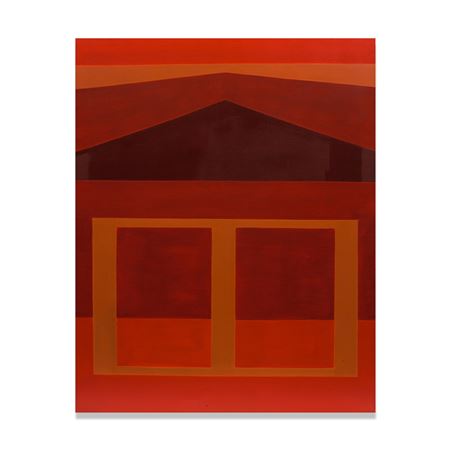 An artist first and foremost, Felrath Hines (1913-1993) worked to create universal visual idioms from a place of complex personal experience, though known to be “color blind” in his relationships with friends and acquaintances,
Hines’s life in 20th century American society was as vibrant as his ever-more-subtle works of art. Hines’s figurative and cubist-style artwork morphed into soft-edged organic abstracts as he grappled with hues in his chosen oil medium. The New York art worldvwas small when he arrived there in the early 1960s, especially for African American artists, who were routinely marginalized by prestigious galleries and museums.
Hines’s fellow artist Romare Bearden invited him to join as a founding member of Spiral, a group of African American visual artists who initially met in response to the civil rights movement in the early 1960s. Several Spiral members attended the March on Washington, and they mounted their first and only group exhibition at their Christopher Street studio in 1965. Unconvinced that there existed styles or subjects that could be categorized as exclusively “black art,” Hines continued to pursue his abstract sensibility.
His social life, including jazz clubs and art openings, led Hines to the 28th Street apartment of acquaintance Frank Neal, where such luminaries as James Baldwin, Harry Belafonte, Charles Sebree and Billy Strayhorn gathered and discussed creative and social issues, as well as their careers and place in the white dominant world. In addition to his work as an artist, Hines became known for his impeccable conservation work and his accurate and sensitive in-painting, allowing him to open his own private conservation practice in 1964.
His client list included the Museum of Modern Art, the Whitney Museum, the Corcoran Gallery of Art and Miss Georgia O’Keeffe, who, as well, became a loyal friend. In 1972 he left NYC for Washington DC to become Chief Conservator of the Smithsonian Institution’s National Portrait Gallery and, later, the Hirshhorn Museum and Sculpture Garden, a job from which he retired in 1984. From that time to his death in 1993, he produced more paintings than during the rest of his career combined.
Fellow artist, Erika D. Passantino, wrote in the catalog for a 2002 June Kelly Gallery show, “Hines balanced a universal, almost Platonic, language of reduction with an insistence on the primacy of individual expression – and for Hines, it was abstract by necessity.” Hines knew and was true to his premise that “each person paints out of the life he lives.”
Written and submitted by Rachel Berenson Perry Author of “From Dark to Light: The Life and Work of Felrath Hines,” published by Indiana University Press and the Indiana Historical Society.Biography from Philip Douglas Fine Art
This biography was submitted by Philip Douglas Heilman owner of Philip Douglas Fine Art. The information was sourced from June Kelley Gallery, who represents Felrath Hine's estate and from published catalog information by the Indianapolis Museum of Art as part of a Felrath Hines retrospective organized by the museum in 1995.
Early in his career Felrath Hines was inspired by the geometry of Cubism and the simplicity of Piet Mondrian and the De stijl movement. As Hines became more influenced by American modernists he began to eliminate line from his compositions, focusing instead on simple shapes and a restrained color palette. Hines's interest in the science of color may have been influenced by his professional career as a painting conservator.
Born in Indianapolis, Hines was active in the Civil Rights movement and participated in Martin Luther King, Jr.'s, March on Washington on August 28, 1963. Hines joined a club of sixteen African American artists called the Spiral Group, which was formed by Romare Bearden in 1963. It was around this time that Hines became labeled as a "black" artist, an epithet that he neither expected nor liked. While not opposed to participating in exhibitions of African American artists, Hines wanted his imagery to remain universal and not to be seen as having relevance exclusively to black social causes or to African Americans. As a result, in 1971 he refused to participate in the Whitney Museum of Art's exhibition Contemporary Black Artists in America.
By focusing on nonrepresentational subject matter and harmoniously balanced shapes and colors, Hines hoped to create works that held a conceptual meaning. As he remarked, "an artist's work is to rearrange everyday phenomena so as to enlarge our perception of who we are and what goes on about us." Hines intended his imagery to be absorbed visually, mentally, and spiritually by all people regardless of gender, ethnicity, or race. There is a peacefulness and optimism in his luminous, tranquil works, which belie the period's social turmoil.
Felrath Hines was born November 9, 1913 in Indianapolis, IN, and died October 3, 1993 in Silver Spring, MD
Education 1953-55 New York University, School of Education 1947-48 Pratt Institute, Brooklyn, New York; also studied with Nahum Tschacbasov 1944-46 Art Institute of Chicago
Solo Exhibitions
2004
Felrath Hines: Paintings, 1960-1985, June Kelly Gallery, New York
Felrath Hines: Paintings, 1979-1992, Picker Gallery, Colgate University, Hamilton, NY; catalogue.
2002 Encore, June Kelly Gallery, New York; catalogue.
Felrath Hines: Explorations in Color & Form, The Athenaeum, Alexandria, VA.
1995 Felrath Hines, Indianapolis Museum of Art, Indiana; catalogue.
Felrath Hines-A Survey: Works on Paper & Canvas (1947-1991), Ruschman Gallery, Indianapolis, IN.
1993 Gudelsky Gallery, Maryland College of Art and Design, Silver Spring, MD.
1992 Felrath Hines, Franz Bader Gallery, Washington, DC.
1987 Felrath Hines, Franz Bader Gallery, Washington, DC.
1986 Felrath Hines, Franz Bader Gallery, Washington, DC.
1984 Recent Paintings: Felrath Hines, Montgomery College, Takoma Park, MD.
1979 Felrath Hines, Barbara Fielder Gallery, Washington, DC.
1977 Felrath Hines, Barbara Fielder Gallery, Washington, DC.
1959 Felrath Hines, Parma Gallery, New York.
1957 Felrath Hines, Parma Gallery, New York.
1951 S. Felrath Hines, Creative Gallery, New York
PUBLIC AND PRIVATE COLLECTIONS
Ackland Art Museum, Chapel Hill, North Carolina
Baltimore Museum of Art, Maryland
Hampton University Museum, Virginia
Indianapolis Museum of Art, Indiana
National Museum of American Art, Washington, DC
Ariel Capital Management, Chicago, IL
Chase Manhattan Bank
Philip Morris Corporation
Prudential Life, Washington, DC
Shearson Hamill and Company
Sallie MaeBiography from The Johnson Collection
SAMUEL FELRATH HINES, JR. (1913-1993)
A 1979 article described Felrath Hines as having “two careers: executing his own art and repairing the art of others.” As both an artist and painting conservator, Samuel Felrath Hines, Jr., merged his interests in technical precision and harmonious color into a remarkable professional life. It was only after he retired from conservation in 1984 that Hines was able to paint fulltime, producing more paintings in less than a decade than the rest of his career combined.
As part of the Great Migration, Hines’s parents left the South in search of a better life and settled in Indianapolis, Indiana, where the artist was born. His mother encouraged him to experience all that the city had to offer, including taking youth art classes at the John Herron Art Institute. After graduating from high school in 1931, Hines enlisted in the Civilian Conservation Corps, serving as a firefighter in the American West while subscribing to art correspondence courses. In 1940, he rode the railroads as a dining car waiter for the Chicago and North Western Transportation Company, saving his salary to attend the Art Institute of Chicago (1944–1946). After moving to New York, he studied privately with Russian modernist Nahum Tschacbasov from 1947 to 1948. He later enrolled in design courses at the Pratt Institute and New York University.
An opportunity in 1951 to work—initially without pay—for master framer Robert M. Kulicke altered Hines’s professional trajectory. Kulicke’s East Tenth Street shop brought Hines into close contact with the New York art world and the field of conservation. As part of a two-year apprenticeship to Caroline and Sheldon Keck, the legendary founders of the Institute of Fine Arts Conservation Center at NYU, Hines assisted the couple in conserving Claude Monet’s Water Lilies at the Museum of Modern Art. Over the course of what would be a twenty-five-year career as a conservator, Hines held a supervisory position at NYU’s Fine Arts Laboratories from 1962–1964 and then opened his own private conservation studio. His client roster included MoMA, the Whitney Museum, and the Guggenheim Museum. In 1972, his customer and great friend, Georgia O’Keeffe, encouraged Hines to move to Washington, DC, where he served as the chief conservator first at the National Portrait Gallery and then at the Hirshhorn Museum and Sculpture Garden.
Hines continued to paint while working as a conservator and even exhibited at his former school, the John Herron Art Institute. Over time, his hard-edged compositions in the De Stijl tradition gave way to painterly abstraction, organic explorations of color executed in oil. In the catalogue to a 2002 exhibition of the artist’s work, one scholar noted that “Hines balanced a universal, almost Platonic, language of reduction . . . [that] was abstract by necessity.” After meeting Romare Bearden, Hines joined Spiral, an African American artist collective, in 1963; fellow members included Charles Alston, Hale Woodruff, and Merton Simpson. Hines’s participation in Spiral spurred his political activism; he joined the March on Washington and declined participating in exclusively African American exhibitions (such as the Whitney Museum’s landmark 1971 presentation, Contemporary Black Artists in America) because he did not want his work “to be placed in a special category with a particular group.”
Dorothy C. Fisher, the artist’s widow, strove to preserve her husband’s legacy by donating paintings to museums and university art galleries. Felrath Hines’s work can be seen at the Chrysler Museum of Art, the Ackland Art Museum at the University of North Carolina at Chapel Hill, and the Detroit Institute of Arts, among others.
The Johnson Collection, Spartanburg, South Carolina
thejohnsoncollection.org