Page loaded successfully. Showing biography for Fernando Zobel de Ayala Montojo.
Fernando Zobel de Ayala Montojo BIOGRAPHY
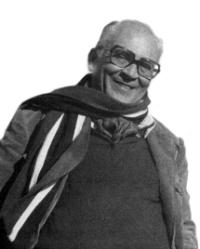
1924 Manilla, Philippines - 1984 Rome, Italy. Known for: Abstract and realist painting.
Fernando Zobel de Ayala was born in Manila, the Philippines, on August 27, 1924. He was an artist, patron of the arts, art collector, teacher, photographer, poet and also a writer on artistic and... Read full biography
Fernando Zobel de Ayala was born in Manila, the Philippines, on August 27, 1924. He was an artist, patron of the arts, art collector, teacher, photographer, poet and also a writer on artistic and cultural topics. As an artist, Zobel is best known for abstractions, often painted in black and white... Read full biography
Fernando Zobel de Ayala was born in Manila, the Philippines, on August 27, 1924. He was an artist, patron of the arts, art collector, teacher, photographer, poet and also a writer on artistic and cultural topics. As an artist, Zobel is best known for abstractions, often painted in black and white color schemes, that reflect the dual influences of Abstract Expressionism and Asian painting and calligraphy. Zobel was the son of Enrique Zobel de Ayala, a Spanish industrialist, and Fermina Montojo y... Read full biography
Fernando Zobel de Ayala was born in Manila, the Philippines, on August 27, 1924. He was an artist, patron of the arts, art collector, teacher, photographer, poet and also a writer on artistic and cultural topics. As an artist, Zobel is best known for abstractions, often painted in black and white color schemes, that reflect the dual influences of Abstract Expressionism and Asian painting and calligraphy. Zobel was the son of Enrique Zobel de Ayala, a Spanish industrialist, and Fermina Montojo y Torróntegui. A citizen of Spain, he grew up in both the Philippines, the United States, Spain and Switerland. His father, who had studied painting, was the patron of Philippine Artist Fernando Amorsolo, who provided art lessons to Zobel as a boy. He... Read full biography
Fernando Zobel de Ayala was born in Manila, the Philippines, on August 27, 1924. He was an artist, patron of the arts, art collector, teacher, photographer, poet and also a writer on artistic and cultural topics. As an artist, Zobel is best known for abstractions, often painted in black and white color schemes, that reflect the dual influences of Abstract Expressionism and Asian painting and calligraphy. Zobel was the son of Enrique Zobel de Ayala, a Spanish industrialist, and Fermina Montojo y Torróntegui. A citizen of Spain, he grew up in both the Philippines, the United States, Spain and Switerland. His father, who had studied painting, was the patron of Philippine Artist Fernando Amorsolo, who provided art lessons to Zobel as a boy. He attended secondary school at the Brent International School in Baguio until World War II disrupted his studies.... Read full biography
Artist Biography
Biography page for Fernando Zobel de Ayala Montojo ((1924 - 1984)), known for Abstract and realist painting. Showing 3 biographical entries and 0 sample artworks.
Fernando Zobel de Ayala Montojo - Artist Info
About Fernando Zobel de Ayala Montojo
Name variants
Fernando Zobel De Ayala, Fernando Sobel, Fernando Zobel
Biography from the Archives of askART
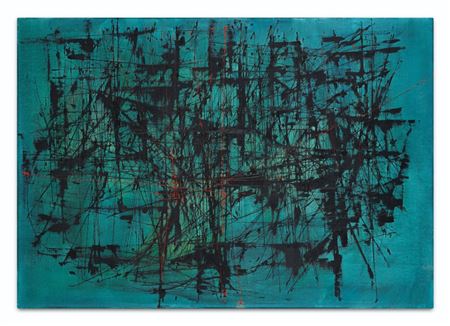 Fernando Zobel de Ayala was born in Manila, the Philippines, on August 27, 1924. He was an artist, patron of the arts, art collector, teacher, photographer, poet and also a writer on artistic and cultural topics. As an artist, Zobel is best known for abstractions, often painted in black and white color schemes, that reflect the dual influences of Abstract Expressionism and Asian painting and calligraphy.
Zobel was the son of Enrique Zobel de Ayala, a Spanish industrialist, and Fermina Montojo y Torróntegui. A citizen of Spain, he grew up in both the Philippines, the United States, Spain and Switerland. His father, who had studied painting, was the patron of Philippine Artist Fernando Amorsolo, who provided art lessons to Zobel as a boy. He attended secondary school at the Brent International School in Baguio until World War II disrupted his studies.
In 1942, at the age of 18, a spinal problem caused him to be bed-ridden for nearly a year. During this time he began to develop his drawing skills, making sketches of the views out his window, as well as caricatures of family members. After the death of his father in 1943, and following World War II, Zobel was admitted to Harvard University, where he studied history and literature, writing his thesis on the drama of Federico Garcia Lorca, graduating Magna Cum Laude in 1949.
After graduation Zóbel remained in Boston, where he had befriended many artists -- including James Pfeufer and Reed Champion -- and began to paint in the "Boston Style." During this period he executed many etchings, aquatints and serigraphs. He also served as a curator at Harvard's Houghton Library, where he studied Medieval calligraphy and emblem books.
His first one-man show was held at the Philippine Art Gallery in 1953, where he exhibited figurative works of Philippine subjects. While in Manila, Zobel, always an active letter writer, corresponded with an international group of friends which included artists, poets and academics.
After recovering from depression in 1954, Zobel visited the Rhode Island School of Design, and was deeply moved by an exhibition of paintings by Mark Rothko. The epiphany provided by this show changed the course of Zobel's art, and within a year or two his paintings were nearly all abstract. During this period he also experimented with photography. Around this time, he was also exposed to Abstract Expressionist artworks, inlcuding works by Jackson Pollock in the collection of his relative Alfonso Ossorio.
Zobel was extremely active in the Manila art scene in the late 1950's. By actively collecting art and setting up exhibitions he played a crucial role in stimulating and promoting modern art in the Philippines. He served as the President of the Philippine art Association, and continued exhibiting his paintings. His lectures at the Ateneo de Manila University, on topics including Chinese Art and Art Appreciation were widely appreciated and attended. He was also active in the management of his family business, Ayala y Compañía from 1955 to 1961.
Although Zobel was a very effective executive, his heart belonged to art, and he was known to rush home from work so he could pick up his brushes. In Manila, he cultivated a serious interest in Chinese and Japanese art, taking classes in calligraphy under Chinese master Ch'en Bing Sun. He also began using a hypodermic syringe to achieve fine effects of line in his abstract meditations on movement, the "Saetas" series. Traveling to Japan and Spain, he broadened his interests, and established close friendships with Spanish modern artists.
His next series, initiated in Madrid in 1959, the "Series Negra" demonstrated his efforts to use the color black to express powerful effects of space and motion. In 1962, he was made honorary Director of the museum of Manila's Universidad del Ateneo, to which he donated his collection of Philippine modern art. After a one-man show at the Luz Gallery in Manila, Zóbel returned to live in Spain permanently. He eventually had nearly identical studios in Madrid, Cuenca and Seville.
In 1966, Zobel displayed his private collection of Spanish modern art, including works by Chillida, Tapies, Saura, Rueda, Torner, Rivera, Millares, and Cuixant as well as his own works at the newly founded "Museum of Abstract Spanish Art" in Cuenca, Spain. He was aided by the artists themselves, especially by Gustavo Torner and Gerardo Rueda, who were the first curators of the collection. They persuaded Cuenca Town Council to give them part of the Hanging Houses, which had recently been restored, to be used as the site for the museum.
In Manila, because of Zóbel's urging and vision, the Ayala Foundation established the Ayala Museum in 1967. This museum, which focuses on Philippine art and culture, moved to a new building in 1974 and continues to thrive.
As an artist, Zóbel worked from the mid-sixties into the seventies developing imagery based on the memory of experience. Among these work are his "Dialogos", which demonstrate his recollections of works by master artists including Degas. Another series, "La Vista", was based on the view from the window of his studio in Cuenca. An avid traveler and museum-goer, Zobel traveled internationally taking in museum collections, and spent many hours in Madrid's Prado.
During the following years he received many honors, and in 1975 Harvard University appointed him a member of the advisory committee for the acquisition of rare books and manuscripts. One-man exhibitions of his work in New York, Madrid and Paris established his reputation as an artist of international significance. He had numerous one-man shows in Spain throughout the 1970's and early 1980's.
After recovering from a stroke suffered in Manila in 1980, Zobel executed works in which drawing increasingly fused with colors applied as glazes. In 1983 a major retrospective of his work was organized by the Caja de Ahorros y Monte de Piedad de Sevilla.
Fernando Zobel died unexpectedly, of a heart attack, in Rome, in June of 1984. He was posthumously awarded a Gold Medal by the City of Cuenca, Spain where he is buried in the Cemetery of San Isidro.
In 2003 Spain honored his achievements as an artist with a major retrospective held at the Museo Nacional Centro de Arte Reina Sofia.
Individual Exhibitions:
1953: The Philippine Art Gallery, Manila
1954: Twelve Paintings by Fernando Zóbel, Contemporary Arts Gallery, Manila and Swetzoff Gallery, Boston
1955: Friedensohn and Zóbel: Paintings, The Rhode Island School of Design
1956: Fifteen Paintings by Fernando Zóbel, Philippine Art Gallery, Manila
1957: Zóbel, an Exhibition of New Paintings, Philippine Art Gallery, Manila
1958: Zóbel Paintings, Schneidam, sculptures, Philippine Art Gallery, Manila
1959: Zóbel, pinturas y dibujos, Galeria Biosca, Madrid
1961: Galería Nebli, Madrid,
1961: Luz Gallery, Manila
1963: Pinturas de Fernando Zóbel. Circulo de Amistad de Cordoba
1963: Zóbel. Dibujos. Galería Fortuny, Madrid
1965: Bertha Schaefer Gallery, New York
1965: Galería Sur, Santander
1966: Galería Juana Mordo, Madrid
1966: Luz Gallery, Manila
1966: Zóbel, Cuadros, grabados, dibujos, Galeria La Pasarela, Seville
1967: Galería Grises, Bilbao
1967: Casa de Cultura de Cuenca, Cuenca
1968: Bertha Schaefer Gallery, New York
1969: Cuenca y sus ninos (photographs) Casa de Cultura, Cuenca
1970: Dibujos, Galeria Egam, Madrid
1971: Galería Juana Mordó, Madrid
1972: Luz Gallery, Manila
1972: El Jucar: Casa de Cultura de Cuenca, Cuenca
1972: Galería Juana de Aizpuru, Seville
1972: Galería Val i 30, Valencia
1973: Linda Goodman Gallery, Johannesburg
1974: La Vista. Galería Juana Mordó, Madrid
1974: Galería Juana de Aizpuru, Seville
1975: Dibujos, Galería Egam, Madrid
1976: Luz Gallery, Manila
1977: Acurelas. Galerie Jacob, Paris
1977: Luz Gallery, Manila
1978: Acuarelas, Galeria Rayuela, Madrid
1978: La Serie Blanca. Galeria Theo, Madrid
1978: Galería Theo, Valencia
1978: Fernando Zóbel. Aquarelles, Galerie Herodiade, St. Etienne
1978: Zóbel/ Obra gráfica. Sala Celini, Madrid
1979: La Serie Blanca. Galería Theo, Barcelona
1980: Circulo de Bellas Artes, Tenerife
1980: Galería 3 i 5, Gerona
1980: Galería Parke-15, Pamploma
1980: Galería Theo, Valencia
1980: Galería Sur, Santander
1981: Galería Jalon, Zaragoza
1981: Galería Citania, Santiago de Compostela
1981: Galería Palace, Granada
1982: Las Orillas, Galería Theo, Madrid
1982: Sala Cellini, Madrid
1982: Galería Theo, Valencia
1982: Galería Juan Gris, Oviedo
1982: Grupo 15, Madrid: A presentation of the book "La cuatro estaciones."
1983: Exhibition Room El Monte, Sevilla
1983: Galería Palace, Granda
1983: Galería Yerba, Murcia
1984: Zóbel, retrospective. Fundación Juan March, Madrid (Note: this exhibition travelled to other cities in Spain until 1986)
1987: Creative Transformations: Drawings and Paintings by Fernando Zóbel. Fogg Art Museum, Harvard University
1991: Zóbel. El Júcar, La vista, El río. Torre de los Guzmanes, La Algaba, Seville.
1991: Fernando Zóbel. Cuadernos de apuntes y portfolios. Una vision de Cuenca. Exhibition Room of the Old Carmelite Convent, Cuenca
1994: Fernando Zóbel. Rio Júcar. Exhibition Room of the Old Carmelite Convent, Cuenca
1995: Zóbel. Galeria Rayuela, Madrid
1995: Fernando Zóbel. Río Júcar. Museo de Bellas Artes de San Pío V, Valencia
1998: Zóbel. BBK Exhibition Room, Bilbao
1998: Zóbel. Espacio y color, Sala Amos Salvador, Cultural Rioja, Logroño
1999: Zóbel: Obra gráfica. Museo de Arte Abstracto, Español de Cuenca, Cuenca
2003: Zóbel: Museo Nacional Centro de Arte Reina Sofia
2009: Fernando Zóbel: Viajar, Dibujar, Pintar. Museo de Arte Abstracto Español, Cuenca
Honors and Awards:
1954: First Prize for his painting "Carroza" Art Association of the Philippines
1966: Awarded membership in the Order of Alfonso X
1966: Awarded membership in the Order of Isabel the Catholic
1972: Named Honorary Citizen of Cuenca
1975: Named member of Advisory Committee for acquisition of rare books and manuscripts, Harvard University.
1983: The Gold Medal for Merit in the Fine Arts, The Spanish Ministry of Culture
1984: The Gold Medal of the City by the Locard Corporation of Cuenca
1984: Awarded Medal of Honor by Universidad Internacional Menéndez y Pelayo in Santander
Selected Museum and Institutional Collections:
The Achenbach Foundation for Graphic Arts, San Francisco, California
Ateneo de Manila University Museum, Manila, The Philippines
Ayala Foundation, Inc., Manila, The Philippines
Biblioteca Nacional, Madrid, Spain
British Museum, Department of Prints and Drawings, London, United Kingdom
Cultural Center of the Philippines, Manila, The Philippines
Fogg Art Museum, Havard University, Boston, Massachusetts
Fundacion Juan March, Madrid, Spain
Göteborgs Konstmuseum, Göteborg, Sweden
Joslyn Art Museum, Omaha, Nebraska
Museo de Arte Abstracto, Cuenca, Spain
Museo de Arte Contemporaneo, Seville, Spain
Museo de Bellas Artes, Bilbao, Spain
Museo Nacional Centro de Arte Reina Sofia, Spain
Museum of Fine Arts, Boston, Massachusetts
National Museum of the Philippines, Manila, The Philippines
New York Public Library, New York
Walker Art Gallery, Liverpool, United Kingdom
Sources:
"Zóbel" Catalog of the Exhibition, Museo Nacional Centro de Arte Reina Sofia, 2003
www.fernandozobel.com
Articles by Fernando Zóbel de Ayala
1. Zóbel de Ayala, Fernando. "Filipino Artistic Expression." Philippine Studies 1, (1953): 125-130.
2. Zóbel de Ayala, Fernando. "The Seventh Annual AAP Art Exhibition." Philippine Studies 2, no. 1 (1954): 40-49.
3. Zóbel de Ayala, Fernando. "A Calligraphic Duel." Harvard Library Bulletin 9, no. 1, (Winter 1955): 46-60.
4. Zóbel de Ayala, Fernando. "The Chapel of the Holy Sacrifice at the University of the Philippines." Philippine Studies 5, no.1 (1957): 1-8.
5. Zóbel de Ayala, Fernando. "Philippine Colonial Sculpture." Philippine studies 6, no. 3 (1958): 249-294
6. Zóbel de Ayala, Fernando. "Philippine Numismatics [Book Review]." Philippine studies 6, no. 3 (1958): 362-365.
7. Zóbel de Ayala, Fernando. "Spanish Philippine Architecture [Book Review]." Philippine studies 8, no. 4 (1960): 656-659.
8. Zóbel de Ayala, Fernando. "The First Philippine Porcelain." Philippine studies 9, no. 1 (1961): 17-19.
Books by Fernando Zóbel de Ayala
1. Zóbel de Ayala, Fernando. Sketchbooks. Manila, 1954.
2. Zóbel de Ayala, Fernando. Philippine Religious Imagery. Quezon City, Philippines: Ateneo de Manila, 1963.
3. Zóbel de Ayala, Fernando. Cuenca: Sketchbook of a Spanish Hill Town. New York: Walker, 1970.
4. Zóbel de Ayala, Fernando. Cuaderno de apuntes sobre la pintura y otras cosas: colección de citas. Madrid: Galería Juana Mordó, 1974.
5. Zóbel de Ayala, Fernando. Mis fotos de Cuenca. Cuenca: Museo de Arte Abstracto Español, 1975.
6. Zóbel de Ayala, Fernando. El Júcar en Cuenca. Cuenca, 1982.
7. Zóbel de Ayala, Fernando. Mis Fotos de Sevilla. Sevilla: Monte De Piedad Y Caja De Ahorros De Sevilla, Sevilla, 1985.
Biographical information provided by John Seed, Professor of Art at Mt. San Jacinto College. He is writing a book about Fernando Zobel.Biography from Tobin Reese Fine Art
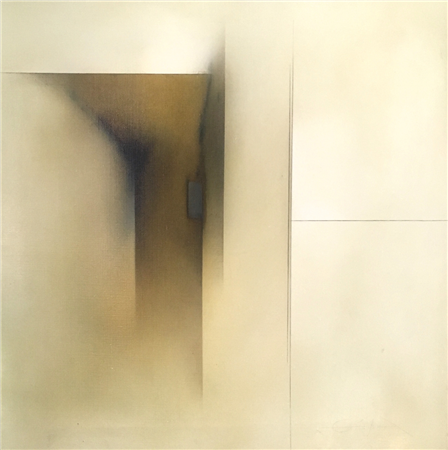 Fernando Zóbel de Ayala y Montojo (1924-1984) was a Filipino painter of Basque, Spanish, Danish and German descent. He was a member of the Zóbel de Ayala family, a prominent business family with vast holdings of land and assets including the prominent Ayala Corporation in the Philippines. He is remembered for his mastery of both the real and abstract, and for his friendliness and generosity.
Zóbel was born in Ermita, the civic center of Manila, Philippines. He received his first artistic training from Fernando Cueto Amorsolo, a Filipino artist who was a recipient of Zóbel's family's support. Immediately after beginning a medical degree at the University of Santo Tomas in 1942, he began to suffer from a spinal condition that caused him to be bedridden. He taught himself sketching to pass the time while he recovered from his condition. Although he eventually recovered fully, he never gave up his passion for sketching, even while completing a degree in history and literature at Harvard University.
While in Boston, he encountered artists such as Hyman Bloom, Reed Champion, and James Pfeufer; he used this time in Boston to expand his artistic horizons, dabbling in a variety of techniques. In 1954, he began studying at the Rhode Island School of Design and encountered works by the abstract painter Mark Rothko; this encounter led to a vast change towards the abstract in Zóbel's work. He painted the Saetas, a series of abstract paintings in which he used a hypodermic syringe to create extremely thin lines of color on the canvas; these paintings are perhaps Zóbel's most famous.
Returning to the Philippines in the late 1950s to help run the family business, Zóbel never abandoned his love for art. In 1962, he held his first one-man show in Manila. Never a businessman at heart, he was most jovial when painting, a mood that is reflect in his art. He became known in the Philippines for his generosity and welcoming nature, always available for a friendly chat. When he moved to Cuenca, Spain in the 1960s, he continued his open door policy at his studio, welcoming many new friends into his life. Inspired by his generosity, his family opened the Ayala Museum in Makati City, Philippines, to showcase both Zóbel's artwork and his vast personal collection; today, the museum dedicates itself to showing the talents of Filipino artists past and present.
Zóbel passed away from a heart attack while visiting Rome in 1984. Immediately after, the city of Cuenca posthumously awarded Zóbel a Gold Medal. He also received the Presidential Medal of Merit in 2006.
Source:
Ian Martyn for Tobin Reese Fine ArtBiography from William A. Karges Fine Art
Fernando Zobel de Ayala was one of the most dynamic and expressive modernist painters in the Philippines during the 20th century. He was the son of Enrique Zobel de Ayala and Fermina Montojo Y Torrontegui. As a young man he studied fine art with the renowned early Philippine impressionist painter, Fernando Amorsolo. Enrique Zobel de Ayala was instrumental in the career of Amorsolo as his patron and mentor.
Shortly after World War II, Zobel attended Harvard University and graduated in 1949 after studying literature and history. Thereafter, he remained in Boston and worked as a curator at the Houghton Library.
By the mid 1950s, Zobel was heavily influenced by the abstract art movement, in particular, after visiting the Rhode Island School of Design in 1954 and seeing an exhibition of Mark Rothko paintings. Thereafter, he focused on developing his own form of abstract expressionism. Returning to Manila, Zobel promoted the modern art movement in the Philippines. He was president of the Philippine Art Association and had regular exhibitions. It was at this time that he began painting using a syringe to create a sense of dynamism in his canvases. His first works of this genre were titled his Saetas series, to be followed in 1959 by his Series Negra, which evoked the impression of movement and energy in his paintings.
After 1962 Zobel moved to Spain where he had studios in Madrid, Seville and Cuenca. In 1967 the Ayala Foundation established the Ayala Museum in Makati City. The museum displays many of Zobel’s finest works, his various art supplies and other historical artifacts from his career. The museum also displays fine ceramics and tapestries as well as a renowned exhibition of gold artifacts from early Philippine history.
Zobel passed away in Rome in 1984. His work is in the permanent collection of many major museums and private collections including the Ayala Museum, the New York Public Library, the Fogg art Museum at Harvard University, the Museo de Arte Abstracto, Seville, Spain, the Museum of Fine Art in Boston, the National Museum of the Philippines in Manila, the Biblioteca Nacional in Madrid, amongst many other institutions. His work was extensively exhibited including exhibitions in Paris, Cuenca, Seville, Bilbao, New York and Manila.