Page loaded successfully. Showing biography for Frederick (Fred) Pansing.
Frederick (Fred) Pansing BIOGRAPHY
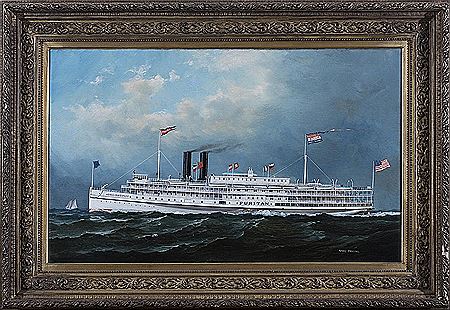
1844 Bremen, Germany - 1912 Jersey City, New Jersey. Known for: Marine and portrait paintings, lithography, photography.
Frederick Pansing ( 1844 – 1912 ). Frederick Pansing was born in Bremen, Germany in 1844. His family emigrated to the United States in 1865, when Pansing was a young man, residing in New Jersey and... Read full biography
Frederick Pansing ( 1844 – 1912 ). Frederick Pansing was born in Bremen, Germany in 1844. His family emigrated to the United States in 1865, when Pansing was a young man, residing in New Jersey and then in New York and finally residing in Hoboken. Little is currently known about Pansing’s early... Read full biography
Frederick Pansing ( 1844 – 1912 ). Frederick Pansing was born in Bremen, Germany in 1844. His family emigrated to the United States in 1865, when Pansing was a young man, residing in New Jersey and then in New York and finally residing in Hoboken. Little is currently known about Pansing’s early education and artistic training. He joined the merchant sea force as a sailor in 1870, leaving service two years later after relocating to Hoboken, New Jersey in 1872, when he decided to become a... Read full biography
Frederick Pansing ( 1844 – 1912 ). Frederick Pansing was born in Bremen, Germany in 1844. His family emigrated to the United States in 1865, when Pansing was a young man, residing in New Jersey and then in New York and finally residing in Hoboken. Little is currently known about Pansing’s early education and artistic training. He joined the merchant sea force as a sailor in 1870, leaving service two years later after relocating to Hoboken, New Jersey in 1872, when he decided to become a painter, lithographer, and photographer in his later career. Pansing is widely known and appreciated for a number of accurately detailed portraits of steamships operating in the Atlantic trade routes. In 1912, Pansing completed eighteen large ship portraits... Read full biography
Frederick Pansing ( 1844 – 1912 ). Frederick Pansing was born in Bremen, Germany in 1844. His family emigrated to the United States in 1865, when Pansing was a young man, residing in New Jersey and then in New York and finally residing in Hoboken. Little is currently known about Pansing’s early education and artistic training. He joined the merchant sea force as a sailor in 1870, leaving service two years later after relocating to Hoboken, New Jersey in 1872, when he decided to become a painter, lithographer, and photographer in his later career. Pansing is widely known and appreciated for a number of accurately detailed portraits of steamships operating in the Atlantic trade routes. In 1912, Pansing completed eighteen large ship portraits from the Nantucket Steamship Company which helped to further elevate his career as one of the masters of ship portrait... Read full biography
Artist Biography
Biography page for Frederick (Fred) Pansing ((1844 - 1912)), known for Marine and portrait paintings, lithography, photography. Showing 3 biographical entries and 0 sample artworks.
Frederick (Fred) Pansing - Artist Info
About Frederick (Fred) Pansing
Biography from the Archives of askART
 Frederick Pansing ( 1844 – 1912 )
Frederick Pansing was born in Bremen, Germany in 1844. His family emigrated to the United States in 1865, when Pansing was a young man, residing in New Jersey and then in New York and finally residing in Hoboken. Little is currently known about Pansing’s early education and artistic training. He joined the merchant sea force as a sailor in 1870, leaving service two years later after relocating to Hoboken, New Jersey in 1872, when he decided to become a painter, lithographer, and photographer in his later career.
Pansing is widely known and appreciated for a number of accurately detailed portraits of steamships operating in the Atlantic trade routes..In 1912, Pansing completed eighteen large ship portraits from the Nantucket Steamship Company which helped to further elevate his career as one of the masters of ship portrait painting. Who’s Who in American Art contains a lengthy article on the artist and The Maine Antiques Digest, April 1988, contains an article on Pansing by A. J. Peluso. The Mystic Seaport Museum and the Peabody Essex Museum in Salem, Massachusetts own ship portraits by Pansing. During his career Pansing was a member of the Hoboken Sketch Club and the New Jersey Art Club.
At this time little was known about Pansing’s interest in other artistic matter until a romantic painting of a wrecked beached sailing vessel was sold at a southeastern regional auction house. The 18 x 24 inch signed oil on canvas is inscribed in pencil on the stretcher, with a line from one of the Psalms and reads, “ Men who go down to the sea in ships...” suggesting a romantic theme and vision that describes the dangers and vicissitudes of life and loss on the sea as a horse-drawn cart carries away the remains of a voyage that ended in disaster.
Frederick Pansing died in Hoboken, New Jersey in 1944. A great number of his ship paintings were produced by the Knopf American Lithographic Company and in Harper’s Magazine, where Pansing served as a marine illustrator.
Written and submitted 2022 by Gary R. Libby, author and art historian.Biography from the Archives of askART
 Fred Pansing, a painter of ships, was born in Germany in 1844. After five years as a sailor, where he spent his spare time drawing sailing vessels, he came to New York City in 1865, hoping to make a life as an artist. After some time working in the grocery belonging to his brother, Pansing found employment making detailed, colorful prints of ships for the American Lithographic Company.
Sailing ships were very popular subject matter, in high demand during their day. When steam driven ships replaced the use of sail, the public desire for paintings and prints of such "romantic" vessels continued, with nostalgia for their passing an added element of interest, along with their intrinsic beauty.
While his oil paintings are rare, Fred Pansing's talent and maritime experience made him a perfect fit for the print market. He died in 1912, having served, in the last years of his life, as manager of the Arts Club of New Jersey from 1910 to 1911.
Sources:
Michael David Zellman, 300 Years of American Art
Peter Hastings Falk, Editor, Who Was Who in American ArtBiography from Adelaide Fine Art
Frederick Pansing (American, 1844-1912)
Frederick Pansing was born in Bremen, Germany in 1844. At the age of 16, he became a sailor and spent 5 years at sea before settling in Hoboken, New Jersey. There, in in 1865, he established his career as a marine painter and ship portraitist.
Additionally, he worked in Manhattan and Brooklyn painting names on steamboats and illustrating sheet music. He was an excellent draftsman, and came to work for American Lithography in Jersey City in the late 1890’s. A number of his marine paintings, with their detailed lines and architectural accuracy, were used as images for publication as chromolithographs.
In the late 19th C., New York Harbor was at that time the busiest port in the world, filled with passenger liners, clipper ships, steam ships, commuter yachts, ferryboats, and tugboats. Public demand for marine paintings such as portraits of newly launched vessels and scenes of yacht races grew tremendously.
Pansing received numerous private commissions for ships’ portraits and the Cunard and White Star Lines commissioned him to paint their growing fleets. His work was often printed as illustrations in Harper’s, The Rudder, as well as other publications, and was printed on posters and maritime related promotional materials.
From 1910 to 1911, Fred Pansing served as the manager of the Arts Club of New Jersey, and he died in 1912.
Written and submitted by Ann Marenakos, ASA, Adelaide Fine Art