Page loaded successfully. Showing biography for George Warren Rickey.
George Warren Rickey BIOGRAPHY
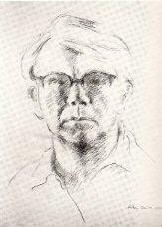
1907 South Bend, Indiana - 2002 St. Paul, Minnesota. Known for: Stainless steel kinetic sculpture, some drawing.
George Rickey was a creator of precisely engineered kinetic sculpture. He was born in South Bend, Indiana, and when age six, was taken to Scotland in 1913. He studied at the Ruskin School of Drawing,... Read full biography
George Rickey was a creator of precisely engineered kinetic sculpture. He was born in South Bend, Indiana, and when age six, was taken to Scotland in 1913. He studied at the Ruskin School of Drawing, Oxford, in 1928-29, earning a B.A. in art history and in 1941, an M.A. from that school. He also... Read full biography
George Rickey was a creator of precisely engineered kinetic sculpture. He was born in South Bend, Indiana, and when age six, was taken to Scotland in 1913. He studied at the Ruskin School of Drawing, Oxford, in 1928-29, earning a B.A. in art history and in 1941, an M.A. from that school. He also studied with Andre Lhote in Paris in 1929. He returned to America in 1930 but continued to travel abroad. Rickey took up sculpture later in his career. From 1930 until the late 40s, he was a fresco and... Read full biography
George Rickey was a creator of precisely engineered kinetic sculpture. He was born in South Bend, Indiana, and when age six, was taken to Scotland in 1913. He studied at the Ruskin School of Drawing, Oxford, in 1928-29, earning a B.A. in art history and in 1941, an M.A. from that school. He also studied with Andre Lhote in Paris in 1929. He returned to America in 1930 but continued to travel abroad. Rickey took up sculpture later in his career. From 1930 until the late 40s, he was a fresco and mural painter, and also a teacher with positions at The Groton School in Massachusetts in the 1930s, and at Muhlenberg College in Allentown, Pennsylvania, where he chaired the art department from 1941 to 1948. In 1945, he completed his first mobile... Read full biography
George Rickey was a creator of precisely engineered kinetic sculpture. He was born in South Bend, Indiana, and when age six, was taken to Scotland in 1913. He studied at the Ruskin School of Drawing, Oxford, in 1928-29, earning a B.A. in art history and in 1941, an M.A. from that school. He also studied with Andre Lhote in Paris in 1929. He returned to America in 1930 but continued to travel abroad. Rickey took up sculpture later in his career. From 1930 until the late 40s, he was a fresco and mural painter, and also a teacher with positions at The Groton School in Massachusetts in the 1930s, and at Muhlenberg College in Allentown, Pennsylvania, where he chaired the art department from 1941 to 1948. In 1945, he completed his first mobile when he was serving in the Air Force, and in 1949, he began glass kinetic works, after which he experimented with a variety of materials. Stain... Read full biography
Artist Biography
Biography page for George Warren Rickey ((1907 - 2002)), known for Stainless steel kinetic sculpture, some drawing. Showing 2 biographical entries and 0 sample artworks.
George Warren Rickey - Artist Info
About George Warren Rickey
Biography from the Archives of askART
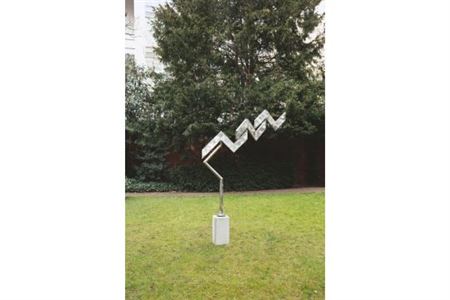 George Rickey was a creator of precisely engineered kinetic sculpture. He was born in South Bend, Indiana, and when age six, was taken to Scotland in 1913. He studied at the Ruskin School of Drawing, Oxford, in 1928-29, earning a B.A.. in art history and in 1941, an M.A. from that school. He also studied with Andre Lhote in Paris in 1929. He returned to America in 1930 but continued to travel abroad.
Rickey took up sculpture later in his career. From 1930 until the late 40s, he was a fresco and mural painter, and also a teacher with positions at The Groton School in Massachusetts in the 1930s, and at Muhlenberg College in Allentown, Pennsylvania, where he chaired the art department from 1941 to 1948. In 1945, he completed his first mobile when he was serving in the Air Force, and in 1949, he began glass kinetic works, after which he experimented with a variety of materials. Stainless steel became his preferred medium.
Around 1959 he began to simplify forms, working with thin blades in vertical and horizontal configurations driven by wind rather by mechanical means. Of these works, both freestanding and suspended, he has said: "I have worked for several years with the simple movement of straight lines, as they cut each other, slice the intervening space, and divide time, responding to the greatest air currents." (Baigell 301)
George Rickey lived and worked in East Chatham, New York. He was the author of, Constructivism: Origins and Evolution (1967).
Sources:
Baigell, Matthew, Dictionary of American Art
Peter Hastings Falk, Editor, Who Was Who in American Art
Rosenthal, Nan, George Rickey, 1977Biography from International Art Centre
Indiana born George Rickey added time and motion to his sculpture. His kinetic sculptures are in motion around the world, activated by indoor air currents or powered, outdoors, by the whim of the wind.
In their silent, graceful movements his hypnotic sculptures reveal the play of natural forces - such as gravity and wind - upon works of art that have carefully considered physics to control the time and limits of their movements. They are, indeed, poetry in motion: once elegiac totems to the passage of time; now also markers of time their maker passed in our midst.
His work can be found in many American and international public institutions including the Indiana University Art Museum. In New Zealand there are two major works in the Gibbs Farm Collection Two Rectangles, Vertical Gyratory Up (V) and Column of Four Squares Eccentric Gyratory (III).