Page loaded successfully. Showing biography for Georges-Hanna Sabbagh.
Georges-Hanna Sabbagh BIOGRAPHY
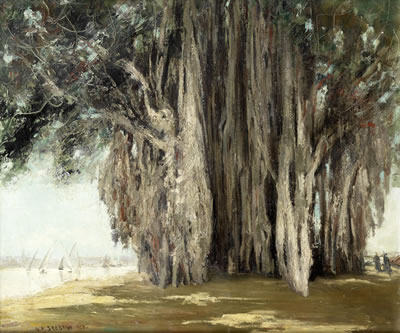
1887 Alexandria, Egypt - 1951. Known for: Land-and seascape painting, teaching.
The following information has been provided by John Morrison, 2nd cousin of Agnès Humbert. It is solely biographical. and based partly on the journal Resistance written by Agnès Humbert.... Read full biography
The following information has been provided by John Morrison, 2nd cousin of Agnès Humbert. It is solely biographical. and based partly on the journal Resistance written by Agnès Humbert. Georges-Hanna Sabbagh was born at Alexandria, Egypt in 1887. He studied art in Paris, being the first Egyptian... Read full biography
The following information has been provided by John Morrison, 2nd cousin of Agnès Humbert. It is solely biographical. and based partly on the journal Resistance written by Agnès Humbert. Georges-Hanna Sabbagh was born at Alexandria, Egypt in 1887. He studied art in Paris, being the first Egyptian at the Ecole du Louvre, and was a pupil of the Symbolist painter Maurice Denis. He served in the British army during the First World War. In 1916 he married a fellow student Agnès Humbert (1894-1963),... Read full biography
The following information has been provided by John Morrison, 2nd cousin of Agnès Humbert. It is solely biographical. and based partly on the journal Resistance written by Agnès Humbert. Georges-Hanna Sabbagh was born at Alexandria, Egypt in 1887. He studied art in Paris, being the first Egyptian at the Ecole du Louvre, and was a pupil of the Symbolist painter Maurice Denis. He served in the British army during the First World War. In 1916 he married a fellow student Agnès Humbert (1894-1963), an art historian and later a leader of the French resistance in World War II. In 1917 and 1918 they had two sons: Jean Sabbagh who became a submarine contre-amiral and advisor to General de Gaulle, and Pierre Sabbagh who became a French journalist... Read full biography
The following information has been provided by John Morrison, 2nd cousin of Agnès Humbert. It is solely biographical. and based partly on the journal Resistance written by Agnès Humbert. Georges-Hanna Sabbagh was born at Alexandria, Egypt in 1887. He studied art in Paris, being the first Egyptian at the Ecole du Louvre, and was a pupil of the Symbolist painter Maurice Denis. He served in the British army during the First World War. In 1916 he married a fellow student Agnès Humbert (1894-1963), an art historian and later a leader of the French resistance in World War II. In 1917 and 1918 they had two sons: Jean Sabbagh who became a submarine contre-amiral and advisor to General de Gaulle, and Pierre Sabbagh who became a French journalist then television director and producer. Georges became a French Citizen in 1930.&n... Read full biography
Artist Biography
Biography page for Georges-Hanna Sabbagh ((1887 - 1951)), known for Land-and seascape painting, teaching. Showing 2 biographical entries and 0 sample artworks.
Georges-Hanna Sabbagh - Artist Info
About Georges-Hanna Sabbagh
Biography from the Archives of askART
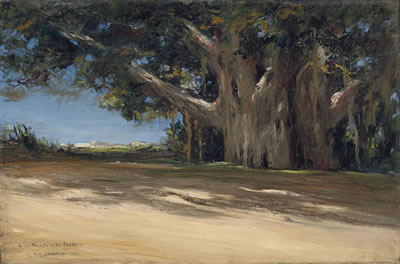 The following information has been provided by John Morrison, 2nd cousin of Agnès Humbert. It is solely biographical. and based partly on the journal Resistance written by Agnès Humbert.
Georges-Hanna Sabbagh was born at Alexandria, Egypt in 1887. He studied art in Paris, being the first Egyptian at the Ecole du Louvre, and was a pupil of the Symbolist painter Maurice Denis. He served in the British army during the First World War.
In 1916 he married a fellow student Agnès Humbert (1894-1963), an art historian and later a leader of the French resistance in World War II. In 1917 and 1918 they had two sons: Jean Sabbagh who became a submarine contre-amiral and advisor to General de Gaulle, and Pierre Sabbagh who became a French journalist then television director and producer.
Georges became a French Citizen in 1930. He and Agnès divorced in 1934. He died in 1951, and after his death his son Jean (with his wife) made a catalogue of his works.Biography from Olympia Auctions (form. 25 Blythe Road Ltd.)
Born in Alexandria, Sabbagh grew up in a wealthy Coptic family of Lebanese origin. Part of the local elite, he received a quality French education at the Ecole des Jésuites. He then traveled to France, where he started studying law in Paris in 1905. However, Sabbagh preferred to frequent the intellectual, and artistic circles and eventually abandoned his law studies.
He attended courses at the atelier of French artist Lucien Lévy-Dhurmer, before completing his training at the Académie Ranson in 1910. Sabbagh participated in several major art events such as the annual Salon d’Automne, the Salon des Indépendants, and the Salon des Tuileries.After the outbreak of the First World War, Sabbagh traveled to England, where he was employed at the factory of Rolls Royce in the city of Derby, from 1914 to 1917.
He returned to Egypt in 1920 following the death of his mother travelling extensively around the country, rediscovering the landscapes of his childhood with a particular fascination for the Nile.In 1934, after divorcing his wife, he left France to relocate in Cairo. There, he established himself in the district of Zamalek and actively contributed to the Egyptian artistic scene. In 1939, he started giving painting courses at the École des Beaux-Arts in Cairo. After the Second World War, he moved back to France, and remained in Paris until his death.
In France, Georges Sabbagh was considered to be “one of the heirs of the Nabis”, and like the Nabis, Sabbagh built a particular connection with Brittany, finding spirituality in the landscapes.Regardless of his strict French education and time spent in France, having grown up in the cosmopolitan society of Alexandria, where Muslims, Christians, Europeans, Arabs, and locals coexisted, the painter stayed true to his Egyptian roots and values throughout his life.
Sabbagh said of himself: 'I am neither of Brittany, Paris, Nabi, nor cubist. I am a painter of the Orient and the West; a man from Africa, the Levant and Europe, a Mediterranean in love with light and life'.
It seems that he refused any categorisations, or strict cultural attachments. This hybrid personality led him to create with profound freedom, a painting, which combines tradition and modernity through a sensitive artistic approach.