Page loaded successfully. Showing biography for Gershon Iskowitz.
Gershon Iskowitz BIOGRAPHY
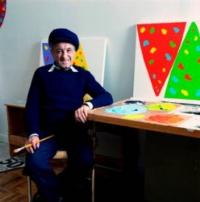
1921 Kielce, Poland - 1988 Toronto, Ontario, Canada. Known for: Expressionist landscape and non objective painting, graphics.
Gershon Iskowitz was a painter and graphic artist. He was born in Kielce, Poland. During the Nazi occupation he was interned in the Kielce ghetto, and the concentration camps Auschwitz and... Read full biography
Gershon Iskowitz was a painter and graphic artist. He was born in Kielce, Poland. During the Nazi occupation he was interned in the Kielce ghetto, and the concentration camps Auschwitz and Buchenwald. After the war he was hospitalized in Munich, Germany, where he resided for the next four years... Read full biography
Gershon Iskowitz was a painter and graphic artist. He was born in Kielce, Poland. During the Nazi occupation he was interned in the Kielce ghetto, and the concentration camps Auschwitz and Buchenwald. After the war he was hospitalized in Munich, Germany, where he resided for the next four years (1945 -1949). He emigrated to Toronto, Ontario, Canada in 1949 where he lived for the rest of his life and died. His mediums were oil, acrylic, watercolour, gouache, ink, colour serigraph and mixed... Read full biography
Gershon Iskowitz was a painter and graphic artist. He was born in Kielce, Poland. During the Nazi occupation he was interned in the Kielce ghetto, and the concentration camps Auschwitz and Buchenwald. After the war he was hospitalized in Munich, Germany, where he resided for the next four years (1945 -1949). He emigrated to Toronto, Ontario, Canada in 1949 where he lived for the rest of his life and died. His mediums were oil, acrylic, watercolour, gouache, ink, colour serigraph and mixed mediums. His early subjects include war, concentration camp life, figures, social commentary, genre, landscape and portraits. The stated subjects of his mature works are landscapes; though to an uninformed viewer they are so abstract that the subjects... Read full biography
Gershon Iskowitz was a painter and graphic artist. He was born in Kielce, Poland. During the Nazi occupation he was interned in the Kielce ghetto, and the concentration camps Auschwitz and Buchenwald. After the war he was hospitalized in Munich, Germany, where he resided for the next four years (1945 -1949). He emigrated to Toronto, Ontario, Canada in 1949 where he lived for the rest of his life and died. His mediums were oil, acrylic, watercolour, gouache, ink, colour serigraph and mixed mediums. His early subjects include war, concentration camp life, figures, social commentary, genre, landscape and portraits. The stated subjects of his mature works are landscapes; though to an uninformed viewer they are so abstract that the subjects appear, at first, to be only colour, shape and texture. According to Iskowitz they depict... Read full biography
Artist Biography
Biography page for Gershon Iskowitz ((1921 - 1988)), known for Expressionist landscape and non objective painting, graphics. Showing 1 biographical entries and 0 sample artworks.
Gershon Iskowitz - Artist Info
About Gershon Iskowitz
Biography from the Archives of askART
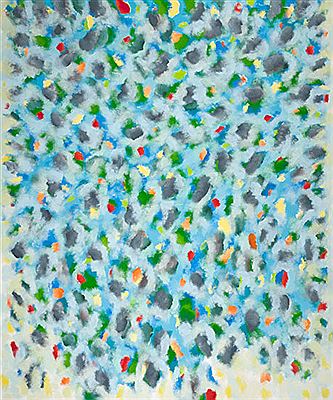 Gershon Iskowitz was a painter and graphic artist. He was born in Kielce, Poland. During the Nazi occupation he was interned in the Kielce ghetto, and the concentration camps Auschwitz and Buchenwald. After the war he was hospitalized in Munich, Germany, where he resided for the next four years (1945 -1949). He emigrated to Toronto, Ontario, Canada in 1949 where he lived for the rest of his life and died.
His mediums were oil, acrylic, watercolour, gouache, ink, colour serigraph and mixed mediums. His early subjects include war, concentration camp life, figures, social commentary, genre, landscape and portraits. The stated subjects of his mature works are landscapes; though to an uninformed viewer they are so abstract that the subjects appear, at first, to be only colour, shape and texture. According to Iskowitz they depict the northern Canadian landscape as though looking down at it through clouds.
Legend has it that his epiphany occurred in 1967 when he took a helicopter ride over Churchill, Manitoba. However, the distinctive style and technique predate the ride, as seen in the AskART example Spring Images created in 1964; in the Art Gallery of Ontario's Summer Sound dated 1965; and in the National Gallery of Canada's Parry Sound Variation XIV also dated 1965.
Quotes: 'My paintings are not abstract. They're real. They're very, very much real. I see those things." and "I reflect things I've seen up north, but you've got to look for a while to see the fact. If it becomes too obvious, its no use, its just a decoration." - Gershon Iskowitz (1975).
In spite of the artist's claims his mature styles are described by many as Abstract Expressionism and Colour Field; they are recognised by their intense colours, all over patterns, vibrating energy and luminosity.
He attended several art schools but none for very long due in large part to the war; they include the Warsaw Academy of Fine Arts (1937), the Academy of Fine Arts, Krakow (1938 -1939) and the Munich Academy of Art (1947). While in Munich he also took private lessons with Oskar Kokoschka (see AskART).
His travels include a 1948 trip to France and Italy on a scholarship from the Munich Academy of Art. He has also visited James Bay, Ontario (1971); Venice, Italy (1972); and Yellowknife, North West Territories (1973 and 1977). The James Bay and Yellowknife excursions are evidence that, while the 1967 flight over Churchill may not have been the nascence of his mature style, the northern Canadian landscape was, never the less, an important source of inspiration to him.
He was a member of the Canadian Society of Graphic Artists (1956) and he was elected to the Royal Canadian Academy of Arts in 1974.
In addition to exhibiting with the above organizations he was also included in the "Sixth Canadian Biennial Exhibition of Canadian Painting" at the National Gallery of Canada (1965); " Eight Artists from Canada" at the Tel-Aviv Museum, Israel (1970); the Venice Biennale (1972); "Toronto Painters 1953 -1965" at the National Gallery of Canada (1973); " Canada on Canvas" at the Montreal Museum of Modern Art (1974); and the "Seven Canadian Painters" exhibition which toured New Zealand and Australia (1977).
The public venues for his solo exhibitions include the University of Toronto (1961,1973); Waterloo University, Ontario (1967); the Glenbow Museum, Calgary, Alberta (1975); the Art Gallery of Nova Scotia, Halifax (1977); and the Art Gallery of Ontario, Toronto (1982).(1)
The private gallery venues include the Here and Now Gallery, Toronto (1960,1961); the Dorothy Cameron Gallery, Toronto (1963) and the Martha Jackson Gallery, NYC (1977). Gallery Moos, Toronto, his long time dealer, has hosted numerous Iskowitz solo exhibitions from 1964 to 1988. (2)
His works are in many private and corporate collections. They are also in many public collections including the Art Gallery of Hamilton (Ontario), the Kitchener-Waterloo Art Gallery (Ontario), Museum London (Ontario), the Robert McLaughlin Gallery (Oshawa, Ontario), the Montreal Museum of Fine Arts, the Montreal Museum of Modern Art, the MacKenzie Art Gallery (Regina, Saskatchewan), Simon Fraser University (Burnaby, B.C.), the Art Gallery of Greater Victoria (B.C.), and the Museum of Art - Fort Lauderdale (Florida). The National Gallery of Canada (Ottawa) has 39 Iskowitz works in its collection. The Art Gallery of Ontario has the largest public collection of Iskowitz works with 60 paintings; it also houses the Gershon Iskowitz archives which includes sketchbooks, early works on paper, correspondence and memorabilia.
His awards include the Queen Elizabeth Silver Jubilee Medal (1977) and several Canada Council Senior grants (one of which funded the 1967 helicopter ride over Churchill). In 1985, to recognize the value of the Canada Council's assistance to him over the years, Iskowitz established The Gershon Iskowitz Foundation, and the Gershon Iskowitz Prize which awards $25,000 annually to a mature, practising artist. The prize includes an exhibition of the recipient's works at the Art Gallery of Ontario accompanied by a publication. It is considered one of the most prestigious visual arts awards in the country.
Footnotes:
(1) The MacDonald and Westbridge dictionaries also list solo exhibits at the Art Gallery of Hamilton, Ontario (1957) and the Vancouver Art Gallery, B.C. (1957).
(2) The Macdonald dictionary also lists solo exhibitions at the Greenwich Gallery, Toronto (1958) and The Hayter Gallery, Toronto (1957, 1958).
Prepared and contributed to askART by M.D. Silverbrooke