Page loaded successfully. Showing biography for Guy Rose.
Guy Rose BIOGRAPHY
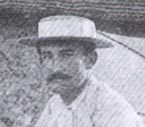
1867 San Gabriel, California - 1925 Pasadena, California. Known for: Impressionist landscape and marine, painting, portrait, genre.
Guy Rose was born in San Gabriel, California on March 3,1867. He was the son of a former senator who was a large Southern California landowner and rancher for whom the town of Rosemead was named. Guy... Read full biography
Guy Rose was born in San Gabriel, California on March 3,1867. He was the son of a former senator who was a large Southern California landowner and rancher for whom the town of Rosemead was named. Guy graduated from Los Angeles High School; next he studied at the California School of Design in San... Read full biography
Guy Rose was born in San Gabriel, California on March 3,1867. He was the son of a former senator who was a large Southern California landowner and rancher for whom the town of Rosemead was named. Guy graduated from Los Angeles High School; next he studied at the California School of Design in San Francisco, where he was particularly influenced by Emil Carlsen. At the age of twenty-one he sailed to Paris to study at the Academie Julian. His big claim to fame was his friendship with Claude Monet... Read full biography
Guy Rose was born in San Gabriel, California on March 3,1867. He was the son of a former senator who was a large Southern California landowner and rancher for whom the town of Rosemead was named. Guy graduated from Los Angeles High School; next he studied at the California School of Design in San Francisco, where he was particularly influenced by Emil Carlsen. At the age of twenty-one he sailed to Paris to study at the Academie Julian. His big claim to fame was his friendship with Claude Monet during a prolonged sojourn in the village of Giverny, near Paris. He traveled between France and Los Angeles many times, suffered a battle with lead poisoning ( an occupational hazard), and taught for a while in New York City at the Pratt Institute;... Read full biography
Guy Rose was born in San Gabriel, California on March 3,1867. He was the son of a former senator who was a large Southern California landowner and rancher for whom the town of Rosemead was named. Guy graduated from Los Angeles High School; next he studied at the California School of Design in San Francisco, where he was particularly influenced by Emil Carlsen. At the age of twenty-one he sailed to Paris to study at the Academie Julian. His big claim to fame was his friendship with Claude Monet during a prolonged sojourn in the village of Giverny, near Paris. He traveled between France and Los Angeles many times, suffered a battle with lead poisoning ( an occupational hazard), and taught for a while in New York City at the Pratt Institute; finally he bought a house in Giverny in 1904. The lead poisoning he suffered from affected his vision and crippled his hands, leaving him unable... Read full biography
Artist Biography
Biography page for Guy Rose ((1867 - 1925)), known for Impressionist landscape and marine, painting, portrait, genre. Showing 8 biographical entries and 0 sample artworks.
Guy Rose - Artist Info
About Guy Rose
Biography from the Archives of askART
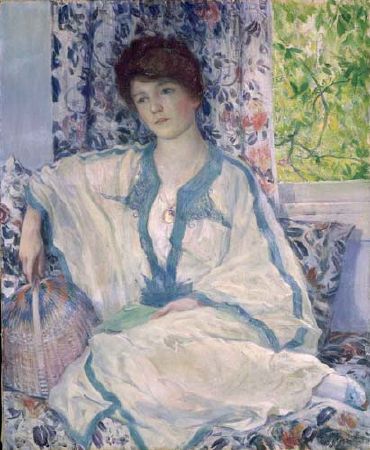 Guy Rose was born in San Gabriel, California on March 3,1867. He was the son of a former senator who was a large Southern California landowner and rancher for whom the town of Rosemead was named. Guy graduated from Los Angeles High School; next he studied at the California School of Design in San Francisco, where he was particularly influenced by Emil Carlsen. At the age of twenty-one he sailed to Paris to study at the Academie Julian. His big claim to fame was his friendship with Claude Monet during a prolonged sojourn in the village of Giverny, near Paris. He traveled between France and Los Angeles many times, suffered a battle with lead poisoning ( an occupational hazard), and taught for a while in New York City at the Pratt Institute; finally he bought a house in Giverny in 1904.
The lead poisoning he suffered from affected his vision and crippled his hands, leaving him unable to paint for various periods of time. In 1914, Rose returned to California and brought with him the light and colors of French Impressionism. He roamed up and down the state of California painting the landscapes in a style somewhat related. He taught at the Stickney School of Art and served as director there. In 1920 he again suffered from lead poisoning and in 1921 he suffered a stroke that left him paralyzed. He died on November 17, 1925.
Written and submitted by Jean Ershler Schatz, artist and researcher from Laguna Woods, California.
Sources include:
French Connection by Cathy Curtis in LA Times, November 30, 1995.
From the Internet, www.AskART.comBiography from American Legacy Fine Arts
Guy Orlando Rose was born March 3, 1867 in San Gabriel, California. He was the seventh child of California Senator Leonard John Rose who was a large southern California landholder and rancher (“Sunny Slope” Ranch). Today, the San Gabriel Valley town of Rosemead bears the family name. In 1876 young Guy Rose was accidentally shot in the chin while hunting with his brothers. During his recuperation he began to sketch and use watercolors and oil paints. After graduating from Los Angeles High School in 1884 he moved to San Francisco where he began his art training at the California School of Design under Virgil Williams and Danish-born artist Emil Carlsen.
On September 12, 1888, Rose enrolled at the Académie Julian in Paris and studied with Benjamin-Constant, Jules Lefebvre, Lucien Doucet and Jean-Paul Laurens. In 1888-89, Rose won a scholarship to study at the Académie Delacluse. In 1898, he received honorable mention at the Paris Salon, the first artist from California to receive such recognition. Some of the work he created in his Paris studio had Oriental motifs, reflecting the fascination of the time in Japonism. Guy Rose was arguably the most pivotal artist to inspire fundamental change from academic 19th-century artistic style toward Impressionism in California
In the mid-1890s, Rose went to New York and taught at the Pratt Institute and did illustrations for Harper’s, Scribners, and Century magazines.
In 1899 Guy Rose and his wife Ethel chose to return to France where they lived for twelve years, mostly in Giverny. In 1900 the couple resided in Paris and spent the winter in Briska, Algeria where Rose painted three known paintings. In 1904 Guy and Ethel Rose acquired an old stone cottage in Giverny where they lived until 1912. The cottage stood on part of the property known as the Sente des Grosses Eaux, located at the far west end of the village, a little over half a mile from the home of Claude Monet. (Will South, Guy Rose American Impressionist, Oakland, California, 1995, p.37) Many young American Impressionists were living in Giverny at the time, including Frederick Frieseke, Richard E. Miller and Alson Clark, with whom Rose became very well acquainted. Rose’s work from this period show the influence of “the master” Claude Monet, who became his friend and mentor. While in Giverny, Guy Rose suffered from effects of recurring lead poisoning, thought to have been caused by the childhood gunshot incident. He had periods of time when he was unable to paint, thus creating fewer than 800 works in his lifetime.
In 1912 Guy Rose returned to New York, where he worked and taught for two years. In 1914 he made his final move back to Pasadena, California where he taught and served as director at the Stickney School of Design. Soon after his return to the West, Rose won silver and gold medals at the 1915 Panama-Pacific International Exposition in San Francisco and the Panama-California International Exposition in San Diego. In 1921 he suffered a debilitating stroke that left him paralyzed. Guy Rose died in Pasadena, California on November 17, 1925. In 1926 the Stendahl Gallery held a memorial exhibition of his works.
Guy Rose was a member of the California Art Club and Painters and Sculptors of Los Angeles. His work is in numerous collections including the Bowers Museum in Santa Ana; the Los Angeles County Museum of Art; The Irvine Museum; and the Crocker Museum in Sacramento.
Research Sources: Guy Rose Gallery, AskART, WikipediaBiography from Lawrence Beebe Fine Art
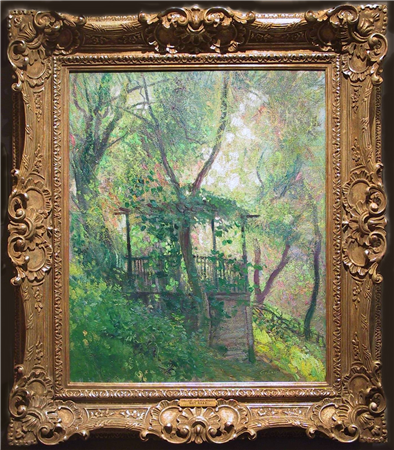 Guy Orlando Rose was born March 3,1867 in San Gabriel, California. He was the seventh child of Leonard John Rose and Amanda Jones Rose. He has become recognized as one of California's top impressionist painters of the late 19th and early 20th centuries.
He was the son of a prominent California senator and was raised on a large Southern California ranch and vineyard -- the town of Rosemead bears the family name. In 1876 he was accidentally shot in the face during a hunting trip with his brothers. While recuperating he began to sketch and use watercolors and oil paints. He graduated from Los Angeles High School in 1884 and moved to San Francisco where he did his art training at the California School of Design.
In September 12, 1888, Rose enrolled at the Academie Julian in Paris and studied with Benjamin-Constant, Jules Lefebvre, Lucien Doucet and Jean-Paul Laurens while in Paris. In 1888-89, he won a scholarship at the Academie Delacluse. He met fellow students Frank Vincent and Frederick Melville at the Academie Julian -- Frank Vincent and Guy Rose were to remain lifelong friends.
Rose lived New York, New York in the 1890s and illustrated for "Harper's," "Scribners," and "Century".
Returning to France in 1899, he and his wife Ethel Rose bought a cottage at Giverny. In 1900 he resided in Paris and spent the winter in Briska, Algeria where he painted three known paintings. From 1904 to 1912 husband and wife lived in Giverny and his works from this period show the influence of "the master" Monet, who became his friend and mentor.
In 1913-1914 the Roses summered in and held an outdoor sketching school at Narragansett, Rhode Island. Suffering on and off again from the effects of lead poisoning, Rose and his wife moved permanently to Los Angeles, California in 1914.
In Los Angeles, Guy Rose taught and served as Director of the Stickney Memorial School of Art in Pasadena. In 1921 he suffered a debilitating stroke that left him paralyzed. Guy Rose died in Pasadena, California on November 17, 1925. In 1926 the Stendahl Gallery held a memorial exhibition of his works.
Rose won the Gold Medal at the Panama-Pacific International Exposition in 1915 and the Gold Medal at the Panama-California Exposition in San Diego, 1915. His works can be found in the following public collections: Bowers Museum, Santa Ana; Cleveland Museum; Laguna Beach Museum of Art; Los Angeles County Museum of Art; the Oakland Museum, California; Pasadena Art Institute.Biography from The Redfern Gallery
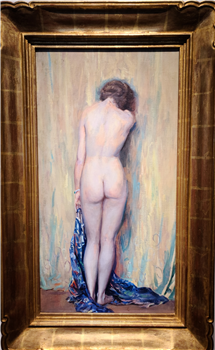 A native Californian, Guy Rose was born in San Gabriel, CA on March 3, 1867. He was the son of a former senator who was a large Southern California landholder and rancher (the town of Rosemead and the boulevard bearing that name are in honor of the Rose family).
After graduating from Los Angeles High School, he moved to San Francisco where he began his art training at the School of Design under Virgil Williams and Emil Carlsen. In 1888 he further studied in Paris under Constant, Lefebvre and Doucet at Academie Julian. In 1894 he received an honorable mention at the Paris Salon, the first Californian to receive an award from that prestigious institution.
Returning to New York City in the mid-1890's, Rose worked at Harper's, Scribner's and Century. In 1899, he was back in France where he bought a cottage in Giverny, and it was there that he was greatly influenced by Claude Monet and the French Impressionists.
He suffered from recurring lead poisoning which affected his vision and crippled his hands, and was unable to paint for various periods of time. In 1912 he returned to New York, and two years later made his final move back to Pasadena where he taught and served as director at the Stickney School of Art.
In 1920 he again suffered lead poisoning, and a stroke the following year left him paralyzed.
His oeuvre includes coastal scenes, missions, figures and landscapes of California and France for which he is internationally known.
ASSOCIATIONS:
California Art Club; Painters & Sculptors of Los Angeles; Ten Painters of Los Angeles; Solo Exhibitions: Los Angeles County Museum of Art, 1916, 1918, 1919; Stendahl Art Gallery, Los Angeles, 1922,1926.Awards: Honorable Mention, Paris Salon, 1894; medal, Atlanta Expo, 1895; bronze medal, Pan-American Expo, Buffalo, 1901; Silver medal, Panama Pacific International 1915; gold medal, Panama-California Expo, San Diego, 1915; Harrison prize, California Art Club, 1921.
PUBLIC COLLECTIONS:
Bowers Museum, Santa Ana; Cleveland Museum; Los Angeles County Museum of Art; Oakland Museum; Pasadena Art Institute; San Diego Museum; Irvine Museum
Source:
Hughes, Edan Milton. "Artists in California" San Francisco: Hughes Publishing Co. 1989Biography from William A. Karges Fine Art - Carmel
Guy Rose's paintings are widely considered to be the apex of early California Impressionism. Born in San Gabriel, California, to a wealthy family, Guy Rose was afforded education at the San Francisco School of Design, and at the Academie Julian in Paris.
Rose spent a good part of his life in France, and in 1899 bought a cottage in Giverny, where he was greatly influenced by Claude Monet. In 1912 Rose returned to the U.S., and was the Director of the Stickney School of Art in Pasadena from 1914-1920. T
he following year Rose suffered a stroke caused by lead poisoning. Known as a masterful, pure Impressionist, Rose's works include coastals, figuratives, and landscapes of California and France.Biography from Thomas Lawrence Fine Art
Guy Rose was born in California in 1867. His parents came to California in the 1850's via covered wagon from the east. He studied art in Paris and exhibited at the Paris Salon, there receiving an honorable mention in 1894. He lived in Giverny for many years and painted alongside Claude Monet.
Coming back to California in about 1914, he brought his style of French Impressionism to his paintings of the California landscape and coastal regions, painting scenes of La Jolla, Carmel, and the countryside around the San Gabriel Valley. He suffered ill-health for most of his life and eventually succumbed to lead poisoning in 1925. He is well known as the most important California impressionist.Biography from Helene Halperin (formerly DeRu's Fine Arts)
Born in San Gabriel, California on March 3, 1867, Guy Rose was the son of a former senator who was a large Southern California landholder and rancher (the town of Rosemead and the boulevard bearing that name are in honor of the Rose family.) After graduating from Los Angeles High School, Rose moved to San Francisco where he began his art training at the School of Design under Virgil Williams and Emil Carlsen.
In 1888 he further studied in Paris under Constant, Lefebvre and Doucet at Academie Julian. In 1894 he received an honorable mention at the Paris Salon; he was the first Californian to receive an award from that prestigious institution. In 1899, Rose bought a cottage in Giverny. It was there that he was greatly influenced by Monet and the French Impressionists. He suffered from lead poisoning, which affected his vision and crippled his hands, and was unable to paint for various periods of time.
In 1912 he returned to the United States and in 1914 made his final move back to Pasadena where he taught and served as director at the Stickney School of Art. In 1920 he again suffered lead poisoning and a stroke the following year left him paralyzed. He died on November 17, 1925. His oeuvre includes Southern California coastal scenes, missions and landscapes of California and France for which he is internationally known.Biography from Fleischer Museum
A landscape painter and illustrator, Guy Rose was born in San Gabriel, California on March 3, 1867. He was the son of a former senator who was a large Southern California landholder and rancher. The town of Rosemead and Rosemead Boulevard are named in honor of the Rose family.
After graduating from Los Angeles High School,Guy Rose moved to San Francisco where he began his art training at the School of Design under Virgil Williams and Emil Carlson. In 1888, he further studied in Paris under Constant, Lefebvre, and Doucet at Academie Julian. In 1894, he received an honorable mention at the Paris Salon, the first Californian to receive an award from that prestigious institution.
Returning to New York City in the mid-1890s, Rose taught at the Pratt Institute and did illustrations for such magazines as Harper's Scribner's and Century. In 1899, he was back in France where he bought a cottage in Giverny, and there was greatly influenced by Monet and the French Impressionists. He also suffered from a recurring lead poisoning which affected his vision and crippled his hands, and left him unable to paint for various periods of time.
In 1912 he returned to New York, and two years later made his final move back to Pasadena where he taught and served as director at the Stickney School of Art. In 1920 he again suffered lead poisoning, and a stroke that following year left him paralyzed. He died on Nov. 17, 1925.
His oeuvre includes coastal scenes, missions, figures, and landscapes of California and France for which he is internationally known.
Memberships:
California Art Club; Painters & Sculptors of Los Angeles; Ten Painters of Los Angeles.
Solo Exhibitions: Los Angeles County Museum of Art, 1916, 1918, 1919; Stendahl Art Gallery, Los Angeles, 1926.
Awards:
medal, Atlanta Expo, 1895; bronze medal, Pan American Expo, Buffalo, 1910; silver medal, PPIE, 1915; gold medal, Panama-Calif. Expo, San Diego, 1915; Harrison prize, Calif. Art. Club, 1921.
Works held:
Bowers Museum, Santa Ana; Cleveland Museum; Laguna Museum; LACMA; Oakland Museum; Pasadena Art Inst; San Diego Museum.
Literature Sources include:
AAA 1907-26 (obit); PPIE cat.; PAP; Impressionism, The Calif. View, AAW; LA Painters of the 1920s; Ber; So. Calif. Artists 1890-1940; Ben; Calif. Design, 1910; H&I; Fld; SCA; Sam; Art News, 11-28-1925,(obit). 2Hughes, Edan Milton, Artists in California 1786-1940 Hughes Publishing Company