Page loaded successfully. Showing biography for H Kofi Bailey.
H Kofi Bailey BIOGRAPHY
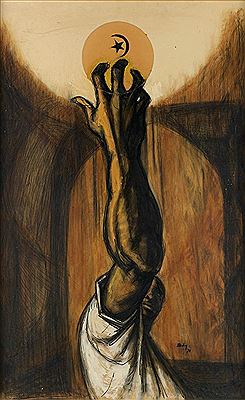
1931 Chicago, Illinois - 1981. Known for: African-American figure painting and genre, lithographs.
Herman "Kofi" Bailey (also known as H. Kofi Bailey and Kofi X) was an African-American artist. He was best known for his conté and charcoal drawings reflecting of the African-American experience.... Read full biography
Herman "Kofi" Bailey (also known as H. Kofi Bailey and Kofi X) was an African-American artist. He was best known for his conté and charcoal drawings reflecting of the African-American experience. Bailey was influenced by artists such as Goya, Rico Lebrun, Jacob Lawrence and Charles White. He... Read full biography
Herman "Kofi" Bailey (also known as H. Kofi Bailey and Kofi X) was an African-American artist. He was best known for his conté and charcoal drawings reflecting of the African-American experience. Bailey was influenced by artists such as Goya, Rico Lebrun, Jacob Lawrence and Charles White. He described himself in 1967 as a "representational" artist rather than "abstract" because his work is committed to the masses who, he feels, "want to see art that deals with man, art which tries to express... Read full biography
Herman "Kofi" Bailey (also known as H. Kofi Bailey and Kofi X) was an African-American artist. He was best known for his conté and charcoal drawings reflecting of the African-American experience. Bailey was influenced by artists such as Goya, Rico Lebrun, Jacob Lawrence and Charles White. He described himself in 1967 as a "representational" artist rather than "abstract" because his work is committed to the masses who, he feels, "want to see art that deals with man, art which tries to express the varying moods of man; and man is my principal concern.". Born in Chicago, Illinois, Bailey grew up in Los Angeles, California. He received his education from Alabama State College and then attended Howard University where he studied under Alain... Read full biography
Herman "Kofi" Bailey (also known as H. Kofi Bailey and Kofi X) was an African-American artist. He was best known for his conté and charcoal drawings reflecting of the African-American experience. Bailey was influenced by artists such as Goya, Rico Lebrun, Jacob Lawrence and Charles White. He described himself in 1967 as a "representational" artist rather than "abstract" because his work is committed to the masses who, he feels, "want to see art that deals with man, art which tries to express the varying moods of man; and man is my principal concern.". Born in Chicago, Illinois, Bailey grew up in Los Angeles, California. He received his education from Alabama State College and then attended Howard University where he studied under Alain Locke, Sterling Brown and James A. Porter. He obtained his MFA at the University of Southern California... Read full biography
Artist Biography
Biography page for H Kofi Bailey ((1931 - 1981)), known for African-American figure painting and genre, lithographs. Showing 1 biographical entries and 0 sample artworks.
H Kofi Bailey - Artist Info
About H Kofi Bailey
Name variants
Herman Bailey
Biography from the Archives of askART
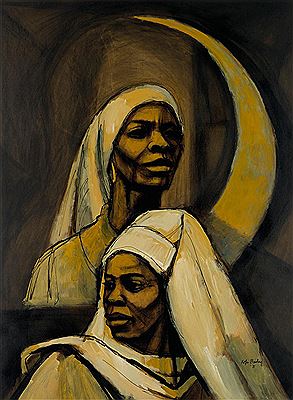 Herman "Kofi" Bailey (also known as H. Kofi Bailey and Kofi X) was an African-American artist. He was best known for his conté and charcoal drawings reflecting of the African-American experience. Bailey was influenced by artists such as Goya, Rico Lebrun, Jacob Lawrence and Charles White. He described himself in 1967 as a "representational" artist rather than "abstract" because his work is committed to the masses who, he feels, "want to see art that deals with man, art which tries to express the varying moods of man; and man is my principal concern."
Born in Chicago, Illinois, Bailey grew up in Los Angeles, California. He received his education from Alabama State College and then attended Howard University where he studied under Alain Locke, Sterling Brown and James A. Porter. He obtained his MFA at the University of Southern California. At Alabama he received commissions for large paintings and murals as a student. He was described as a "black bohemian" at the time, often seen wearing a beret, talking jive, carrying a bottle "in one pocket" and talking about music and art. While living in Atlanta his studio space was located at the Institute of the Black World's second building. He lived at Paschal's Motor Lodge Hotel, where if he was unable to make rent he would trade artwork with one of the Paschal brothers in exchange. Bailey spoke with slurred speech, which was due to his heavy use of drugs and alcohol. Bailey was described as taking pills then drinking, spending his money on "a full pint of scotch" or vodka.
In 1967 Bailey was artist-in-residence at Spelman College which held an exhibition about Bailey's work that was created while he was living in Ghana in 1962-1966.
While living in Ghana he served as an art teacher and the artist-in-residence to Nkrumah until the leader was deposed in 1966. Bailey also covered other areas of the African-American experience such as Black Power, anticolonialism, and African-American civil rights. Black women and children often made frequent appearances as well. These socially aware and often politically charged artworks reflected the racism experienced by Africans and African Americans primarily in the 20th century. The stark contrast of the black inks or charcoals on white paper at times dramatizes the conflicts of blacks and whites. His work is commonly found in civil rights movement art and literature.
While living in Atlanta he created posters for the H. Rap Brown Center, a venue that was frequented by members of the Student Nonviolent Coordinating Committee (SNCC). Eventually he would create posters for and serve as newsletter illustrator for the SNCC. After the Six-Day War, which Israel won, SNCC launched an anti-Zionist campaign featuring anti-Semitic images. Bailey created an illustration featuring an Israeli firing squad shooting a group of Arabs with a caption reading: "This is the Gaza Strip, Palestine, not Dachau, Germany". While some SNCC officers distanced themselves from the article and image, the SNCC's pro-Palestinian stand cut support from many Jewish organizations. Bailey continued to create at times controversial comics for SNCC including depictions of Moshe Dayan, believed by some to be stereotyping of Jewish financial dominance and by others as showing the financial dependencies between the US and Israeli military's.The Palestine Problem, another comic by Bailey during this time, connects United States racial violence, military imperialism in Vietnam and the Arab world, and the Afro-Arab freedom struggle.
Herman "Kofi" Bailey died in 1981 in Atlanta, Georgia.
Sources include:
wikipedia.org