Page loaded successfully. Showing biography for Hans Fredrik Gude.
Hans Fredrik Gude BIOGRAPHY
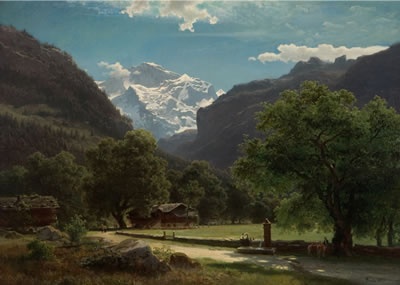
1825 Christiania, Norway - 1903 Berlin, Germany. Known for: Romantic landscape painting, teaching.
Hans Fredrik Gude was a Norwegian romanticist painter and is considered along with Johan Christian Dahl to be one of Norway's foremost landscape painters. He has been called a mainstay of Norwegian... Read full biography
Hans Fredrik Gude was a Norwegian romanticist painter and is considered along with Johan Christian Dahl to be one of Norway's foremost landscape painters. He has been called a mainstay of Norwegian National Romanticism. He is associated with the Düsseldorf School* of painting. Gude's artistic... Read full biography
Hans Fredrik Gude was a Norwegian romanticist painter and is considered along with Johan Christian Dahl to be one of Norway's foremost landscape painters. He has been called a mainstay of Norwegian National Romanticism. He is associated with the Düsseldorf School* of painting. Gude's artistic career was not one marked with drastic change and revolution, but was instead a steady progression that slowly reacted to general trends in the artistic world. Gude's early works are of idyllic,... Read full biography
Hans Fredrik Gude was a Norwegian romanticist painter and is considered along with Johan Christian Dahl to be one of Norway's foremost landscape painters. He has been called a mainstay of Norwegian National Romanticism. He is associated with the Düsseldorf School* of painting. Gude's artistic career was not one marked with drastic change and revolution, but was instead a steady progression that slowly reacted to general trends in the artistic world. Gude's early works are of idyllic, sun-drenched Norwegian landscapes which present a romantic, yet still realistic view of his country. Around 1860 Gude began painting seascapes and other coastal subjects. Gude had difficulty with figure drawing initially and so collaborated with Adolph... Read full biography
Hans Fredrik Gude was a Norwegian romanticist painter and is considered along with Johan Christian Dahl to be one of Norway's foremost landscape painters. He has been called a mainstay of Norwegian National Romanticism. He is associated with the Düsseldorf School* of painting. Gude's artistic career was not one marked with drastic change and revolution, but was instead a steady progression that slowly reacted to general trends in the artistic world. Gude's early works are of idyllic, sun-drenched Norwegian landscapes which present a romantic, yet still realistic view of his country. Around 1860 Gude began painting seascapes and other coastal subjects. Gude had difficulty with figure drawing initially and so collaborated with Adolph Tidemand in some of his painting, drawing the landscape himself and allowing Tidemand to paint the figures. Later Gude would work specifically o... Read full biography
Artist Biography
Biography page for Hans Fredrik Gude ((1825 - 1903)), known for Romantic landscape painting, teaching. Showing 2 biographical entries and 0 sample artworks.
Hans Fredrik Gude - Artist Info
About Hans Fredrik Gude
Biography from the Archives of askART
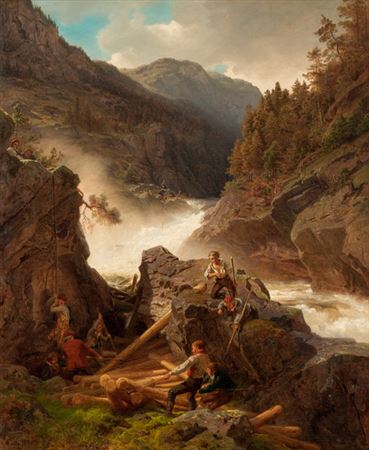 Hans Fredrik Gude was a Norwegian romanticist painter and is considered along with Johan Christian Dahl to be one of Norway's foremost landscape painters. He has been called a mainstay of Norwegian National Romanticism. He is associated with the Düsseldorf School* of painting.
Gude's artistic career was not one marked with drastic change and revolution, but was instead a steady progression that slowly reacted to general trends in the artistic world. Gude's early works are of idyllic, sun-drenched Norwegian landscapes which present a romantic, yet still realistic view of his country. Around 1860 Gude began painting seascapes and other coastal subjects. Gude had difficulty with figure drawing initially and so collaborated with Adolph Tidemand in some of his painting, drawing the landscape himself and allowing Tidemand to paint the figures.
Later Gude would work specifically on his figures while at Karlsruhe, and so began populating his paintings with them. Gude initially painted primarily with oils in a studio, basing his works on studies he had done earlier in the field. However, as Gude matured as a painter he began to paint en plein air and espoused the merits of doing so to his students. Gude would go on to work with watercolors later in life as well as gouache in an effort to keep his art constantly fresh and evolving, and although these were never as well received by the public as his oil paintings, his fellow artists greatly admired them.
Gude spent forty-five years as an art professor and so he played an important roll in the development of Norwegian art by acting as a mentor to three generations of Norwegian artists.Young Norwegian artists flocked to wherever Gude was teaching, first at the Academy of Art in Düsseldorf and later at the School of Art in Karlsruhe. Gude also served as a professor at the Berlin Academy of Art from 1880 to 1901, although he attracted few Norwegians to the Berlin Academy because by this time Berlin had been surpassed in prestige in the eyes of young Norwegian artists by Paris.
Over the course of his lifetime Gude won numerous medals, was inducted as an honorary member in to many art academies, and was awarded the Grand Cross of the Order of St. Olav.
Source:
Wikipedia
http://en.wikipedia.org/wiki/Hans_Gude
* For more in-depth information about these terms and others, see AskART.com Glossary http://www.askart.com/AskART/lists/Art_Definition.aspxBiography from Blomqvist
In 1880, Gude moved with his large family to Berlin, where he was appointed professor at the art academy. He settled in a large three-story villa in central Berlin, with three daughters and a son-in-law. "You would think that living closer to Norway would have a significant influence on the choice of Norwegian subjects; but for the first year, it turned out differently, which had a peculiar reason. I had always, almost without exception, taken my family on study trips because I loved having them around me and believed that summer life outdoors was beneficial for them. In Germany, with good inns everywhere, it had never been difficult, but in Norway, it began to become more challenging as the many children grew up, and thus we settled in Mönchgut on Rügen in 1881 and 1882..." (Dietrichson, p. 125).