Page loaded successfully. Showing biography for Hanson Duvall Puthuff.
Hanson Duvall Puthuff BIOGRAPHY
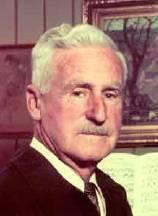
1875 Waverly, Missouri - 1972 Corona del Mar, California. Known for: Desert landscape, portrait and mural painting.
Hanson Puthuff was born in 1875 in Waverly, Missouri. He is primarily remembered for his California landscapes and desert paintings, and his involvement in the Southern California art world in the... Read full biography
Hanson Puthuff was born in 1875 in Waverly, Missouri. He is primarily remembered for his California landscapes and desert paintings, and his involvement in the Southern California art world in the early 20th century. His paintings of rolling hills, canyons, and atmospheric effects of Southern... Read full biography
Hanson Puthuff was born in 1875 in Waverly, Missouri. He is primarily remembered for his California landscapes and desert paintings, and his involvement in the Southern California art world in the early 20th century. His paintings of rolling hills, canyons, and atmospheric effects of Southern California, the Sierras, and desert scenes are widely admired. Puthuff childhood was filled with both uncertainty and strife. He was born to a struggling carpenter, Alonzo Augustus Duvall, and his wife,... Read full biography
Hanson Puthuff was born in 1875 in Waverly, Missouri. He is primarily remembered for his California landscapes and desert paintings, and his involvement in the Southern California art world in the early 20th century. His paintings of rolling hills, canyons, and atmospheric effects of Southern California, the Sierras, and desert scenes are widely admired. Puthuff childhood was filled with both uncertainty and strife. He was born to a struggling carpenter, Alonzo Augustus Duvall, and his wife, Mary Anne Lee. When Puthuff was two, his mother died and he was given to the care of her close friend Elizabeth Stadley Puthuff, a young Civil War widow who supported herself as a seamstress. She became his surrogate mother, and he later assumed her... Read full biography
Hanson Puthuff was born in 1875 in Waverly, Missouri. He is primarily remembered for his California landscapes and desert paintings, and his involvement in the Southern California art world in the early 20th century. His paintings of rolling hills, canyons, and atmospheric effects of Southern California, the Sierras, and desert scenes are widely admired. Puthuff childhood was filled with both uncertainty and strife. He was born to a struggling carpenter, Alonzo Augustus Duvall, and his wife, Mary Anne Lee. When Puthuff was two, his mother died and he was given to the care of her close friend Elizabeth Stadley Puthuff, a young Civil War widow who supported herself as a seamstress. She became his surrogate mother, and he later assumed her name. Puthuff remained close to her, with the exception of a period of eight years, when his father took him at age... Read full biography
Artist Biography
Biography page for Hanson Duvall Puthuff ((1875 - 1972)), known for Desert landscape, portrait and mural painting. Showing 5 biographical entries and 0 sample artworks.
Hanson Duvall Puthuff - Artist Info
About Hanson Duvall Puthuff
Biography from the Archives of askART
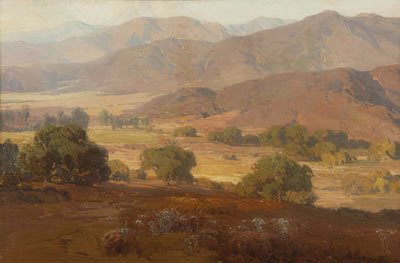 Hanson Puthuff was born in 1875 in Waverly, Missouri. He is primarily remembered for his California landscapes and desert paintings, and his involvement in the Southern California art world in the early 20th century. His paintings of rolling hills, canyons, and atmospheric effects of Southern California, the Sierras, and desert scenes are widely admired.
Puthuff childhood was filled with both uncertainty and strife. He was born to a struggling carpenter, Alonzo Augustus Duvall, and his wife, Mary Anne Lee. When Puthuff was two, his mother died and he was given to the care of her close friend Elizabeth Stadley Puthuff, a young Civil War widow who supported herself as a seamstress. She became his surrogate mother, and he later assumed her name. Puthuff remained close to her, with the exception of a period of eight years, when his father took him at age six to live with various relatives in Kentucky, and later with himself for a short time in Oklahoma.
After studying at the Chicago Art Institute, Puthuff and his foster mother moved to Colorado in 1889. She was responsible for his art training in 1893 at the University of Denver Art School and then the Chicago Academy of Fine Arts. Through friends and relatives she then helped him start a career in commercial art,-first as a mural painter in Peoria, Illinois, and later as a poster and sign painter for an advertising firm in Denver.
He arrived in Los Angeles in 1903, as an established pictorial artist, and soon had a job at five dollars a day. He worked for the next twenty-three years as a commercial artist, primarily painting billboards as well as a theater scene painter. He also was a significant teacher of private art classes. His great love, however, was "plein aire" landscape painting, which he took up full time in 1926.
Easel painting grew quite naturally out of his professional commercial work. When painting billboards, Puthuff would be transported by horse-drawn wagon out to a billboard and deposited for the day. When he and his helpers finished sign painting, they would often set up easels and sketch and paint while they waited for the return of the wagon. When Puthuff first came to California he had been mainly interested in figural painting, but he found this new land so paintable that he concentrated almost exclusively on landscapes from that time on.
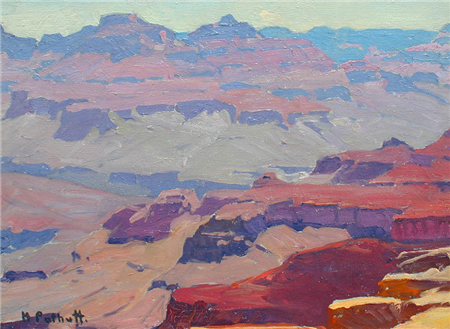
Shortly after leaving commercial art, the Santa Fe Railroad offered Puthuff one of his first commissions. He was asked to paint a series of different views of the Grand Canyon, which the railroad would use for advertising and promotional purposes. These works, Grand Canyon, were shown to the public in a 1927 exhibition in the offices of the railroad. They remained there for many years until their purchase by the Fleischer Museum. Puthuff also painted backgrounds for the Santa Fe Railroad model train exhibits in various cities.
Living in La Canada and Corona del Mar, Puthuff painted desert scenes throughout California and frequently accompanied Edgar Payne on painting trips to Canyon de Chelly in Arizona. He loved the bright colors and open space of Navajo country.
In addition to his lyrical landscapes, which he often painted along the coast south of Los Angeles, in the foothills of the San Gabriel Mountains, and among the desert buttes of the Southwest, Puthuff was responsible for the backgrounds of the habitat groups at the Los Angeles County Museum of History, Science, and Art. This work led to a commission for Puthuff to paint backgrounds for the Theodore Roosevelt Memorial in the American Museum of History in New York. After weeks of work both at Roosevelt's Elk Horn Ranch in North Dakota and in New York, he completed three panoramic dioramas depicting the ranch.
His work is often considered to be stylistically akin to that of William Wendt, although with a wider chromatic spectrum. Puthuff is also particularly identified with the depiction of eucalyptus trees, as are Jean Mannheim, Dana Bartlett, Edgar Payne, and Anna Althea Hills, and Paul Lauritz.
In addition to his own artistic achievements, Puthuff was an activist in the art community. He was partly responsible for the formation of the two most important artists' organizations of the period, the California Art Club and the Art Students League of Los Angeles, which he helped found with Norwegian- born art writer and close friend Antony Anderson, art critic for the Los Angeles Times. Puthuff had introduced study from the nude in his private classes in 1903, and in 1906 these were transferred to the Blanchard building in Los Angeles, and the school later took the name the Art Students League of Los Angeles.
He became associated with a group called the Garvanza Circle, named for the Garvanza district of eastern Los Angeles, which included such artists as Fernand Lungren, Carl Oscar Borg, Maynard Dixon, Granville Redmond, Elmer Wachtel, and others who were inspired by southwestern cultural heritage.
Puthuff's private life spanned two thirty-year long marriages. The first began in 1910, when he married May Longest, a commercial artist and co-worker. They had five children, Lee and Duvall, identical twin boys, and later, Robert, Paul, and Matilda, and the family lived in the Los Angeles area. After May's death, Puthuff married Louise Ashbridge White in 1940, a relationship that lasted until his death thirty-two years later.
He won numerous awards including a Diploma from the Alaska-Yukon Exposition in 1892 and Silver Medals at the Panama-California Exposition in 1915. He was a member of numerous clubs, including the California Art Club, the Laguna Beach Art Association, the Los Angeles Watercolor Society, the Pasadena Society of Artists, the Salmagundi Club of New York, the San Francisco Art Association, and the Southern States Art League.
Hanson Puthuff died May 12, 1972, in Corona del Mar, California.
Sources:
Michael David Zellman, 300 Years of American Art
Donald Hagerty, Canyon de Chelly
Wesley Jessup and Jean Stern, Hanson Puthuff, California Colors
Edan Hughes, Artists in California, 1786-1940Biography from the Archives of askART
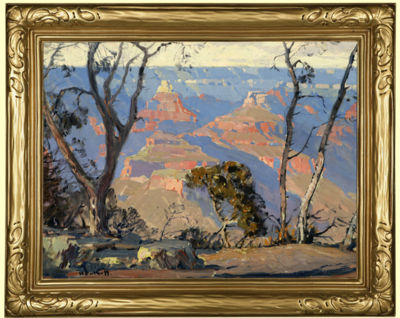 Born in Waverly, Missouri on Aug. 21, 1875, Hanson Puthuff studied at the Art Institute of Chicago before moving to Colorado in 1889 to study at the University of Denver Art School.
He arrived in Los Angeles in 1903 and for 23 years painted billboards for Foster & Kleiser. After 1926, he was able to abandon commercial art and devote full time to fine art and exhibitions.
Puthuff died in Corona del Mar on May 12, 1972. He is nationally famous for his lyric landscapes of the southern California deserts.
Memberships:
Palette & Chisel Club (Chicago); Pasadena Society of Artists; Salmagundi Club; Southern States Art League.
Exhibitions:
Blanchard Gallery (LA), 1906, 1907; Del Monte Art Gallery, 1908-12; Alaska-Yukon Expo (Seattle), 1909; California Art Club, 1912-23; Paris Salon, 1914 (bronze medal); Los Angeles County Museum of Art, 1914, 1917 (solos), 1929; Panama-California Expo (San Diego), 1915 (silver medal); San Francisco Art Association, 1916; California State Fair, 1918 (gold medal), 1919 (silver medal), 1926, 1930; Ten Painters of LA, 1919; Laguna Beach Art Association, 1920-21 (1st prizes); Southwest Museum (LA), 1921 (2nd prize); California Water Color Society, 1921-23; Leonard's Gallery (LA), 1923; Springville (UT) High School, 1924 (1st prize); Painters of the West (LA), 1925 (silver medal), 1927 (gold medal), 1930 (bronze medal); Painters & Sculptors of LA, 1926; Ebell Club (LA), 1927; Pacific Southwest Expo, 1928 (silver medal); Foothill Artists (La Canada), 1936; GGIE, 1939; Whittier AA, 1944; AIC, 1945.
Collections:
Hackley Museum (Muskegon, MI); Pasadena Art Inst.; Laughlin Theatre, Long Beach (murals); CHS; Municipal Collections of Denver and Phoenix; Gardena (CA) High School; Orange Co. (CA) Museum; Fleischer Museum (Scottsdale); LACMA; Irvine (CA) Museum.Biography from American Legacy Fine Arts
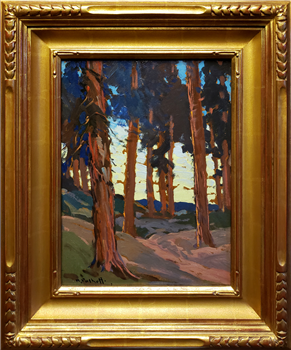 Hanson Duval Puthuff was born on August 21, 1875, in Waverly, Missouri, to Alonzo Augustus Duval and Mary Anne Lee. After his mother’s passing when he was two, his father, unable to care for him alone, entrusted him to Mary’s close friend, Elizabeth Stadley Puthuff, a young Civil War widow working as a seamstress. Elizabeth became Hanson’s surrogate mother, and he later adopted her surname. Although Puthuff was deeply attached to her, they were separated for eight years when, at age six, his father took him to live with various relatives in Kentucky and later with himself briefly in Oklahoma.
Puthuff began his art studies at the Chicago Academy of Fine Arts, established in 1879 and renamed the Art Institute of Chicago three years later. In 1889, he and his foster mother moved to Colorado, where he enrolled at the University of Denver, studying in the Fine Arts Department from 1890 to 1893 under Ida De Steiguer (active 1881–1907). Afterward, he and Elizabeth moved to Peoria, Illinois, where he launched his professional career, creating murals for the city hall and local churches. He later returned to Colorado, working for nine years as a sign painter for a Denver advertising firm.
In 1903, at age twenty-eight, Puthuff moved to Los Angeles to work as a commercial artist and billboard painter for the Wilshire Advertising Company, earning five dollars a day. In 1906, he returned briefly to Chicago, working alongside Victor Higgins (1884–1949) as a set painter at the Sasmun Studio. His commercial work spanned twenty-eight years, providing a steady income that enabled him to pursue his true passion—fine landscape painting. In 1904, Puthuff married Helen Marie Wren. The couple had a son named Wilfrid. The Puthuff’s lived in the Highland Park area of Los Angeles, a neighborhood that was an early hub for artists in Southern California and offered convenient access to the scenic landscapes that inspired his work. Highland Park’s proximity to the Arroyo Seco made it an ideal location for Puthuff and other plein air painters who were captivated by California’s natural beauty. His home and studio in this area allowed him to be part of a vibrant artistic community while staying connected to the landscapes he loved to paint. Helen was a supportive partner throughout her husband’s career.
Although skilled as a figure painter, Puthuff was captivated by California's untouched landscapes, inspiring him to shift his focus to the region’s scenic beauty. Living in Los Angeles, he joined the growing community of plein air artists and became a part of the California Impressionist movement. Hanson Duval Puthuff was a founding member of the California Art Club in 1909, a pivotal organization in promoting the plein air painting tradition and California’s burgeoning art scene. His involvement with the club not only solidified his place among the most respected artists of his time but also connected him with prominent peers, such as Guy Rose, William Wendt, and Jean Mannheim, who collectively shaped the California Impressionist movement. Puthuff frequently exhibited with the California Art Club, where his evocative landscapes received considerable acclaim, underscoring his impact on early 20th-century American art and his lasting influence on California’s artistic heritage.
Puthuff’s work stood out for its loose brushwork and high-key atmospheric light, evoking a strong sense of place. This mastery earned him several prominent public commissions, including his 1915 decorations for Homer Laughlin’s theater in Long Beach, where he collaborated with William Wendt (1865–1946) on murals portraying "The Spirit of California." In 1924, he was commissioned to paint backdrops for the first habitat dioramas at the Los Angeles Museum of History, Science, and Art. He continued painting backgrounds for Santa Fe Railroad model displays across the country until the 1940s and, in 1938, created panoramic scenery for the Theodore Roosevelt Memorial at the American Museum of Natural History in New York.
As a fine artist, Hanson Puthuff received numerous awards for his landscapes, including the Alaska–Yukon–Pacific Exposition in 1909, a bronze medal at the Paris Salon in 1914, and two silver medals from the Panama-California Exposition held in San Diego between January 1, 1915 and January 1, 1917.
Puthuff’s later paintings were mostly of the La Crescenta, La Canada, and Verdugo Hills area around his home, as well as the Eastern Sierra and Arizona deserts. In 1904 he was given his first solo exhibition, and by 1914 the first of several solo museum exhibitions of his work was held at the Los Angeles Museum of History, Science, and Art. He also exhibited throughout the country in national exhibitions. Puthuff was active in local art organizations, helping establish the Painter’s Club of Los Angeles, predecessor of the California Art Club, and the Art Students League of Los Angeles, which he co-founded with his friend Antony Anderson, the first art critic for the Los Angeles Times. Puthuff was also a founding member of the Laguna Beach Art Association, established in 1918, which played a vital role in supporting and promoting California plein air artists.
Hanson Puthuff’s paintings are held in esteemed collections, including those of the Los Angeles County Museum of Art, Laguna Art Museum, Bowers Museum, and the UCI Langson Irvine Museum of California Art. His exceptional diorama backgrounds are still prominently displayed at the Natural History Museum of Los Angeles County, and many of his works are cataloged in the Smithsonian American Art Museum’s inventory. In 2007, the Pasadena Museum of California Art honored his legacy with an exhibition, California Colors: Hanson Puthuff, and republished his autobiography alongside the show. Hanson Duval Puthuff passed away in Corona del Mar on May 12, 1972.
Elaine Adams
Director, American Legacy Fine Arts
Research Sources:
AskART.com
Michael David Zellman, 300 Years of American Art
Donald Hagerty, Canyon de Chelly
Wesley Jessup and Jean Stern, Hanson Puthuff, California Colors
Edan Hughes, Artists in California, 1786-1940
Fabricating Wilderness: The Habitat Dioramas of the Natural History Museum of Los Angeles County edited by Matt Davis
Los Angeles County Museum of Art collections researchBiography from William A. Karges Fine Art - Carmel
 Hanson Puthuff was born in Waverly, Missouri, in 1875. His formal art studies were at the Art Institute of Chicago, and the University of Denver Art School. Puthuff moved to the Los Angeles are in 1903, finding work as a billboard illustrator, a job he would keep for over 20 years.
Concurrently, Puthuff would sketch and paint in his free time, and in 1926, he was able to devote himself entirely to his art. Known as a classic Southern California Plein Air artist, Puthuff exhibited extensively, including shows at the Los Angeles County Museum of Art, the San Francisco Art Association, and the Paris Salon, where he earned a bronze medal.Biography from Helene Halperin (formerly DeRu's Fine Arts)
Hanson Puthuff was born in Waverly, Missouri on August 21, 1875. Puthuff studied at the Art Institute of Chicago before moving to Colorado in 1889 to study at the University of Denver Art School. He arrived in Los Angeles in 1903 and for 23 years worked as a commercial artist painting billboards while painting landscapes in his leisure.
In Southern California, he lived in Eagle Rock, La Crescenta, Corona Del Mar and La Canada. He was a co-founder of the California Art Club and the Laguna Beach Art Association. After 1926 he was able to abandon commercial art and devote full time to fine art and exhibitions. He won dozens of awards including Diploma from the Alaska-Yukon Exposition, 1892, and two Silver medals from the Panama-California Exposition, 1915. He is nationally famous for his lyric interpretations of the Southern California landscapes and deserts.
Puthuff died in Corona Del Mar on May 12, 1972.