Page loaded successfully. Showing biography for Henri Epstein.
Henri Epstein BIOGRAPHY
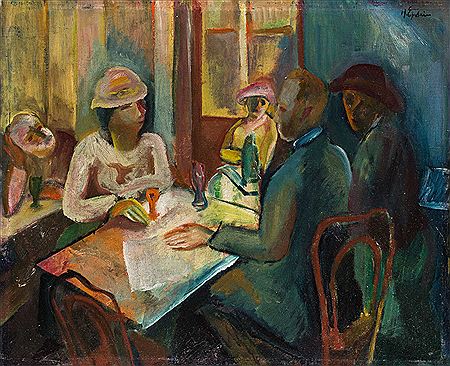
1891 Lodz, Poland - 1944 Auschwitz, Poland. Known for: Modernist, expressionist landscape, still life and figure painting.
Henri Epstein was born in 1891 in Lódz, the son of an antiquarian, and became one of the notable Polish-Jewish painters associated with the École de Paris. He first studied at the private Drawing... Read full biography
Henri Epstein was born in 1891 in Lódz, the son of an antiquarian, and became one of the notable Polish-Jewish painters associated with the École de Paris. He first studied at the private Drawing School of Jakub Kacenbogen in Lódz, and around 1910 continued his training in Munich. In 1913 he... Read full biography
Henri Epstein was born in 1891 in Lódz, the son of an antiquarian, and became one of the notable Polish-Jewish painters associated with the École de Paris. He first studied at the private Drawing School of Jakub Kacenbogen in Lódz, and around 1910 continued his training in Munich. In 1913 he settled permanently in Paris, where he studied at the Académie de la Grande Chaumière and entered the artistic milieu of Montparnasse. There he formed close friendships with Marc Chagall, Amedeo Modigliani,... Read full biography
Henri Epstein was born in 1891 in Lódz, the son of an antiquarian, and became one of the notable Polish-Jewish painters associated with the École de Paris. He first studied at the private Drawing School of Jakub Kacenbogen in Lódz, and around 1910 continued his training in Munich. In 1913 he settled permanently in Paris, where he studied at the Académie de la Grande Chaumière and entered the artistic milieu of Montparnasse. There he formed close friendships with Marc Chagall, Amedeo Modigliani, and Chaim Soutine, becoming part of the vibrant community of émigré artists shaping the Parisian avant-garde. From the early 1920s Epstein exhibited regularly in the Paris Salons. During the 1920s and 1930s he painted extensively en plein air in... Read full biography
Henri Epstein was born in 1891 in Lódz, the son of an antiquarian, and became one of the notable Polish-Jewish painters associated with the École de Paris. He first studied at the private Drawing School of Jakub Kacenbogen in Lódz, and around 1910 continued his training in Munich. In 1913 he settled permanently in Paris, where he studied at the Académie de la Grande Chaumière and entered the artistic milieu of Montparnasse. There he formed close friendships with Marc Chagall, Amedeo Modigliani, and Chaim Soutine, becoming part of the vibrant community of émigré artists shaping the Parisian avant-garde. From the early 1920s Epstein exhibited regularly in the Paris Salons. During the 1920s and 1930s he painted extensively en plein air in Auvergne, Brittany, and Corsica, producing landscapes marked by strong colour, expressive contour, and a lyrical sense of atmosphere. His work refl... Read full biography
Artist Biography
Biography page for Henri Epstein ((1891 - 1944)), known for Modernist, expressionist landscape, still life and figure painting. Showing 5 biographical entries and 0 sample artworks.
Henri Epstein - Artist Info
About Henri Epstein
Name variants
Henri Eipstein, Henryk Epstein
Biography from the Archives of askART
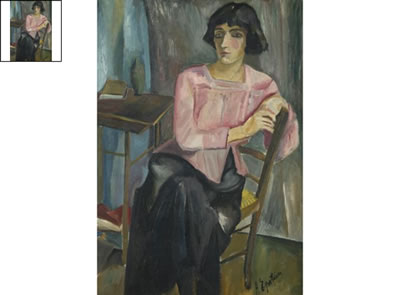 Henri Epstein was born in 1891 in Lódz, the son of an antiquarian, and became one of the notable Polish-Jewish painters associated with the École de Paris. He first studied at the private Drawing School of Jakub Kacenbogen in Lódz, and around 1910 continued his training in Munich. In 1913 he settled permanently in Paris, where he studied at the Académie de la Grande Chaumière and entered the artistic milieu of Montparnasse. There he formed close friendships with Marc Chagall, Amedeo Modigliani, and Chaim Soutine, becoming part of the vibrant community of émigré artists shaping the Parisian avant-garde.
From the early 1920s Epstein exhibited regularly in the Paris Salons. During the 1920s and 1930s he painted extensively en plein air in Auvergne, Brittany, and Corsica, producing landscapes marked by strong colour, expressive contour, and a lyrical sense of atmosphere. His work reflects the influence of Cézanne and the Fauves, while maintaining a personal, introspective character. Although he worked primarily in oil, he also produced watercolours, drawings, and graphic works.
Epstein supported himself in Paris through illustration and by copying old masters, activities that refined his technique and broadened his stylistic vocabulary. His only solo exhibition was held posthumously at Galerie Berri-Raspail in 1946, and after the war his work appeared in numerous group exhibitions devoted to the École de Paris.
In 1944, during the German occupation of France, Epstein was arrested and deported to Auschwitz, where he was murdered. His surviving oeuvre remains an important testament to the artistic vitality of the interwar Paris school and to the cultural legacy of the Polish-Jewish diaspora.Biography from the Archives of askART
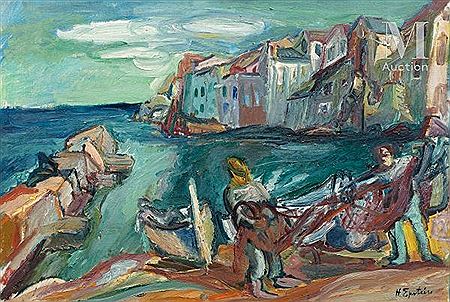 Henri Epstein - Lódz - 1891 - deported to Auschwitz - 1944
Henri Epstein's father was a bookshop owner who died when he was three. His mother raised young Henri and encouraged his encouraged his precocious interest in painting. He studied first at the Jakub Kacenbogen Drawing School in Lodz, then at the Fine Art Academy in Munich until the age of nineteen. In 1912 he first visited Paris, after which time he served in the Polish army.
In 1913 he returned to Paris and became a member of La Ruche until 1938, taking courses at La Grande Chaumiere Academy.* His initially fauvist *style evolved later towards expressionism*.
In 1921, Epstein illustrated Gustave Coquiot's work Vagabondages (Ollendorff) and in 1926 the work Les Rois du Maquis by Pierre Bonardi (André Delpeuch). He most probably participated in the inaugural edition of the Jewish art review Makhmadim, published first by La Ruche and then by La Renaissance, for which he wrote articles in yiddish. Epstein bought a farm near Épernon, which served both as an atelier* and a refuge during the Occupation.
On 23 February 1944, he was arrested in Epernon by three Gestapo agents. Despite the efforts of his friends and his wife (the painter George Dorignac's daughter) he was interned in Drancy on 24 February 1944 and deported on 7 March 1944 on convoy n°69. He was assassinated in Auschwitz.
Source:
"Henri Epstein", Nadien Nieszawer, /www.ecoledeparis.org/artists/view/henri_epstein
* For references for these terms and others, see AskART Glossary http://www.askart.com/AskART/lists/Art_Definition.aspxBiography from Desa Unicum
He studied painting for some time in Munich. Around 1911, he moved permanently to Paris, where he attended one of the art studios in Montparnasse. He was friends with Utrill, Chaim Soutin and Amadeo Modigliani. He exhibited at the Independent Salons (1921-23, 1925, 1928) and at the Autumn Salon in 1921 and the Tuileries Salon in 1927-31. Initially, he was primarily interested in post-impressionism - the synthesisism of Paul Gauguin and Ecole de Pont-Aven. Later he entered the circle of Fauvist painters - André Derain, Maurice Vlaminck and Raoul Dufa, as well as Pablo Picasso and Susanne Valadon.
In the paintings from 1915-20, the influence of Cézanne and cubism is felt, combined with inspiration from fauvism and expressionism. In the 1920s and 1930s, Epstein increasingly dynamized the forms, introduced sharp contrasts in color and chiaroscuro, and sometimes used expressive contours. He painted primarily landscapes, portraits, still lifes, but also genre compositions with peasants, fishermen and women from the underworld.
In 1929-31 Epstein visited Brittany - he stayed in Quiberon and Concarneau - where he painted pictures and watercolors with views of ports and fishermen, as well as "Breton" still lifes with expressively depicted fish, birds and seafood.Biography from Dom Aukcyjny Ostoya
Henry Epstein was born in 1890 in Lódz, Poland. He studied painting for some time in Munich. Around 1911, he moved to Paris permanently, where he attended one of the art studios in Montparnasse. He was friends with Utrill, Chaim Soutin and Amadeo Modigliani. Henri Epstein exhibited at the Independent Salons (1921-23, 1925, 1928) and at the Autumn Salon in 1921 and the Tuileries Salon in 1927-31. Initially, he was primarily interested in post-impressionism, the synthetism of Paul Gauguin and Ecole de Pont-Aven.
Later, he entered the circle of Fauvism painters, André Derain, Maurice Vlaminck and Raoul Dufa, as well as Pablo Picasso and Susanne Valadon. In the paintings from 1915-20, the influences of Cézanne and Cubism are felt, combined with inspiration from Fauvism and Expressionism. In the 1920s and 1930s, Epstein made forms more dynamic, he introduc
Henri Epstein painted mainly landscapes, portraits, and still lifes, but also genre compositions with villagers, fishermen and women from the underworld. In 1929-31 Epstein visited Brittany, he stayed in Quiberon and Concarneau, where he painted pictures and watercolors with views of ports and fishermen, as well as "Breton" still lifes with expressively depicted fish, birds and seafood.Biography from Sopocki Dom Aukcyjny
Henri Epstein, the son of a Lódz antiquarian, studied in Munich before settling in Paris in 1913. He painted landscapes in various regions of France and exhibited at the Paris Salons. His work was influenced by Cézanne and the Fauvists. Epstein's only solo exhibition was held posthumously in 1946 at the Galerie Berri-Raspail in Paris. Tragically, he died in the Auschwitz concentration camp in 1944.