Page loaded successfully. Showing biography for Henri Fantin-Latour.
Henri Fantin-Latour BIOGRAPHY
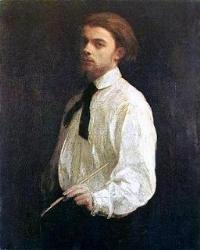
1836 Grenoble, France - 1904 Bure, Orne, Basse-Normandie. Known for: Still life, allegory and figure painting, lithography.
Born to a Russian mother and a French father, who was a portrait painter and drawing teacher, Henri Fantin-Latour became a well known French painter and lithographer in the classical tradition of the... Read full biography
Born to a Russian mother and a French father, who was a portrait painter and drawing teacher, Henri Fantin-Latour became a well known French painter and lithographer in the classical tradition of the Old Masters. He moved with his family to Paris from Grenoble in1841 and early took lessons from his... Read full biography
Born to a Russian mother and a French father, who was a portrait painter and drawing teacher, Henri Fantin-Latour became a well known French painter and lithographer in the classical tradition of the Old Masters. He moved with his family to Paris from Grenoble in1841 and early took lessons from his father, Théodore Fantin-Latour. This instruction was followed by short enrollment at the Ecole des Beaux Arts and then work in the studio of Gustave Courbet. From 1853 for about 12 years, he made his... Read full biography
Born to a Russian mother and a French father, who was a portrait painter and drawing teacher, Henri Fantin-Latour became a well known French painter and lithographer in the classical tradition of the Old Masters. He moved with his family to Paris from Grenoble in1841 and early took lessons from his father, Théodore Fantin-Latour. This instruction was followed by short enrollment at the Ecole des Beaux Arts and then work in the studio of Gustave Courbet. From 1853 for about 12 years, he made his living by copying Old Master paintings at the Louvre, where he made the acquaintance of Edgar Degas, Edouard Manet and Berthe Morisot. He became close friends with James McNeill Whistler and with Whistler and Alphonse Legros, formed the Société des... Read full biography
Born to a Russian mother and a French father, who was a portrait painter and drawing teacher, Henri Fantin-Latour became a well known French painter and lithographer in the classical tradition of the Old Masters. He moved with his family to Paris from Grenoble in1841 and early took lessons from his father, Théodore Fantin-Latour. This instruction was followed by short enrollment at the Ecole des Beaux Arts and then work in the studio of Gustave Courbet. From 1853 for about 12 years, he made his living by copying Old Master paintings at the Louvre, where he made the acquaintance of Edgar Degas, Edouard Manet and Berthe Morisot. He became close friends with James McNeill Whistler and with Whistler and Alphonse Legros, formed the Société des Trois. In 1859, at the invititation of Whistler, he visited him in London and with th... Read full biography
Artist Biography
Biography page for Henri Fantin-Latour ((1836 - 1904)), known for Still life, allegory and figure painting, lithography. Showing 2 biographical entries and 0 sample artworks.
Henri Fantin-Latour - Artist Info
About Henri Fantin-Latour
Name variants
Henri Fantin Latour, Ignace Henri Latour
Biography from the Archives of askART
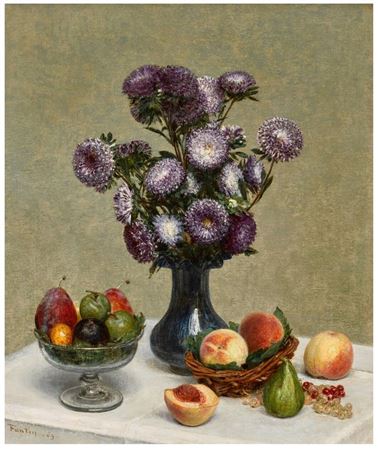 Born to a Russian mother and a French father, who was a portrait painter and drawing teacher, Henri Fantin-Latour became a well known French painter and lithographer in the classical tradition of the Old Masters.
He moved with his family to Paris from Grenoble in1841 and early took lessons from his father, Théodore Fantin-Latour. This instruction was followed by short enrollment at the Ecole des Beaux Arts and then work in the studio of Gustave Courbet. From 1853 for about 12 years, he made his living by copying Old Master paintings at the Louvre, where he made the acquaintance of Edgar Degas, Edouard Manet and Berthe Morisot. He became close friends with James McNeill Whistler and with Whistler and Alphonse Legros, formed the Société des Trois.
In 1859, at the invititation of Whistler, he visited him in London and with the influence of him plus Alphonse Legros and engraver Edwin Edwards, he became a part of the sophisticated art society of London.
In 1861 and 1862, he first exhibited at the Paris Salon. He had close friendships with Impressionists but did not participate in their exhibitions nor agree with their theories. His style was precise and realistic, and he was a great admirer of the Romantics including composer Richard Wagner, whose music he illustrated with lithographs.
Fantin-Latour married Victoria Dubourg, also a painter, in 1876, and they spent their summers on her family's estate at Buré, Orne in Basse-Normanie, the place of his death.
Source:
http://www.abcgallery.com/F/fantin-latour/fantin-latourbio.html
http://www.ibiblio.org/wm/paint/auth/fantin-latour/
http://en.wikipedia.org/wiki/Henri_Fantin-LatourBiography from Anderson Galleries, Inc.
At the age of ten, Henri Fantin-Latour began painting with his father, Théodore Fantin-Latour (1805-1875). In 1850, he left Grenoble and moved to Paris to study under Horace Lecoq de Boisbaudran, an innovative and non-traditional instructor who developed and published his own unique teaching method based on painting and drawing from memory. Fantin-Latour studied with him for six years before attending the École des Beaux-Arts for less than a year in 1854.
Encouraged by the renowned J.A.M. Whistler, whom he met in 1858 at the Louvre, Fantin-Latour made several trips to London from 1859 to 1881, where he exhibited at the Royal Academy. London collectors appreciated his still lifes, and he began accepting numerous portrait commissions from English patrons.
In an effort to become better known in France, Fantin-Latour also exhibited with his friend Edouard Manet and future impressionists Jean Renoir and Claude Monet. Unlike the realists and the impressionists, Fantin did not paint out of doors, as he preferred literary subjects, still lifes, and portraits that could be painted in his studio. In addition to portraits and still lifes, he made numerous paintings, and more than 150 prints that were fantasy works and dream visions, paving the way for symbolist artists. These works were inspired by allegorical and mythological subjects as well as motivated by contemporary Romantic German composers such as Schumann, Berlioz, and Wagner.
In November 1901, Fantin-Latour wrote: "Never again flowers or portraits. I amuse myself painting whatever comes to mind." The present picture, which has been dated to 1902, is an example of the late imaginative works that the artist—freed from the necessity of painting portraits or commercial still-lifes—made at the end of his career. They were distinctive for their loose, spontaneous execution and delicate harmonies of color, in addition to their fantastical subject matter.