Page loaded successfully. Showing biography for Henry Perlee Parker.
Henry Perlee Parker BIOGRAPHY
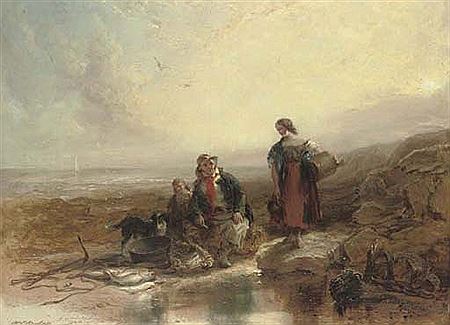
1795 Plymouth Dock, now Devonport, England - 1873. Known for: Landscape and genre painting.
One of the best-known painters working in north-east England during the early nineteenth century, Henry Perlee Parker contributed greatly to the development of the region’s cultural life. While... Read full biography
One of the best-known painters working in north-east England during the early nineteenth century, Henry Perlee Parker contributed greatly to the development of the region’s cultural life. While producing a variety of portraits and genre subjects, he became synonymous with scenes of smuggling life.... Read full biography
One of the best-known painters working in north-east England during the early nineteenth century, Henry Perlee Parker contributed greatly to the development of the region’s cultural life. While producing a variety of portraits and genre subjects, he became synonymous with scenes of smuggling life. Henry Perlee Parker was born at Plymouth Dock (now Devonport), Devon on 15 March 1795. He was the son of Robert Parker, a teacher of marine and mechanical drawing to the Royal Navy, who has also been... Read full biography
One of the best-known painters working in north-east England during the early nineteenth century, Henry Perlee Parker contributed greatly to the development of the region’s cultural life. While producing a variety of portraits and genre subjects, he became synonymous with scenes of smuggling life. Henry Perlee Parker was born at Plymouth Dock (now Devonport), Devon on 15 March 1795. He was the son of Robert Parker, a teacher of marine and mechanical drawing to the Royal Navy, who has also been described as ‘a painter, carver and gilder’ (Wood 1978, p 356). Though he worked briefly as both a tailor and a coachman, Parker soon turned to art, painting portraits and producing drawings for his father’s pupils to copy. In about 1813, he was... Read full biography
One of the best-known painters working in north-east England during the early nineteenth century, Henry Perlee Parker contributed greatly to the development of the region’s cultural life. While producing a variety of portraits and genre subjects, he became synonymous with scenes of smuggling life. Henry Perlee Parker was born at Plymouth Dock (now Devonport), Devon on 15 March 1795. He was the son of Robert Parker, a teacher of marine and mechanical drawing to the Royal Navy, who has also been described as ‘a painter, carver and gilder’ (Wood 1978, p 356). Though he worked briefly as both a tailor and a coachman, Parker soon turned to art, painting portraits and producing drawings for his father’s pupils to copy. In about 1813, he was commissioned by C T Gilbert to illustrate his Historical Survey of the County of Cornwall (1815), and traveled... Read full biography
Artist Biography
Biography page for Henry Perlee Parker ((1795 - 1873)), known for Landscape and genre painting. Showing 2 biographical entries and 0 sample artworks.
Henry Perlee Parker - Artist Info
About Henry Perlee Parker
Biography from the Archives of askART
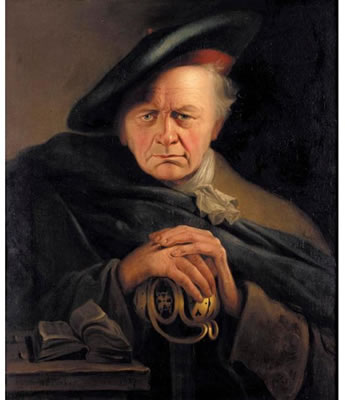 One of the best-known painters working in north-east England during the early nineteenth century, Henry Perlee Parker contributed greatly to the development of the region’s cultural life. While producing a variety of portraits and genre subjects, he became synonymous with scenes of smuggling life.
Henry Perlee Parker was born at Plymouth Dock (now Devonport), Devon on 15 March 1795. He was the son of Robert Parker, a teacher of marine and mechanical drawing to the Royal Navy, who has also been described as ‘a painter, carver and gilder’ (Wood 1978, p 356). Though he worked briefly as both a tailor and a coachman, Parker soon turned to art, painting portraits and producing drawings for his father’s pupils to copy. In about 1813, he was commissioned by C T Gilbert to illustrate his Historical Survey of the County of Cornwall (1815), and traveled with him through Cornwall in order to make preparatory drawings. This gave him the opportunity to see paintings in the private collections of county families.
In 1815, Parker married a Suffolk-born woman at Maker, Cornwall, and returned to Plymouth to establish himself as a portrait painter. However, while his work was admired, little of it sold, so he decided to try his luck in Sunderland, Co Durham, where he and his wife were able to stay with relatives. Initially, he gave drawing lessons. Settling in Newcastle upon Tyne before the end of the year, Parker developed as one of the best-known artists in north-east England during the following quarter of a century. He made his name with a portrait of George Gray, a local fruit painter, and the group portrait, Principal Eccentric Characters of Newcastle, selling the latter to Charles John Brandling, the local member of parliament. As a result, he received many prestigious commissions, and was able to move into a house in one of the town’s most fashionable streets.
Parker engaged fully in Newcastle’s artistic life, taking on a number of pupils and befriending some significant local artists. Most notable among these was Thomas Miles Richardson, with whom he founded two exhibiting societies: the Northumberland Institution for the Promotion of the Fine Arts (1822) and the Northern Academy of Arts (1828). He also gained a wider reputation, exhibiting in London, at the Royal Academy of Arts (from 1817), the British Institution (from1822), the Society of British Artists (from 1827) and the New Society of Painters in Water Colors; and also in Carlisle and Edinburgh (both1823).
Parker became so well known for his many smuggling subjects that he was given the nickname ‘Smuggler Parker’. However, he painted a wide variety of genre scenes; these included the famous William and Grace Darling Going to Rescue the Forfarshire Survivors (1838, in collaboration with the Newcastle artist, John Wilson Carmichael) and the Historical Wesleyan Centenary Picture, Representing the Rescue of the Founder of Methodism… (1839). The second of these was produced in anticipation of the John Wesley conference held in Newcastle in 1840, and proved so popular that he was offered the post of drawing master at Wesley College, Sheffield. Accepting the position, he moved to Sheffield with his family.
During his time at Wesley College, Parker continued to take private pupils, and to produce and exhibit his own work. He also became increasingly absorbed in plans to establish a School of Design for Sheffield. However, when it was finally established in 1845, he was not offered a post at the school. His wife having died in the previous year, he became increasingly disillusioned with the town and moved to London in 1847.
His son, Raphael Hyde Parker, succeeded him as drawing master at Wesley College while still in his teens, and exhibited at the Society of British Artists and the Royal Academy.
Following his move to London, Parker remarried. He continued to exhibit his work, but struggled to make a living, and died in poverty at his home – 1 Blenheim Villas, Goldhawk Road, Shepherd’s Bush – on 9 November 1873.
His work is represented in numerous public collections, including the Grace Darling Museum (Bamburgh) and Tyne & Wear Museums. The manuscript, ‘An artist’s narrative’, is held by Newcastle Central Library.
Source:
http://www.chrisbeetles.com/artists/Biography from the Archives of askART
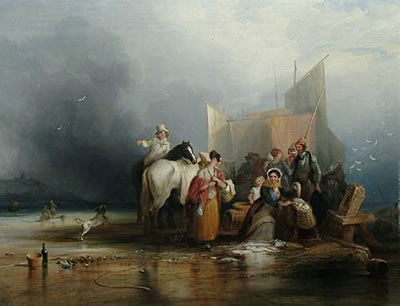 Henry Perlee Parker (1795 - 1873) - Portrait, genre, landscape and marine artist in oil and watercolour. Born in Devonport son of a woodcarver and gilder. He became a professional painter in 1814 settling in Plymouth. He moved to stay with relatives in Sunderland in the hope that work would be more forthcoming in the North. He later moved to Newcastle where he stayed for over quarter of a century (1815-1841). He quickly established himself as one of the senior artists of the region and became friends with many of the leading artists of the time including Thomas Bewick, TM Richardson snr. He exhibited 23 works at the RA
Source:
http://www.johnnicholsonfineart.co.uk/