Page loaded successfully. Showing biography for Hugo Scheiber.
Hugo Scheiber BIOGRAPHY
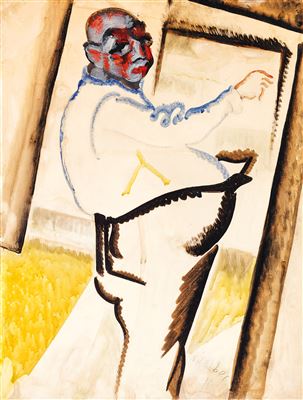
1873 Budapest, Hungary - 1950. Known for: Female figure and portrait painting.
Hugó Scheiber was born in Budapest in 1873. At the age of eight, he moved with his family from Budapest to Vienna. In 1898, to help support his family after they had returned to Budapest. He started... Read full biography
Hugó Scheiber was born in Budapest in 1873. At the age of eight, he moved with his family from Budapest to Vienna. In 1898, to help support his family after they had returned to Budapest. He started working during the day, attending painting classes at the Commercial Art School in the evening. In... Read full biography
Hugó Scheiber was born in Budapest in 1873. At the age of eight, he moved with his family from Budapest to Vienna. In 1898, to help support his family after they had returned to Budapest. He started working during the day, attending painting classes at the Commercial Art School in the evening. In 1900, he completed his studies. Scheiber showed an early interest in German Expressionism and Futurism. In 1915 he met Marinetti, who invited him to join the Futurist movement. Because Scheiber's... Read full biography
Hugó Scheiber was born in Budapest in 1873. At the age of eight, he moved with his family from Budapest to Vienna. In 1898, to help support his family after they had returned to Budapest. He started working during the day, attending painting classes at the Commercial Art School in the evening. In 1900, he completed his studies. Scheiber showed an early interest in German Expressionism and Futurism. In 1915 he met Marinetti, who invited him to join the Futurist movement. Because Scheiber's paintings conflicted with academic style of the Hungarian art establishment, his work was virtually ignored in his own country. In 1919, he and his friend Béla Kádár held an exhibition organized by Hévesy in Vienna, which was a great success, so much so... Read full biography
Hugó Scheiber was born in Budapest in 1873. At the age of eight, he moved with his family from Budapest to Vienna. In 1898, to help support his family after they had returned to Budapest. He started working during the day, attending painting classes at the Commercial Art School in the evening. In 1900, he completed his studies. Scheiber showed an early interest in German Expressionism and Futurism. In 1915 he met Marinetti, who invited him to join the Futurist movement. Because Scheiber's paintings conflicted with academic style of the Hungarian art establishment, his work was virtually ignored in his own country. In 1919, he and his friend Béla Kádár held an exhibition organized by Hévesy in Vienna, which was a great success, so much so that the Budapest Art Museum purchased two of his drawings. In 1920, Scheiber returned to V... Read full biography
Artist Biography
Biography page for Hugo Scheiber ((1873 - 1950)), known for Female figure and portrait painting. Showing 3 biographical entries and 0 sample artworks.
Hugo Scheiber - Artist Info
About Hugo Scheiber
Name variants
Hugo Sheiber
Biography from Papillon Gallery
Hugó Scheiber was born in Budapest in 1873. At the age of eight, he moved with his family from Budapest to Vienna.
In 1898, to help support his family after they had returned to Budapest. He started working during the day, attending painting classes at the Commercial Art School in the evening. In 1900, he completed his studies.
Scheiber showed an early interest in German Expressionism and Futurism. In 1915 he met Marinetti, who invited him to join the Futurist movement. Because Scheiber's paintings conflicted with academic style of the Hungarian art establishment, his work was virtually ignored in his own country. In 1919, he and his friend Béla Kádár held an exhibition organized by Hévesy in Vienna, which was a great success, so much so that the Budapest Art Museum purchased two of his drawings.
In 1920, Scheiber returned to Vienna. A turning point in his career came in 1921 when Herwarth Walden, founder of Germany's leading avant-garde periodical, Der Sturm, and of the Der Sturm Gallery in Berlin, became interested in Scheiber's work. His paintings soon appeared regularly in Walden's magazine. Exhibitions of his work followed in London, Rome, La Paz, and New York.
Another turning point came in 1926, with the New York exhibition of the Société Anonyme, organized by Katherine Dreier. Important avant-garde artists from more than twenty-three countries were represented. Scheiber was invited by Marinette to participate in the great meeting of the Futrists held in Rome in 1933, where he was
received with great enthusiasm.
Scheiber's focus on cafe life is exemplified in a number of works illustrated in Schelgl's Hugo Scheiber, Leben und Werk. His humorous and lively drawings and paintings of dancers, acrobats, singers, and musicians are among his classic works and always elicit a positive response.
Scheiber's work has been shown in many important exhibitions since 1945, including: "The Nell Walden Collection" at the Kunsthaus, Zurich (1945), Kunsthaus Aarau (1957), and Kunstmuseum, Bern (1967); "Collection of the Société Anonyme," Yale University Art Gallery, New Haven (1950); "Paris-Berlin 1900-1930," Centre Georges Pompidou, Paris (1978); "l'Art en Hongrie, 1905-1930," Musée d'Art et l'Industrie, St. Etienne (1980), and Musée d'Art Moderne de la Ville de Paris (1981).
Scheiber's work was represented in the exhibition, "Futurismo & Futurismi," organized by Pontus Hulten at the Palazzo Grassi in Venice in 1986.Biography from Auctionata
Hugo Scheiber was born in Budapest, Hungary in 1873. Scheiber worked as a sign painter. From 1898 to 1900, he attended the School of Applied Arts in Budapest. His early works are based on Impressionism.
In the 1920's, he went to Berlin and came to terms with Futurism and Expressionism. Thematically, he dealt mainly with portraits, life in the big city, and the world of cabaret.
His works were shown at the Galerie Der Sturm, and published in the same named journal. In 1926, his paintings were shown in the exhibition ‘Société Anonyme’ in New York. In the 1930's, he oriented his work increasingly towards Art Deco.
Hugo Scheiber returned to Budapest in 1939, where he died in 1950. Scheiber's work is represented in numerous exhibitions of Hungarian avant-garde and renowned collections. These include the Hungarian National Gallery, and the Janus Pannonius Muzeum in Pecs.Biography from Auktionshaus Schwab
Hugo Scheiber was a Hungarian Expressionist painter known for his unique style and portrayal of anonymous figures in his artwork. Born in Hungary, Scheiber initially worked as a sign painter before studying at the School of Applied Arts in Budapest. Despite his negative attitude towards academic art, he gained recognition in the art world through his friendship with Béla Kádár. Scheiber had several exhibitions between 1924-1930, showcasing his work alongside renowned artists like Kádár and László Moholy-Nagy. One of his recurring motifs was the representation of anonymous individuals, as seen in his painting 'Man with House'.