Page loaded successfully. Showing biography for Isaac Ilyitch Levitan.
Isaac Ilyitch Levitan BIOGRAPHY
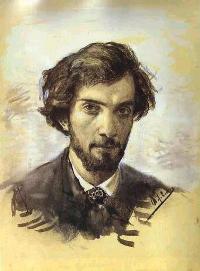
1860 Vibarty, Lithuania - 1900 Moscow Russia. Known for: Landscape and waterscape painting-snowscenes.
Famous for his ability to capture and convey the ineffable charm of the Russian landscape, Isaak Levitan was born in 1860 in Vibarty, Lithuania. Orphaned by the age of eighteen, Levitan became close... Read full biography
Famous for his ability to capture and convey the ineffable charm of the Russian landscape, Isaak Levitan was born in 1860 in Vibarty, Lithuania. Orphaned by the age of eighteen, Levitan became close friends with Anton Chekhov, spending many nights with the Russian author and his family. Chekhov... Read full biography
Famous for his ability to capture and convey the ineffable charm of the Russian landscape, Isaak Levitan was born in 1860 in Vibarty, Lithuania. Orphaned by the age of eighteen, Levitan became close friends with Anton Chekhov, spending many nights with the Russian author and his family. Chekhov would later satirize his friend in his play The Seagull as the dilettante artist Ryabovsky. Levitan attended the Moscow School of Painting, Sculpture, and Architecture from 1873-1885. While there, he... Read full biography
Famous for his ability to capture and convey the ineffable charm of the Russian landscape, Isaak Levitan was born in 1860 in Vibarty, Lithuania. Orphaned by the age of eighteen, Levitan became close friends with Anton Chekhov, spending many nights with the Russian author and his family. Chekhov would later satirize his friend in his play The Seagull as the dilettante artist Ryabovsky. Levitan attended the Moscow School of Painting, Sculpture, and Architecture from 1873-1885. While there, he studied under many famous names including Vasily Perov (1832-82), Alexei Savrasov (1830-97), and Vasily Perov (1844-1927). The meeting of Alexei Savrasov proved to be prophetic for Levitan. The Russian landscape master fired up the impressionable... Read full biography
Famous for his ability to capture and convey the ineffable charm of the Russian landscape, Isaak Levitan was born in 1860 in Vibarty, Lithuania. Orphaned by the age of eighteen, Levitan became close friends with Anton Chekhov, spending many nights with the Russian author and his family. Chekhov would later satirize his friend in his play The Seagull as the dilettante artist Ryabovsky. Levitan attended the Moscow School of Painting, Sculpture, and Architecture from 1873-1885. While there, he studied under many famous names including Vasily Perov (1832-82), Alexei Savrasov (1830-97), and Vasily Perov (1844-1927). The meeting of Alexei Savrasov proved to be prophetic for Levitan. The Russian landscape master fired up the impressionable artist's imagination, encouraging him to work outside and study nature at first hand. Savr... Read full biography
Artist Biography
Biography page for Isaac Ilyitch Levitan ((1860 - 1900)), known for Landscape and waterscape painting-snowscenes. Showing 1 biographical entries and 0 sample artworks.
Isaac Ilyitch Levitan - Artist Info
About Isaac Ilyitch Levitan
Name variants
Isaak Iljitsch Lewitan
Biography from LewAllen Galleries
Famous for his ability to capture and convey the ineffable charm of the Russian landscape, Isaak Levitan was born in 1860 in Vibarty, Lithuania. Orphaned by the age of eighteen, Levitan became close friends with Anton Chekhov, spending many nights with the Russian author and his family. Chekhov would later satirize his friend in his play The Seagull as the dilettante artist Ryabovsky.
Levitan attended the Moscow School of Painting, Sculpture, and Architecture from 1873-1885. While there, he studied under many famous names including Vasily Perov (1832-82), Alexei Savrasov (1830-97), and Vasily Perov (1844-1927). The meeting of Alexei Savrasov proved to be prophetic for Levitan. The Russian landscape master fired up the impressionable artist's imagination, encouraging him to work outside and study nature at first hand. Savrasov also passed on to Levitan his admiration for the artists of the Barbizon School.
As an artist, Levitan sought to suggest a spiritual dimension in the natural scene, to reveal its character and portray its moods, often betraying an indisputable yet captivating vein of melancholy in the Russian landscape. While a large number of his paintings reference man's presence and toil on the land, nature is always the subject of Levitan's compositions. At times it appears ready to intimidate or overwhelm humankind; at others, it is peaceful and benevolent.
Following a trip down the Volga River in 1887, Levitan began painting what are known as his "mood landscapes," successors to the lyrical landscape, which represented a turning back to nature in the Russian psyche. His mature style is characterized by simple compositions, a delicate, subtle tonality, and careful selection of motifs, as well as, confident and economic brushstrokes.
A member of The Association for Traveling Exhibitions, also known as the Wanderers, Levitan showed regularly in exhibitions from 1884 before being elected a full member in 1891. Six years later, he would also be elected to the Munich Secession, showing with the group in 1896, 1898, and 1899.
In 1898, he accepted a position as head of the landscape department at the Moscow School of Painting, a position formally held by his mentor Alexei Savrasov. His work, which was the subject of a major retrospective in Moscow in 1938, can be found in many international institutions including the State Russian Museum, the Ashmolean Museum at the University of Oxford, the National Gallery of Armenia, and the Tretyakov Gallery.
Beloved by the Russian people, his body was re-interred in 1941 in the Novodevichy Cemetery in Moscow alongside Anton Chekhov.