Page loaded successfully. Showing biography for Jack Tworkov.
Jack Tworkov BIOGRAPHY
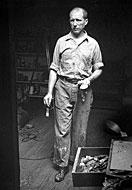
1900 Biala, Poland - 1982 Provincetown, Massachusetts. Known for: Cubist and geometric expressionist painting.
Jack Tworkov (8/15/1900 - 9/4/1982). A literate man uncertain whether to become a poet or painter, Jack Tworkov became an Abstract Expressionist who is known for that style modified with gridlike... Read full biography
Jack Tworkov (8/15/1900 - 9/4/1982). A literate man uncertain whether to become a poet or painter, Jack Tworkov became an Abstract Expressionist who is known for that style modified with gridlike restraint of forms and low-key color. He was also an art educator. From 1963 to 1969, he was Chair of... Read full biography
Jack Tworkov (8/15/1900 - 9/4/1982). A literate man uncertain whether to become a poet or painter, Jack Tworkov became an Abstract Expressionist who is known for that style modified with gridlike restraint of forms and low-key color. He was also an art educator. From 1963 to 1969, he was Chair of the Art Department at Yale University, and he also held teaching positions at Queens College, 1948 to 1951; Black Mountain College, summer of 1952; Pratt Institute, 1955 to 1958; 1972, and American... Read full biography
Jack Tworkov (8/15/1900 - 9/4/1982). A literate man uncertain whether to become a poet or painter, Jack Tworkov became an Abstract Expressionist who is known for that style modified with gridlike restraint of forms and low-key color. He was also an art educator. From 1963 to 1969, he was Chair of the Art Department at Yale University, and he also held teaching positions at Queens College, 1948 to 1951; Black Mountain College, summer of 1952; Pratt Institute, 1955 to 1958; 1972, and American Academy in Rome. Excepting for temporary periods of time, he lived primarily in New York City and Provincetown, Massachusetts. At Yale, where he was Visiting Professor of Art from 1961-1963, and Department Chair from 1963-1969, he was stirred by... Read full biography
Jack Tworkov (8/15/1900 - 9/4/1982). A literate man uncertain whether to become a poet or painter, Jack Tworkov became an Abstract Expressionist who is known for that style modified with gridlike restraint of forms and low-key color. He was also an art educator. From 1963 to 1969, he was Chair of the Art Department at Yale University, and he also held teaching positions at Queens College, 1948 to 1951; Black Mountain College, summer of 1952; Pratt Institute, 1955 to 1958; 1972, and American Academy in Rome. Excepting for temporary periods of time, he lived primarily in New York City and Provincetown, Massachusetts. At Yale, where he was Visiting Professor of Art from 1961-1963, and Department Chair from 1963-1969, he was stirred by questions of the interrelationship of psychology, education, political history and art creativity and, as a result, instigated cross... Read full biography
Artist Biography
Biography page for Jack Tworkov ((1900 - 1982)), known for Cubist and geometric expressionist painting. Showing 4 biographical entries and 0 sample artworks.
Jack Tworkov - Artist Info
About Jack Tworkov
Biography from the Archives of askART
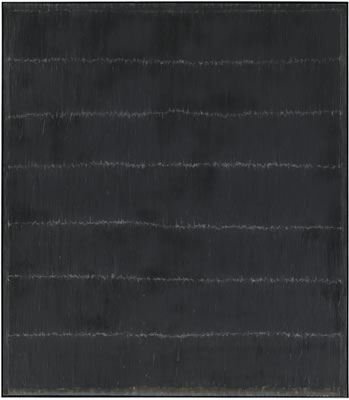 Jack Tworkov (8/15/1900 - 9/4/1982)
A literate man uncertain whether to become a poet or painter, Jack Tworkov became an Abstract Expressionist who is known for that style modified with gridlike restraint of forms and low-key color. He was also an art educator. From 1963 to 1969, he was Chair of the Art Department at Yale University, and he also held teaching positions at Queens College, 1948 to 1951; Black Mountain College, summer of 1952; Pratt Institute, 1955 to 1958; 1972, and American Academy in Rome. Excepting for temporary periods of time, he lived primarily in New York City and Provincetown, Massachusetts.
At Yale, where he was Visiting Professor of Art from 1961-1963, and Department Chair from 1963-1969, he was stirred by questions of the interrelationship of psychology, education, political history and art creativity and, as a result, instigated cross-disciplinary study. Among the future 'big-name' artists he mentored were Jennifer Bartlet, Robert Mangold, Chuck Close and Nancy Graves.
Tworkov was born in Biala, Poland, and at the age of thirteen immigrated to New York City where in 1928, he became a US citizen. He studied at Columbia University from 1920 to 1923, majoring in English. He left Columbia to attend the National Academy of Design from 1923 to 1925, and from 1925 to 1926,at the Art Students League. During this period, he did landscapes, still lifes, portraits, and figure studies that show the influence of European modernism, especially the paintings of Paul Cezanne.
From 1935 to 1941, Tworkov worked in the Easel Division of the WPA Federal Art Project, and by the 1940s was deeply involved in Abstract Expressionism with work characterized by broad, spontaneous brush strokes. He loved the camaraderie of painting, especially with Karl Knaths, Franz Kline, and Willem DeKooning, the latter with whom he had an adjoining studio from 1948 to 1953. However, in the early 1940s, his career like that of so many was interrupted by military service, which he served as a tool designer.
In 1958, jack Tworkov established a permanent studio in Provincetown, Massachusetts, and worked there from May to November until his death in 1977. In 1963, as Chair of the Yale Art Department, he became close to Josef Albers whose Geometric Abstraction influenced Tworkov's own style of small, measured brush strokes. He was determined to subvert his individuality into a coherent, measured system, which meant he was much less spontaneous than most of his peer Abstract Expressionists.
Sources:
Matthew Biagell, Dictionary of American Art
Michael David Zellman, 300 Years of American Art
Marika Herskovic, Editor, American Abstract Expressionism of the 1950s
Jason Andrew, Archivist of the Estate of Jack Tworkow, "Letters", ARTnews, January 2007Biography from Hollis Taggart Galleries
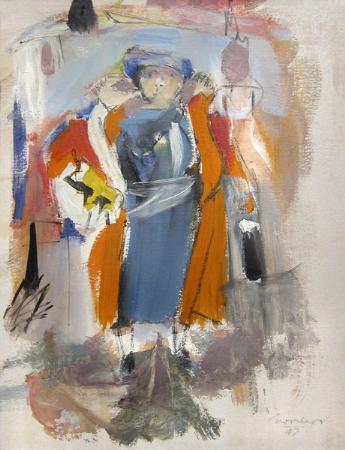 Polish-born painter Jack Tworkov made his mark as a leading Abstract Expressionist, though he painted in other styles during his long career. Born in 1900, he studied English at Columbia University and considered becoming a poet before turning his attention to art. He enrolled at the National Academy of Design from 1923 to 1925, then took classes at the Art Students League.
Between 1935 and 1941, Tworkov worked for the WPA and began making connections with other future Abstract Expressionists including Willem de Kooning. As a member of the Eighth Street Club, a group of New York artists who began meeting regularly in 1951, Tworkov was a key proponent of abstraction. In this heady atmosphere, artists such as Tworkov, de Kooning, and Franz Kline discussed and debated their views on art.
Scholars have identified two distinct periods in Tworkov's Abstract Expressionist oeuvre—one occurring from approximately 1945 to 1954, and another beginning in 1954. The first phase is marked by a sensual and lyrical sense of line and abstract figuration. Loaded brushstrokes move across the surface of these gestural paintings, enlivening the picture plane with pigment and texture.
Tworkov's second period of Abstract Expressionist work coincided with his withdrawal from the Eighth Street Club. Believing the group had drifted away from talk of art, he renewed his interest in theory through teaching, first in part-time positions and later as chairman of the Art Department at Yale University. Tworkov began employing grid structures and architectonic compositions. He also used layers of tusche and gouache as additive and subtractive elements; he would frequently scrape, erase, and scumble his drawings and paintings.
In the mid 1960s, Tworkov turned to a geometric style of painting aligned with Minimalism. He died in Provincetown in 1982.
© Copyright 2008 Hollis Taggart GalleriesBiography from ACME Fine Art
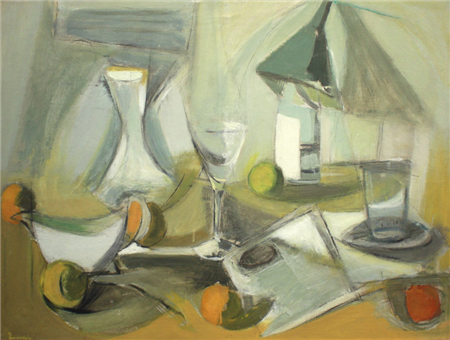 Jack Tworkov
1900-1982
Education:
Columbia University
Art Students League, with Guy Pen du Bois and Boardman Robinson
National Academy of Design
Awards and Honors:
William A. Clark Prize accompanied by Corcoran Gold Medal, 28th Biennial Exhibition of American Painting, 1963
MFA in privatum, Yale University, 1963
John Simon Guggenheim Fellowship Award (Fine Art-Painting), 1970
Honorary Doctor of Fine Arts, Maryland Institute of Art, Baltimore, 1971
Honorary Doctor of Humane Letters, Columbia University, 1972
Medal for Painting, Skowhegan School of Painting and Sculpture, 1974
Member, National Society of Literature and the Arts, 1974
Appointed Andrew Carnegie Visiting Professor of Art, Cooper Union, New York, 1975
Honorary Doctor of Fine Arts Degree, Rhode Island School of Design, Providence, 1979
Elected Member, American Academy and Institute of Arts and Letters, New York, 1981
Selected Exhibitions:
Pennsylvania Academy of the Fine Arts, Philadelphia, PA, 1929, 1948, 1949
New School for Social Research, New York, NY, 1937
Montclair Museum, Montclair, NJ, 1937, 1978
ACA Gallery, New York, NY, 1940 (Solo)
Whitney Museum of American Art, New York, NY, 1941, 1951, 1952, 1953,
1955, 1956, 1960, 1962, 1973
Carnegie Institute, Pittsburgh, PA, 1941, 1953, 1958, 1961
Baltimore Museum, Baltimore, MD, 1948 (Solo)
The Virginia Museum of Fine Arts, Richmond, VA, 1948
Corcoran Gallery of Art, Washington, DC, 1949, 1952, 1955, 1959, 1961,
1975
Museum of Modern Art, New York, NY, 1952, 1969
Poindexter Gallery, New York, NY, 1956, 1957
Stable Gallery, New York, NY, 1957, 1958, 1959 (Solo)
Walker Art Center, Minneapolis, MN, 1957 (Solo)
Dallas Museum of Contemporary Arts, Dallas, TX, 1958
Tate Gallery, London, England, 1958
Musee National D'Art Moderne, Paris, France, 1959
Museum of Fine Arts, Houston, TX, 1959
Leo Castelli Gallery, New York, NY, 1959, 1960
San Francisco Museum of Art, San Francisco, CA, 1960
Museum of Modern Art, New York, NY, 1961, 1975
Metropolitan Art Gallery, Tokyo, Japan, 1961
Solomon R. Guggenheim Museum, New York, NY, 1961
Wadsworth Atheneum, Hartford, CT, 1962
Yale University Art Gallery, New Haven, CT, 1963 (Solo)
Musee Cantonal des Beaux Arts, Lausanne, Switzerland, 1963
Washington Gallery of Modern Art, Washington, D.C., 1963, 1966
Whitney Museum of American Art, New York, NY, 1964, 1971 (Solo)
Institute of Contemporary Art, University of Pennsylvania, Philadelphia, PA,
1967
Skowhegan Exhibition, 1968
The Hudson River Museum, Yonkers, NY, 1971
The Aldrich Museum of Contemporary Art, CT, 1971
Toledo Museum of Art, Toledo, OH, 1972 (Solo)
Harcus, Krakow, Rose, Sonnabend Gallery, Boston, MA, 1974 (Solo)
New York Cultural Center, New York, 1974
Pace Gallery, New York, 1974
Indianapolis Museum of Art, Indianapolis, IN, 1974
Virginia Museum, Richmond, VA, 1974
American University, Washington, DC., 1974 (Solo)
Nancy Hoffman Gallery, New York, NY, 1974, 1982, 1983, 1985 (Solo)
The Portland Center for the Visual Arts, Portland, OR, 1974 (Solo)
List Gallery, Denver Art Museum, Denver, CO,1974 (Solo
New Gallery of Contemporary Art, Cleveland, OH, 1975 (Solo)
US Department of State, Washington, D.C., 1976
Hirshhorn Museum and Sculpture Garden, Smithsonian Institution,
Washington, DC, 1976
Selected Exhibitions Continued:
Institute of Contemporary Art, Boston, MA, 1976
Solomon R. Guggenheim Museum, New York, 1976, 1979, 1987
Brooklyn Museum, Brooklyn, NY, 1976, 1980
Museum of Art, Rhode Island School of Design, Providence, RI, 1976
Society for Contemporary Art, Art Institute of Chicago, IL, 1977
Toledo Museum of Art, Toledo, 1977
New York State Museum, Albany, New York, 1977
Worcester Art Museum, Worcester, MA, 1977
Minnesota Museum of Art, St. Paul, MN, 1977 (Solo)
Yale University, New Haven, CT, 1978
Museum of Contemporary Art, Chicago, IL, 1978
Federal Reserve Bank, Boston, MA
Third Eye Centre, Glasgow, Scotland, 1979 (Solo)
Betty Parsons Gallery and Marilyn Pearl Gallery, New York, NY, 1979
Metropolitan Museum of Art, New York, NY, 1979
Academy Gallery, Liverpool, England, 1979 (Solo)
Ulster Museum, Belfast, Ireland, 1979 (Solo)
American Academy and Institute of Arts and Letters, New York, NY, 1979,
1981, 1983
Rhode Island School of Design, Providence, RI, 1980 (Solo)
Federal Reserve Board, Fine Arts Program, Washington, DC, 1980
The Cleveland Museum of Art, Cleveland, OH, 1980
Newark Museum, Newark, NJ, 1981
Whitney Museum of American Art, New York, NY, 1981
The Aldrich Museum, Ridgefield, CT, 1981
Solomon R. Guggenheim Museum, New York, NY, 1982 (Solo)
Nancy Hoffman Gallery, New York, NY, 1981, 1982, 1983, 1984, 1985
Delaware Art Museum, Wilmington, DE, 1983
Richmond Gallery, Provincetown Art Association, Provincetown, MA, 1983
(Solo)
Pennsylvania Academy of the Fine Arts, Philadelphia, PA, 1987 (Solo)
Provincetown Art Association, Provincetown, MA, 1987, 1993
Fine Arts Work Center, Provincetown, MA, 1987
André Emmerich Gallery, New York, NY, 1990,1991, 1995 (Solo)
Boston College Museum of Art, Chestnut Hill, MA, 1994 (Solo)
Manny Silverman Gallery, Los Angeles, CA, 1994 (Solo)
Mitchell-Innes & Nash, New York, NY, 1998
Plattsburgh State Art Museum, Plattsburgh, NY, 1998
Centre Cultural de la Fundacio "la caixa", Barcelona, Spain, 1999
The National Arts Club, New York, NY, 2000
American Contemporary Art Gallery, Munich, Germany, 2000, 2001, 2002,
2004
Mitchell Innes & Nash, New York, NY, 2000, 2002, 2007 (Solo)
American Contemporary Art Gallery, Munich, Germany, 2000 (Solo)
Ameringer/Howard/Yohe Fine Art, New York, NY, 2001 (Solo)
American University, Washington, DC, 2002
Musee d'Art Moderne, Nice, France, 2005
Valerie Carberry Gallery, Chicago, IL, 2006 (Solo)
Kunstforum, Vienna, 2006
Cheim & Read, New York, NY, 2006
Hackett Freedman Gallery, San Francisco, CA, 2007
Hollis Taggart Galleries, New York, NY, 2007
Adelson Galleries, New York, NY, 2007
Valerie Carberry Gallery, Chicago, IL, 2007
Oklahoma City Museum of Art, Oklahoma City, OH, 2007
Georgia Museum of Art, Athens, GA, 2007
Pavel Zoubok Gallery, New York, NY, 2007
Metropolitan Museum of Art, New York, NY, 2007
UBS Art Gallery, New York, NY, 2009 (Solo)
Selected Collections:
Ackland Art Museum, University of North Carolina, NC
Addison Gallery of American Art, Andover, MA
Albright-Knox Art Gallery, Buffalo, NY
Allentown Art Museum, Allentown, PA
American Academy of Arts and Letters, New York, NY
The Art Institute of Chicago, Chicago, IL
The Baltimore Museum of Art, Maryland, MD
Brooklyn Museum of Art, Brooklyn, NY
The Chase Manhattan Bank, New York, NY
Chrysler Museum, Norfolk, VA
The Cleveland Museum of Art, Cleveland, OH
Hartford Atheneum, Hartford, CT
The Hirshhorn Museum and Sculpture Garden, Washington, DC
Indianapolis Museum of Art, Indianapolis, IN
The Jewish Museum, New York, NY
The Museum of Modern Art, New York, NY
The Museum of Fine Arts, Houston, TX
The National Gallery of Art, Smithsonian Institution, Washington, DC
Phillips Collection, Washington, DC
Portland Art Museum, Portland, ME
Provincetown Art Association and Museum, Provincetown, MA
The Rockefeller Institute, New York, NY
Rhode Island School of Design Museum, Providence, RI
San Francisco Museum of Art, San Francisco, CA
Solomon R. Guggenheim Museum, New York, NY
Tate Modern, London, UK
The Wadsworth Atheneum, Hartford, CT
Walker Art Center, Minneapolis, MN
Washington Gallery of Modern Art, Washington, DC
Watkins Collection, The American University, Washington, DC
Whitney Museum of American Art, New York, NY
Yale University, New Haven, CT
Yellowstone Art Museum, Billings, MTBiography from The Johnson Collection
JACK TWORKOV (YAKOV TWORKOVOSKY) (1900-1982)
A founding member of the New York School and leading twentieth-century painter, Jack Tworkov’s life is an illustration of the American dream. Yakov Tworkovosky was born in Biala, Poland, a small village on the northeast border with Russia. At the age of thirteen, he immigrated to America and assumed the name of his sponsor, Jacob Bernstein. Not only had the young man lost his identity, he struggled in his teenage years to adapt to a new language and different culture. One bright spot was attending Stuyvesant High School, where he took mechanical drawing and a sketch class after school. In 1923, he changed his name to Jack Tworkov and became a naturalized citizen of the United States five years later.
Tworkov aspired first to be a poet, but following a transformative visit to the Brooklyn Museum and encounters with the work of Paul Cézanne and Henri Matisse, he redirected his focus. After several semesters studying English at Columbia University between 1920 and 1923, he enrolled at the Art Students League where Guy Pène du Bois was his instructor. He also took classes at the National Academy of Design (1923–1925) with Ivan G. Olinsky and Charles Hawthorne, who introduced him to Provincetown, Massachusetts. Tworkov returned to Provincetown regularly, maintaining a permanent studio from 1958 until his death there in 1982.
Between 1931 and 1933, Tworkov taught at the Fieldston School of Ethical Culture. Like many artists, he found employment with the Federal Art Project, one of the Depression-era programs under the New Deal. He worked in the easel division for seven years, 1934–1941, an experience he later described as “the worst period of his life.” The job did introduce him to several painters who later became known as the Abstract Expressionists, including Willem de Kooning and Mark Rothko, and Tworkov’s paintings were exhibited alongside theirs in various group shows. From 1952 until 1947, he worked as a tool designer for the Eastern Engineering Company and painted only intermittently.
Regarded for his intellectual subtlety, Tworkov returned to teaching in 1948 as a drawing instructor at Queens College, a position he held for seven years, and as a summer faculty member at The American University in Washington, DC, from 1949 to 1951. At the invitation of Josef Albers, he spent June and July of 1952 at Black Mountain College in North Carolina, where his students included Joseph Fiore. By this time, Tworkov was fully steeped in Abstract Expressionism, creating paintings characterized by their large-scale, bold brushwork, and brash colors. Significant gallery and museum attention soon followed, including exhibitions at notable institutions such as the Corcoran Gallery of Art, Solomon R. Guggenheim Museum, and Whitney Museum of American Art.
Following interim appointments at several academic institutions, Tworkov reconnected with Albers at Yale University: first as a visiting artist (1961–1963) in the art department of the School of Art and Architecture, and then as department chair, a post he held from 1963 through 1969. His work underwent a stylistic shift about this time as he turned to carefully composed geometric grid designs. In 1974, Tworkov authored a brief memoir in which he summarized his passion for his life’s work: “If I have to choose between painting and ideas, I choose painting.”
The Johnson Collection, Spartanburg, South Carolina
thejohnsoncollection.org