Page loaded successfully. Showing biography for Jacques Schnier.
Jacques Schnier BIOGRAPHY
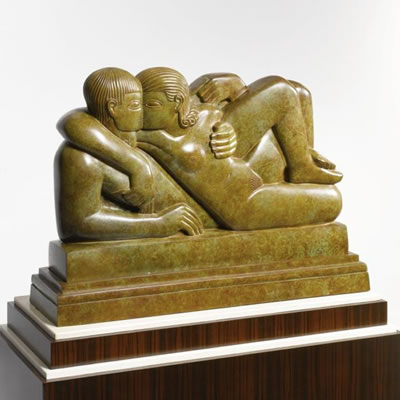
1898 Constanza, Romania - 1988 Walnut Creek, California. Known for: Sculptor-modernist figure, mural painting.
Born in Constanza, Romania on Dec. 25, 1898. At age two Schnier immigrated with his family to San Francisco where his father became engaged in home building. The younger Schnier's interests during... Read full biography
Born in Constanza, Romania on Dec. 25, 1898. At age two Schnier immigrated with his family to San Francisco where his father became engaged in home building. The younger Schnier's interests during the early part of his life were engineering and architecture. After receiving an M.A. degree from the... Read full biography
Born in Constanza, Romania on Dec. 25, 1898. At age two Schnier immigrated with his family to San Francisco where his father became engaged in home building. The younger Schnier's interests during the early part of his life were engineering and architecture. After receiving an M.A. degree from the engineering school at Stanford University in 1920, he worked as an engineer in Hawaii until 1923. Opting for an art career, he abandoned engineering and returned to the mainland to begin an intensive... Read full biography
Born in Constanza, Romania on Dec. 25, 1898. At age two Schnier immigrated with his family to San Francisco where his father became engaged in home building. The younger Schnier's interests during the early part of his life were engineering and architecture. After receiving an M.A. degree from the engineering school at Stanford University in 1920, he worked as an engineer in Hawaii until 1923. Opting for an art career, he abandoned engineering and returned to the mainland to begin an intensive study of art and architecture at UC Berkeley. After two years at UC, he spent another year at the CSFA where he decided to become a sculptor. His first favorable notice was given in 1927 when his work was exhibited at the EastWest Gallery in San... Read full biography
Born in Constanza, Romania on Dec. 25, 1898. At age two Schnier immigrated with his family to San Francisco where his father became engaged in home building. The younger Schnier's interests during the early part of his life were engineering and architecture. After receiving an M.A. degree from the engineering school at Stanford University in 1920, he worked as an engineer in Hawaii until 1923. Opting for an art career, he abandoned engineering and returned to the mainland to begin an intensive study of art and architecture at UC Berkeley. After two years at UC, he spent another year at the CSFA where he decided to become a sculptor. His first favorable notice was given in 1927 when his work was exhibited at the EastWest Gallery in San Francisco. Schnier took an extended tour of Asia after having established himself as a successful sculptor. He returned to San Francisco in 1933 and,.... Read full biography
Artist Biography
Biography page for Jacques Schnier ((1898 - 1988)), known for Sculptor-modernist figure, mural painting. Showing 3 biographical entries and 0 sample artworks.
Jacques Schnier - Artist Info
About Jacques Schnier
Biography from the Archives of askART
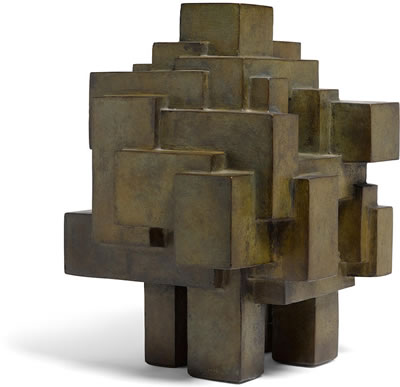 Born in Constanza, Romania on Dec. 25, 1898. At age two Schnier immigrated with his family to San Francisco where his father became engaged in home building. The younger Schnier's interests during the early part of his life were engineering and architecture. After receiving an M.A. degree from the engineering school at Stanford University in 1920, he worked as an engineer in Hawaii until 1923. Opting for an art career, he abandoned engineering and returned to the mainland to begin an intensive study of art and architecture at UC Berkeley. After two years at UC, he spent another year at the CSFA where he decided to become a sculptor. His first favorable notice was given in 1927 when his work was exhibited at the EastWest Gallery in San Francisco. Schnier took an extended tour of Asia after having established himself as a successful sculptor. He returned to San Francisco in 1933 and, from the philosophies he had studied in the Orient, brought with him a more mature approach to his work. By 1935 he was teaching at the CCAC, and in that year he was chosen to design the half-dollar which was minted to commemorate the opening of the San Francisco-Oakland Bay Bridge. He joined the faculty at UC Berkeley in 1936 and continued teaching sculpture there for 30 years. He contributed statuary to Treasure Island for the GGIE. In 1979 the San Francisco Arts Commission made him Artist of the Year. He was active as an artist until shortly before his death in Walnut Creek, CA on March 24, 1988. Schnier contributed greatly to California art both as a sculptor and an educator. An advocate of modern art, he produced abstractions in wood, clay, bronze, marble, pewter, and glazed ceramics. Member: Calif. Society of Mural Painters; NSS. Exh: San Francisco Art Association, 1928-30 (1st prizes); Seattle, 1929 (1st prize); Oakland Art Gallery, 1933-48 (gold medals); LACMA, 1934 (award); SFMA, 1935; GGIE, 1939; De Young Museum, 1947, 1960; Stanford Univ. Museum, 1962; Crocker Museum, 1963; Santa Barbara Museum, 1963; Mills College (Oakland), 1998. In: Honolulu Academy of Arts; Mills College; SFMA; CHS; UC Berkeley; Berkeley High School Auditorium (bas relief); CPLH; Santa Barbara Museum; Crocker Museum (Sacramento); SF Art Inst. Library (bas relief); Oakland Museum; Stanford Museum; Smithsonian Inst.
Biography from the Archives of askART
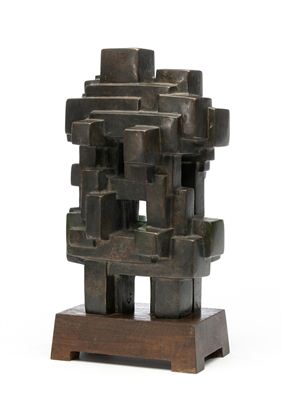 Moving to San Francisco in 1926, Jacques Schnier became a sculptor especially noted for his marble carvings including "Leda and the Swan" and wood reliefs such as "The Gardner", which is at the San Francisco Museum of Art. He also worked in stone, clay and metal. In the late 60s, he changed his style from figural to geometric abstraction and began to incorporate industrial materials such as plastics into his work.
He started his professional career as a Civil Engineer, having studied at Stanford University. Then he practiced for two years in the Hawaiian Islands. However a course in architectural design followed by study of painting and sculpture at the University of California and the California School of the Fine Arts turned him to sculpting and carving.
Like many of his contemporaries, he found inspiration in African and Meso- American cultures and also Asian.
With a studio on the Montgomery Block, the art colony, he was inspired by the bordering Chinese district. From 1932-1933, he traveled extensively in the Orient. After serving in World War II, he returned to California and lived in Lafayette in the Bay Area. He also taught Life Modeling and Sculpture Design at the California School of Arts and Crafts, was active with the National Sculpture Society and wrote articles on sculpture for various publications.
Source:
"The Western Artist", January 1936, 'Jacques Schnier--Sculptor', p. 10
Peter Falk, "Who Was Who in American Art"Biography from Spencer Helfen Fine Arts
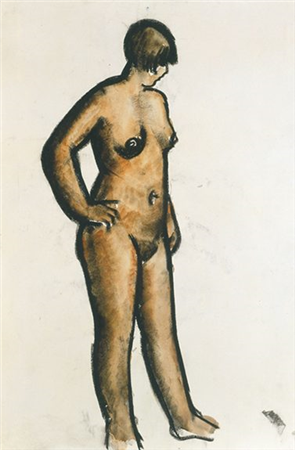 Having discovered Asian and Polynesian art before he received his artistic training, Jacques Schnier had aesthetic assumptions quite different from those of artists who studied art academically before exposure to primitivist sources of inspiration. His early sculptures showed an interest, not just in the Asian aesthetic, but also in those of Egypt and pre-Classic Greece; as a result, Schnier's work often reflected an amalgamation of historical references.
Always, however, his sculptures emphasized form, and incorporated rhythmic design and a purity of line. After World War II, Schnier abandoned figural work for abstract geometries, and in the1960s, he began working in media such as fiberglass, polyester resin, Styrofoam, polyvinyl chloride and acrylic.
Born in Constanza, Romania in 1898, Jacques Schnier moved to the U.S. with his family at the age of 2. The family settled in San Francisco, where Schnier's first interest was engineering and architecture. Receiving an M.A. degree in engineering from Stanford University in 1920, Schnier first worked as an engineer in Hawaii, but returned to the mainland in 1923 to pursue a career in art. He studied for two years at the University of California, Berkeley, and then at the California School of Fine Arts, where he turned his focus to sculpture. He exhibited at the EastWest Gallery in San Francisco in 1927.
Schnier became known as one of America's most creative Modernists, and one of the nation's finest direct carvers, whether working in wood or stone. An extended trip to Asia in 1933 exposed Schnier to aspects of Eastern philosophy, which informed his later work. While an instructor at the California College of Arts and Crafts in 1935, Schnier was chosen to design the commemorative half dollar for the opening of the San Francisco-Oakland Bay Bridge; and in 1936 he began a teaching career at the University of California, Berkeley, where he would remain for 30 years.
Schnier contributed monumental statues and bas-reliefs to the 1939 Golden Gate International Exposition on San Francisco's Treasure Island, and remained a very active presence in the art community of both the city and state throughout his life, winning first prizes at the San Francisco Art Association in 1928 and the Oakland Art Gallery in 1936 and 1948.
His work has been exhibited at or is in the collections of many of California's museums including the California Historical Society, the California Palace of the Legion of Honor, and the De Young Museum in San Francisco; Mills College in Oakland; the Crocker Museum in Sacramento; the Stanford University Museum; the Santa Barbara Museum; and the Los Angeles County Museum of Art; as well as the Smithsonian Institution and the Honolulu Academy of Arts.
Other examples of his commissioned works are the bronze John Galen Howard Memorial in the Howard Room of UC Berkeley's Faculty Club and a 32-foot-high concrete bas-relief on an exterior wall of the Berkeley High School, as well as bas-reliefs for the library of the San Francisco Art Institute. Schnier is also the author of the 1948 book Sculpture in Modern America, whose subject is early-mid-century American sculpture.
Jacques Schnier sculpted, exhibited, and received many awards well into his 80s. He received an Award of Honor from the San Francisco Arts Commission in 1979, and was given a one-man exhibition at the Arts Commission Gallery; and after an exhibition in Walnut Creek in 1984 the city's mayor proclaimed January 5, 1984, as Jacques Schnier Day, "in recognition of his continuing enrichment of the artistic, cultural and educational environment of our City."
Jacques Schnier passed away in Walnut Creek, California in 1988, at the age of 89.