Page loaded successfully. Showing biography for Jean-Francois Millet.
Jean-Francois Millet BIOGRAPHY
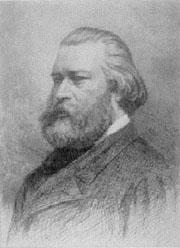
1814 Gruchy, France - 1875 Barbizon, France. Known for: Bucolic-scene painting, rural peasant genre.
Jean Francois Millet was what Gustave Courbet pretended to be: the son of peasants. Born in 1814, at Gruchy near Cherbourg, he spent most of his life in rural France. He received his first... Read full biography
Jean Francois Millet was what Gustave Courbet pretended to be: the son of peasants. Born in 1814, at Gruchy near Cherbourg, he spent most of his life in rural France. He received his first instruction in art from Langlois at Cherbourg in 1832. His aptitude was so obvious that he was granted a... Read full biography
Jean Francois Millet was what Gustave Courbet pretended to be: the son of peasants. Born in 1814, at Gruchy near Cherbourg, he spent most of his life in rural France. He received his first instruction in art from Langlois at Cherbourg in 1832. His aptitude was so obvious that he was granted a pension by the Municipal Council to enable him to study art in Paris. In 1837, he joined the Parisian studio of Delaroche where Diaz and Rousseau were his fellow pupils. He first exhibited at the Salon in... Read full biography
Jean Francois Millet was what Gustave Courbet pretended to be: the son of peasants. Born in 1814, at Gruchy near Cherbourg, he spent most of his life in rural France. He received his first instruction in art from Langlois at Cherbourg in 1832. His aptitude was so obvious that he was granted a pension by the Municipal Council to enable him to study art in Paris. In 1837, he joined the Parisian studio of Delaroche where Diaz and Rousseau were his fellow pupils. He first exhibited at the Salon in 1840. He was able to perceive the land and the labor it exacted from men as substance and process, not as a sight for city-dwelling impressionists on an outing. For some time he earned a living painting portraits in Cherbourg where he had returned.... Read full biography
Jean Francois Millet was what Gustave Courbet pretended to be: the son of peasants. Born in 1814, at Gruchy near Cherbourg, he spent most of his life in rural France. He received his first instruction in art from Langlois at Cherbourg in 1832. His aptitude was so obvious that he was granted a pension by the Municipal Council to enable him to study art in Paris. In 1837, he joined the Parisian studio of Delaroche where Diaz and Rousseau were his fellow pupils. He first exhibited at the Salon in 1840. He was able to perceive the land and the labor it exacted from men as substance and process, not as a sight for city-dwelling impressionists on an outing. For some time he earned a living painting portraits in Cherbourg where he had returned. In 1845 he was in Paris once more; he devoted himself entirely to peasant and figure paint... Read full biography
Artist Biography
Biography page for Jean-Francois Millet ((1814 - 1875)), known for Bucolic-scene painting, rural peasant genre. Showing 3 biographical entries and 0 sample artworks.
Jean-Francois Millet - Artist Info
About Jean-Francois Millet
Name variants
Jean Francois Miller, Jean Francois Millet
Biography from the Archives of askART
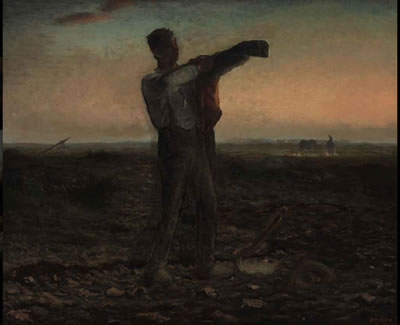 Jean Francois Millet was what Gustave Courbet pretended to be: the son of peasants. Born in 1814, at Gruchy near Cherbourg, he spent most of his life in rural France. He received his first instruction in art from Langlois at Cherbourg in 1832. His aptitude was so obvious that he was granted a pension by the Municipal Council to enable him to study art in Paris.
In 1837, he joined the Parisian studio of Delaroche where Diaz and Rousseau were his fellow pupils. He first exhibited at the Salon in 1840. He was able to perceive the land and the labor it exacted from men as substance and process, not as a sight for city-dwelling impressionists on an outing. For some time he earned a living painting portraits in Cherbourg where he had returned. In 1845 he was in Paris once more; he devoted himself entirely to peasant and figure painting, at which he worked solely from memory.
Though he lived to see himself the most famous of the painters who worked at Barbizon, during much of his life he was on the verge of poverty. There were times when Millet and his wife had nothing to eat, but they did make sure that their children did not suffer. As a result of his privation he was subject all his life to fearful headaches and pains in his eyes. But he never complained.
Yet Millet painted one of the most popular pictures of the 19th century. Even his most famous canvas he had difficulty selling, but once sold, its rise in value was fantastic. But Millet's faults were made especially conspicuous by the trends of more modern painting. He was a powerful draftsman, but he was indifferent to color; he was a touching poet, but he often became sentimental; he was an admirable humanitarian, but he rarely conveyed his feelings with any charm or beauty of brushwork. Consequently his canvases sank in critical esteem to a point below their real worth. He died at Barbizon surrounded by the life and people he had loved.
Written and submitted by Jean Ershler Schatz, artist and researcher from Laguna Woods, California
Sources include:
Robert Hughes in Time Magazine, February 23, 1976
Masterpieces of Art: Catalogue of the New York World's Fair 1940Biography from the Archives of askART
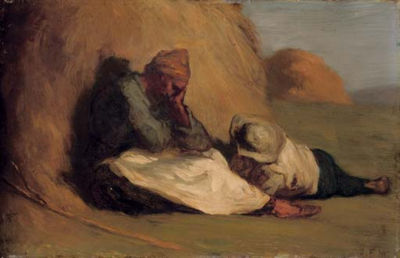 Jean-François Millet, (born October 4, 1814, Gruchy, near Gréville, France—died January 20, 1875, Barbizon), French painter renowned for his peasant subjects.
Millet spent his youth working on the land, but by the age of 19 he was studying art in Cherbourg, France. In 1837 he arrived in Paris and eventually enrolled in the studio of Paul Delaroche, where he seems to have remained until 1839.
After the rejection of one of his entries for the Salon of 1840, Millet returned to Cherbourg, where he remained during most of 1841, painting portraits. He achieved his first success in 1844 with The Milkmaid and a large pastel, The Riding Lesson, that has a sensual character typical of a large part of his production during the 1840s.
The peasant subjects, which from the early 1850s were to be Millet’s principal concern, made their first important appearance at the Salon of 1848 with The Winnower, later destroyed by fire. In 1849, after a period of great hardship, Millet left Paris to settle in Barbizon, a small hamlet in the forest of Fontainebleau.
He continued to exhibit paintings of peasants, and, as a result, periodically faced the charge of being a socialist. Letters of the period defending Millet’s position underline the fundamentally classical nature of his approach to painting.
By the mid-1860s, Millet’s work was beginning to be in demand. Official recognition came in 1868, after nine major paintings had been shown at the exposition of 1867. Important collections of Millet’s pictures are to be found in the Museum of Fine Arts, Boston, and in the Louvre.
Written By: The Editors of Encyclopaedia Britannica, and recently revised and updated by Alicja Zelazko, Assistant Editor. (2019)Biography from Modern Art Dealers
Jean-François Millet was the son of Normandy farmers and began studying painting in Cherbourg, France In 1838, with the aid of a scholarship, he moved to Paris and became briefly, a pupil of Paul Delaroche, but soon decided that he preferred to work alone. He made frequent visits to the Louvre Museum, where he was particularly influenced by Buonarroti Michelangelo, Gaspard Poussin and Peter Paul Rubens. In order to earn a living he painted shop signs and numerous portraits.
In the 1840s, Millet spent most of his time in Cherbourg, and after the death of his first wife in 1844, he spent a year in Le Havre where he exhibited with some success.
In 1849, he was persuaded by Charles-Emile Jacque to settle with his new family in Barbizon and discovered the green landscapes of this region where Rousseau and Diaz were already living. Unlike the other Barbizon painters he was principally inspired by the occupations rather than the scenery of rural life and the daily toil of the peasants became his preferred subject.