Page loaded successfully. Showing biography for Jean-Henry Alexandre Pernet.
Jean-Henry Alexandre Pernet BIOGRAPHY
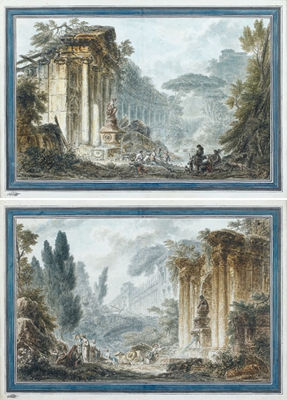
1763 Paris, France - 1789 apres. Known for: Paintings of architectural images, ancient ruins, landmark buildings.
Brilliant designer of architectural whims, easily magnifying pen and wash and sometimes, as is the case here, watercolor, Jean-Henri Alexandre Pernet presents himself, in the second half of the... Read full biography
Brilliant designer of architectural whims, easily magnifying pen and wash and sometimes, as is the case here, watercolor, Jean-Henri Alexandre Pernet presents himself, in the second half of the eighteenth century, as the worthy heir of first "French Piranesians". We know little about his career,... Read full biography
Brilliant designer of architectural whims, easily magnifying pen and wash and sometimes, as is the case here, watercolor, Jean-Henri Alexandre Pernet presents himself, in the second half of the eighteenth century, as the worthy heir of first "French Piranesians". We know little about his career, except that he exhibited two landscapes in gouache at the Salon de la Correspondance in 1779 and entered the Royal Academy in 1783, as a student of Demachy. No trip to Italy is attested for Pernet, but... Read full biography
Brilliant designer of architectural whims, easily magnifying pen and wash and sometimes, as is the case here, watercolor, Jean-Henri Alexandre Pernet presents himself, in the second half of the eighteenth century, as the worthy heir of first "French Piranesians". We know little about his career, except that he exhibited two landscapes in gouache at the Salon de la Correspondance in 1779 and entered the Royal Academy in 1783, as a student of Demachy. No trip to Italy is attested for Pernet, but his inspirations are nonetheless evident in his abundant drawings where the monuments of ancient Rome, ruins, fountains, fragments of nature, which gradually regain its rights and sometimes rub shoulders. small figures and animals, borrowing their... Read full biography
Brilliant designer of architectural whims, easily magnifying pen and wash and sometimes, as is the case here, watercolor, Jean-Henri Alexandre Pernet presents himself, in the second half of the eighteenth century, as the worthy heir of first "French Piranesians". We know little about his career, except that he exhibited two landscapes in gouache at the Salon de la Correspondance in 1779 and entered the Royal Academy in 1783, as a student of Demachy. No trip to Italy is attested for Pernet, but his inspirations are nonetheless evident in his abundant drawings where the monuments of ancient Rome, ruins, fountains, fragments of nature, which gradually regain its rights and sometimes rub shoulders. small figures and animals, borrowing their favorite vocabulary from Piranesi, Panini or even Hubert Robert. He also seems to have willingly imagined his works in pairs and... Read full biography
Artist Biography
Biography page for Jean-Henry Alexandre Pernet ((1763 - 1789)), known for Paintings of architectural images, ancient ruins, landmark buildings. Showing 1 biographical entries and 0 sample artworks.
Jean-Henry Alexandre Pernet - Artist Info
About Jean-Henry Alexandre Pernet
Name variants
Jean Henry Alexandre Pernet, Jean-Louis-Alexandre Pernet
Biography from Artcurial
Brilliant designer of architectural whims, easily magnifying pen and wash and sometimes, as is the case here, watercolor, Jean-Henri Alexandre Pernet presents himself, in the second half of the eighteenth century, as the worthy heir of first "French Piranesians".
We know little about his career, except that he exhibited two landscapes in gouache at the Salon de la Correspondance in 1779 and entered the Royal Academy in 1783, as a student of Demachy.
No trip to Italy is attested for Pernet, but his inspirations are nonetheless evident in his abundant drawings where the monuments of ancient Rome, ruins, fountains, fragments of nature, which gradually regain its rights and sometimes rub shoulders. small figures and animals, borrowing their favorite vocabulary from Piranesi, Panini or even Hubert Robert.
He also seems to have willingly imagined his works in pairs and we only know of his hand works on paper. The design of our collector is quite characteristic of his production, bringing together soldiers and figures dressed in the Antiquity at the foot of the pyramid of Cestius.