Page loaded successfully. Showing biography for John Edward Thompson.
John Edward Thompson BIOGRAPHY
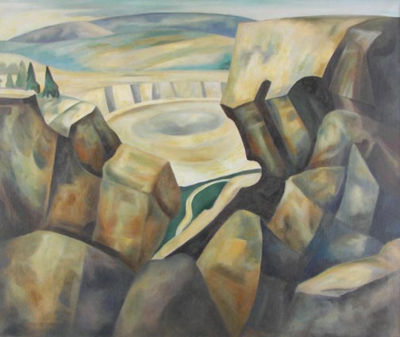
1882 East Buffalo, New York - 1945. Known for: Figure, genre and landscape painting, mural.
John Edward Thompson, painter and teacher, was born in Buffalo, New York on January 3, 1882. Pupil of the Art Students League of Buffalo; Art Students League of New York; of Laurens, Blanche, Cottet... Read full biography
John Edward Thompson, painter and teacher, was born in Buffalo, New York on January 3, 1882. Pupil of the Art Students League of Buffalo; Art Students League of New York; of Laurens, Blanche, Cottet and Tudor-Hart in Paris. Thompson was a member of the Denver Art Group and the Denver Art Museum. He... Read full biography
John Edward Thompson, painter and teacher, was born in Buffalo, New York on January 3, 1882. Pupil of the Art Students League of Buffalo; Art Students League of New York; of Laurens, Blanche, Cottet and Tudor-Hart in Paris. Thompson was a member of the Denver Art Group and the Denver Art Museum. He received the Medal for murals, Denver, 1929, which was represented by Decorations in National Bank Building, Polo Club, St. Martin's Chapel, Art Museum of Denver, Co. "Still Life; Rubber Plant"... Read full biography
John Edward Thompson, painter and teacher, was born in Buffalo, New York on January 3, 1882. Pupil of the Art Students League of Buffalo; Art Students League of New York; of Laurens, Blanche, Cottet and Tudor-Hart in Paris. Thompson was a member of the Denver Art Group and the Denver Art Museum. He received the Medal for murals, Denver, 1929, which was represented by Decorations in National Bank Building, Polo Club, St. Martin's Chapel, Art Museum of Denver, Co. "Still Life; Rubber Plant" Corcoran Gallery of Art, Washington DC. Thompson served as a Professor of Art at the University of Denver. Submitted April, 2003, by Katherine Tozier. Source: Who's Who in American Art 1936-1937... Read full biography
John Edward Thompson, painter and teacher, was born in Buffalo, New York on January 3, 1882. Pupil of the Art Students League of Buffalo; Art Students League of New York; of Laurens, Blanche, Cottet and Tudor-Hart in Paris. Thompson was a member of the Denver Art Group and the Denver Art Museum. He received the Medal for murals, Denver, 1929, which was represented by Decorations in National Bank Building, Polo Club, St. Martin's Chapel, Art Museum of Denver, Co. "Still Life; Rubber Plant" Corcoran Gallery of Art, Washington DC. Thompson served as a Professor of Art at the University of Denver. Submitted April, 2003, by Katherine Tozier. Source: Who's Who in American Art 1936-1937... Read full biography
Artist Biography
Biography page for John Edward Thompson ((1882 - 1945)), known for Figure, genre and landscape painting, mural. Showing 3 biographical entries and 0 sample artworks.
John Edward Thompson - Artist Info
About John Edward Thompson
Biography from the Archives of askART
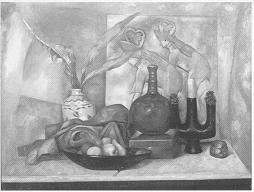 John Edward Thompson, painter and teacher, was born in Buffalo, New York on January 3, 1882. Pupil of the Art Students League of Buffalo; Art Students League of New York; of Laurens, Blanche, Cottet and Tudor-Hart in Paris. Thompson was a member of the Denver Art Group and the Denver Art Museum. He received the Medal for murals, Denver, 1929, which was represented by Decorations in National Bank Building, Polo Club, St. Martin's Chapel, Art Museum of Denver, Co. "Still Life; Rubber Plant" Corcoran Gallery of Art, Washington DC. Thompson served as a Professor of Art at the University of Denver.
Submitted April, 2003, by Katherine Tozier
Source: Who's Who in American Art 1936-1937Biography from David Cook Galleries (M-Z)
John Edward Thompson was one of Colorado's most acclaimed modernist painters. He was born in the East Buffalo, New York, and first studied at the Art Students League in New York with L.W. Hitchcock and also at the Academie Julian in Paris with J.P. Laurens in 1907.
In 1917, Thompson moved to Denver. He organized a "Colorado Armory Show" in 1918, undaunted by the negative attitude that modern art received in the first half of the 20th century. Thompson began teaching at the Denver Academy of Applied Art and later taught at the University of Denver.
While teaching at the University of Denver he helped to found the Chappell House (later known as the Denver University art department). Through the exposure he gained from his mural work, Thompson quickly made a name for himself among Denver society.
Thompson spent many summers painting and teaching in Santa Fe, and made important contributions to that art community as well.
For his dedication to art and to the community, John Edward Thompson came to be known as the "Dean of Colorado Painters."Biography from Savageau Gallery
John Edward Thompson was a well-trained artist and visionary Colorado arts leader. He was born in the Irish section of East Buffalo, New York, and first studied art with noted illustrator Lucius Hitchcock at the Art Students League's branch in that city. While Thompson was learning to draw, he was also working with his fists, fighting and winning amateur boxing matches. In fact, in bag punching he was ranked among the best in the nation. Offered contracts to stay in the ring, Thompson turned them down to study art.
While studying with Hitchcock, Thompson began earning a living as an illustrator. This paid work plus his ring-money enabled him to go to New York City. Once there he studied at the Chase School and with Frank Vincent DuMond at the Art Student's League.
In 1902, Thompson headed for France. The turn of the century was an exciting time to be in Europe. Artists were hungry, experimenting, searching for new ways to express their creativity and knowledge. Thompson made the most of it. He studied with Jean Paul Laurens and other artists at the Julian Academy and with Edmond Francois Aman-Jean at La Palette. He haunted the Louvre for drawings by the Old Masters. He fell in love with the work of Renoir, Daumier and Toulouse-Lautrec, all considered artistic rebels at that time, but also soaked in the diverse influences of classical mosaics and murals, Persian miniatures, and the Renaissance masters.
Thompson spent a little over a year in Holland living in Laren, a famous painting village near Amsterdam where he met Josef Israels and Albert Neuhys. By the time he returned to Paris, Thompson was ready to fall headlong into the heady currents sweeping the art world. He began exhibiting his work at both the traditional Salon Francaise and the more contemporary - and controversial - Autumn Salon.
Thompson visited Gertrude Stein, lived for a while in George Sands' home and - when funds ran low - put on boxing exhibitions. As the avant-garde took on new appeal to him, his academic training expanded to include the new masters, including the Impressionists.
In 1905, Thompson met Percival Tudor-Hart, considered by some to be the greatest color scientist of all time. Thompson studied with him from 1905 to 1908, and during that time received a solid grounding in color composition and theory.
An art-world-shaking event occurred in Paris in 1907. Reclusive Post-Impressionist Paul Cezanne had recently died, and a retrospective of his work brought artists from throughtout Europe. Anyone who has seen Cezanne's works firsthand knows the power of their presence. Cezanne was a colorist and yet it was his emphasis on the geometry of nature, the supremacy of visual design and the use of plastic space that helped transformed a whole generation of artists. Braque and Picasso were developing Cubism based on what they learned from Cezanne.
Thompson was transfixed by the Cezanne retrospective. He returned to the Louvre, reexamining all he found there and all he had learned from his teachers, and suddenly saw everything from a new perspective. He traced Cezanne's basic geometry in Oriental, Renaissance and ancient art. Working independently, Thompson began really developing his own vision, melding the geometric color-planes of Cezanne with the traditional art he loved.
On a quest of discovery, Thompson traveled to Spain, England, Germany, Italy and the south of France. Then came World War I. Thompson idealistically expected the war would be over in three months and went home to Buffalo to wait out the storm.
Back in the United States, railroad travel brochures depicting the West caught Thompson's eye. A railroad agent recommended Pine, Colorado for its fine quality of mountain light. Thompson acted promptly on the suggestion. Arriving in Pine, he rented a cabin and settled down to paint mountain landscapes and wait out the war. Thompson quickly fell in love with the Colorado air, light and landscape; he also met his future wife.
The Thompsons returned to Buffalo in 1915 for an exhibition of his work and a stint of teaching. When Thompson returned to Denver in 1917, a number of students followed him West, including Walter Mruk and Jozef Bakos. (These two artists eventually formed the Santa Fe group Los Cinco Pintores along with B.J.O. Nordfelt, Willard Nash, and Andrew Dasburg.)
Once back in Denver, Thompson began working to infuse the area with modern art and artistic freedom. He mounted a "Colorado Armory Show" in 1918, undaunted by the negative editorials and hysterical letters to the editor that invariably followed modern art in the first half of the 20th century. Thompson began teaching at the Denver Academy of Applied Art and soon gathered a new group of art disciples, including Frank Vavra and Charles F. Ramus. Thompson was determined to bring French and European artistic sensibilities to the rugged and still-wild west, and soon artist/Denver Art Guild luminary Elisabeth Spalding and Denver Art Museum maven Anne Evans were championing Thompson's cause.
With the establishment of Chappell House (later the Denver University art department) and extensive personal exposure through his mural work, Thompson became established in Denver's cultural life and one of its most famous artists. He spent many summers painting and teaching in Santa Fe, and made important contributions to that art community as well. For his personal talents, and his dedication to art and to the community, John Edward Thompson came to be known as the "Dean of Colorado Painters." Said Donald Bear, director of the Santa Barbara Museum of Art, when Thompson died in 1945, "I have never in my life met anyone… who knew so profoundly, so thoroughly and yet so simply and directly what constituted great painting… I have never met anyone either, that could convey what he knew with such clarity."
SELECTED MURALS: St. Martins Chapel, Denver University Theatre, Denver National Bank, Polo Club, International Trust Building, Midland Savings, Symes Building, Fisher and Fisher architectural firm, Casanova Room at the Brown Palace (all in Denver), Maytag House (Colorado Springs).
SELECTED AMERICAN EXHIBITS: Joslyn Museum (Omaha NE), Art Institute of Chicago, New York World's Fair, Philadelphia Sesqui-Centennial Exhibition, Grand Palace of the Legion of Honor (San Francisco), Corcoran Museum (Washington D.C.)
RETROSPECTIVES: Denver Art Museum, 1945, and Colorado Springs Fine Art Center, 1963.
MEMBERSHIPS AND AWARDS: Member of "The Atelier," a Denver group of artists and architects; member of the Denver Art Guild; member of the Societe des Artistes Francais. Named by fellow artists to the Denver Art Hall of Fame.
REFERENCES:
American Art Exhibition.(1st annual) catalog. Rockefeller Center. New York,1936.
Bridaham, D. "Thompson Art Deserves Permanent Denver Display." The Denver Post Roundup, January 6, 1963: 10-11
"Colorado Artist's Works on Display" Rocky Mountain News, July 11, 1964: 51
Dawdy, Doris, Artists of the American West. 3 vols. Chicago: Swallow, 1974: 231
Falk, Peter Hastings, Who Was Who in American Art. Sound View Press, 1985
Fielding, Mantle Dictionary of American Painters. Poughkeepsie: Apollo, 1984
"Gifted Artist Gets 1928 Medal for Colorado Work," The Buffalo Courier, 3 February, 1929
Havlice, P. P. Index to Artistic Biography. New Jersey: Scarecrow, 1973: 1228
"J.E. Thompson, widely known artist, dead." The Denver Post, May 24, 1945: 9
"John Thompson is Named for Denver Art Hall of Fame" The Rocky Mountain News, June 30, 1929
"John Thompson Scores in long battle." The Rocky Mountain News, June 4, 1939
Mallett, D.T. Mallett's Index of Artists. NY: P.Smith, 1948
McGlauflin, A.C. Who's Who in American Art. Washington: American Federation of Arts, 1935 continuing to NY: Cattell Press, 1976
McNeil, B. Artists Master Index Detroit: Gale Research Tower, 1986: 618
McMechen E. "Brinton Terrace", Colorado Magazine, XXIV, 1947 : 97-114
Miller, A.A. "Painters of the Rocky Mountain Region". Design. vol.43 no.8, April 1942: 3-5
Ramus, C. "John Edward Thompson: Dean of Colorado Painters." Art Education, Denver: Denver U.P. April 1943
Thompson, J.E. Manuscripts at the Denver Public Library Denver, CO.
"Thompson Watercolors Shown," The Rocky Mountain News, 1 February 1945: 19
Young, W. A Dictionary of American Artists, Sculptors, and Engravers. Cambridge: Arno, 1968: 455