Page loaded successfully. Showing biography for John Emms.
John Emms BIOGRAPHY
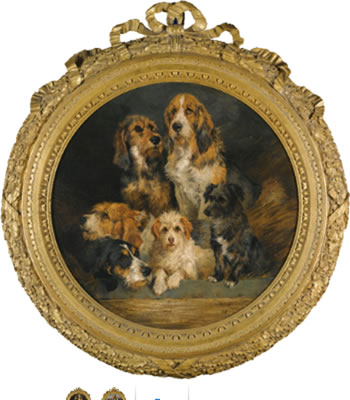
1843 Blofield, Norfolk, England - 1912 Lyndhurst, England. Known for: Dog and horse portraits, animals in landscape.
A late 19th and 20th century British painter in realist style of horses and dogs, especially in hunting scenes, John Emms began exhibiting his paintings at the Royal Academy of London in 1866. He was... Read full biography
A late 19th and 20th century British painter in realist style of horses and dogs, especially in hunting scenes, John Emms began exhibiting his paintings at the Royal Academy of London in 1866. He was born in Blofield, Norfolk, and had a strong interest in art, which took him to London for study.... Read full biography
A late 19th and 20th century British painter in realist style of horses and dogs, especially in hunting scenes, John Emms began exhibiting his paintings at the Royal Academy of London in 1866. He was born in Blofield, Norfolk, and had a strong interest in art, which took him to London for study. There he became studio assistant fo Frederick Leighton, later Lord Leighton, and in this capacity traveled to New Forest in Lyndhurst to do a fresco, The Ten Virgins, for the local church. In Lyndhurst,... Read full biography
A late 19th and 20th century British painter in realist style of horses and dogs, especially in hunting scenes, John Emms began exhibiting his paintings at the Royal Academy of London in 1866. He was born in Blofield, Norfolk, and had a strong interest in art, which took him to London for study. There he became studio assistant fo Frederick Leighton, later Lord Leighton, and in this capacity traveled to New Forest in Lyndhurst to do a fresco, The Ten Virgins, for the local church. In Lyndhurst, he became exposed to an outdoor lifestyle and he became an enthusiastic sportsman, especially fond of hunting and of horseback riding. He also mixed well with the local gentry, and met many of his painting customers were people he met in the... Read full biography
A late 19th and 20th century British painter in realist style of horses and dogs, especially in hunting scenes, John Emms began exhibiting his paintings at the Royal Academy of London in 1866. He was born in Blofield, Norfolk, and had a strong interest in art, which took him to London for study. There he became studio assistant fo Frederick Leighton, later Lord Leighton, and in this capacity traveled to New Forest in Lyndhurst to do a fresco, The Ten Virgins, for the local church. In Lyndhurst, he became exposed to an outdoor lifestyle and he became an enthusiastic sportsman, especially fond of hunting and of horseback riding. He also mixed well with the local gentry, and met many of his painting customers were people he met in the 'field'. His early painting is quite precise in style, but he gradually developed a rapid method u... Read full biography
Artist Biography
Biography page for John Emms ((1843 - 1912)), known for Dog and horse portraits, animals in landscape. Showing 2 biographical entries and 0 sample artworks.
John Emms - Artist Info
About John Emms
Name variants
J Emms
Biography from the Archives of askART
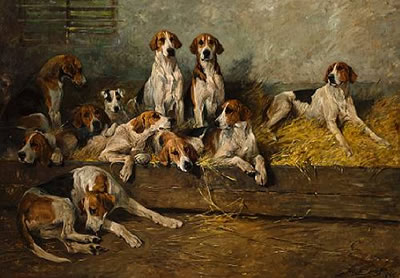 A late 19th and 20th century British painter in realist style of horses and dogs, especially in hunting scenes, John Emms began exhibiting his paintings at the Royal Academy of London in 1866. He was born in Blofield, Norfolk, and had a strong interest in art, which took him to London for study. There he became studio assistant fo Frederick Leighton, later Lord Leighton, and in this capacity traveled to New Forest in Lyndhurst to do a fresco, The Ten Virgins, for the local church.
In Lyndhurst, he became exposed to an outdoor lifestyle and he became an enthusiastic sportsman, especially fond of hunting and of horseback riding. He also mixed well with the local gentry, and met many of his painting customers were people he met in the 'field'. His early painting is quite precise in style, but he gradually developed a rapid method using a limited palette.
It was also written that he was quite a distinctive 'character' with a bohemian lifestyle and unique wardrobe.
Having secured an established painting reputation, he built a large house, which he called "The Firs", on Queens Road at Lyndhurst.
Exhibition venues in addition to the Royal Academy included the Southampton Art Society. His work is in the collections of the Southampton Art Gallery, the National Gallery of Scotland, and the Russell-Cotes Art Gallery in Bournemouth.
Sources include:
http://pages.britishlibrary.net/mikepymm/john_emms_-_the_artist.htm
http://www.burlington.co.uk/gallery/artist/biography?contentId=1520Biography from Red Fox Fine Art
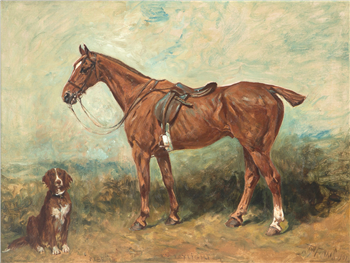 John Emms was born in Blofield, Norfolk, England, on 21 April, 1841.
Little is known of his early life and training; he presumably received instruction from his father, Henry Emms, who was also an artist. He is said to have studied with the noted classicist painter Lord Frederick Leighton, whom he assisted on his fresco The Ten Virgins in the parish church at Lyndhurst, England.
Emms began exhibiting at the Royal Academy in London in 1866; he continued to exhibit there fairly regularly until 1906. An avid horseman and frequent rider to hounds, he specialized in animal paintings, particularly those relating to horses, hounds and hunting. His evident skill in depicting his chosen subject earned him numerous commissions.
In 1872 he settled in Lyndhurst, and in 1880 he married Fanny Primmer, a woman fifteen years his junior. He worked in London during the 1880s, but spent much of the remainder of his life in Lyndhurst; a profligate lifestyle led to erratic finances, and it became necessary for Emms to trade paintings for necessary goods and services when an illness toward the end of his life interfered with his ability to work.
Emms exhibited several paintings at the Royal Academy in London; paintings he exhibited there include The Bird's-Nester in 1866, Foxhound Whelps in 1875, Gone Away in 1878, and Digging Out in 1889. He also exhibited at the Society of British Artists, where he showed such works as Beagles, Cub Hunting and Otter Hounds between 1867 and 1885.
Emms died in Lyndhurst, England, on 1 November, 1912.
Sources:
Graves, Algernon. The Royal Academy of Arts: A Complete Dictionary of Contributors and Their Work, from Its Foundation in 1796 to 1904. London, UK: S. R. Publishers, 1970 (reissue).
Hook, Philip and Poltimore, Mark. Popular 19th Century Painting - A Dictonary of European Genre Painters. Woodbridge, Suffolk, UK: The Antique Collectors' Club, 1986.
Jarman, Angela, ed. The Royal Academy of Arts: Royal Academy Exhibitors 1905 - 1970.Calne, Wiltshire, UK: Hilmarton Manor Press, 1985.
Johnson, J. and A. Greutzner. The Dictionary of British Artists 1880-1940. Woodbridge, Suffolk, UK: The Antique Collectors' Club, 1976.
Mitchell, Sally. The Dictionary of British Equestrian Artists. Suffolk, England: The Antique Collectors Club, 1985.
Wingfield, Mary Ann. A Dictionary of Sporting Artists 1650 - 1990. Suffolk, England: The Antique Collectors Club, 1992.
Wood, Chrisopher. The Dictionary of Victorian Painters-2nd Edition. Woodbridge, Suffolk, UK: The Antique Collectors' Club, 1978.