Page loaded successfully. Showing biography for John F Francis.
John F Francis BIOGRAPHY
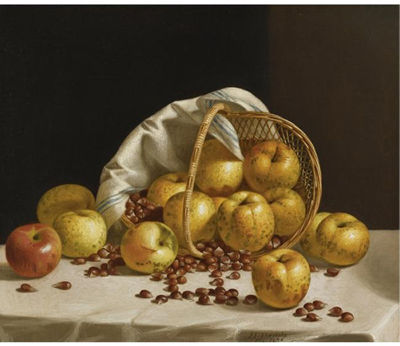
1808 Philadelphia, Pennsylvania - 1886 Jeffersonville, Pennsylvania. Known for: Food still life and portrait painting.
Born in Philadelphia, John Francis became a key artist in the mid-19th century revival of still life painting in America but was not recognized during his lifetime. His focus was "luncheon" or... Read full biography
Born in Philadelphia, John Francis became a key artist in the mid-19th century revival of still life painting in America but was not recognized during his lifetime. His focus was "luncheon" or "dessert" type subjects, which he rendered in bright, radiant color, a breaking away from the stern mode... Read full biography
Born in Philadelphia, John Francis became a key artist in the mid-19th century revival of still life painting in America but was not recognized during his lifetime. His focus was "luncheon" or "dessert" type subjects, which he rendered in bright, radiant color, a breaking away from the stern mode taught by the Peale family of artists in Philadelphia. His style is highly realistic and arguably fits the criteria of trompe l'oeil in that the objects are to scale, are arranged on a flat plane, and... Read full biography
Born in Philadelphia, John Francis became a key artist in the mid-19th century revival of still life painting in America but was not recognized during his lifetime. His focus was "luncheon" or "dessert" type subjects, which he rendered in bright, radiant color, a breaking away from the stern mode taught by the Peale family of artists in Philadelphia. His style is highly realistic and arguably fits the criteria of trompe l'oeil in that the objects are to scale, are arranged on a flat plane, and thrust forward into the viewer space. There is a suggestion of some disorder, giving the impression that a person has just been there. It is also thought that he influenced Michael Harnett, the founder of trompe l'oeil still life painting, and at... Read full biography
Born in Philadelphia, John Francis became a key artist in the mid-19th century revival of still life painting in America but was not recognized during his lifetime. His focus was "luncheon" or "dessert" type subjects, which he rendered in bright, radiant color, a breaking away from the stern mode taught by the Peale family of artists in Philadelphia. His style is highly realistic and arguably fits the criteria of trompe l'oeil in that the objects are to scale, are arranged on a flat plane, and thrust forward into the viewer space. There is a suggestion of some disorder, giving the impression that a person has just been there. It is also thought that he influenced Michael Harnett, the founder of trompe l'oeil still life painting, and at least one work by John Frances was passed off as a painting by Harnett. Most of his work is unsigned and undated, but it is thought that hi... Read full biography
Artist Biography
Biography page for John F Francis ((1808 - 1886)), known for Food still life and portrait painting. Showing 2 biographical entries and 0 sample artworks.
John F Francis - Artist Info
About John F Francis
Name variants
John F Frances
Biography from the Archives of askART
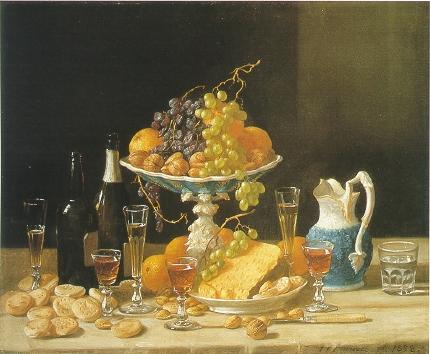 Born in Philadelphia, John Francis became a key artist in the mid-19th century revival of still life painting in America but was not recognized during his lifetime. His focus was "luncheon" or "dessert" type subjects, which he rendered in bright, radiant color, a breaking away from the stern mode taught by the Peale family of artists in Philadelphia.
His style is highly realistic and arguably fits the criteria of trompe l'oeil in that the objects are to scale, are arranged on a flat plane, and thrust forward into the viewer space. There is a suggestion of some disorder, giving the impression that a person has just been there. It is also thought that he influenced Michael Harnett, the founder of trompe l'oeil still life painting, and at least one work by John Frances was passed off as a painting by Harnett.
Most of his work is unsigned and undated, but it is thought that his later work was somewhat freer in style than the earlier.
The early part of his career, he was an itinerant portrait painter and silhouettist in Schuylkill County, Pennsylvania and then spent about 25 years traveling and painting in rural Pennsylvania well as in Delaware, Tennessee and Washington D.C. About 1850, he turned exclusively to still life subjects, using the techniques of 17th-century Dutch still life painters.
The last twenty years of his life, he lived alone and died 1886. No known paintings by him are extant after 1879. According to scholar Alfred Frankenstein in his book, After the Hunt, Francis was a very religious person who died a wealthy man. It was also mentioned in his obituaries that he was a very reclusive, often depressed person who was nervous and anxious to avoid interaction with other people.
He exhibited at the Pennsylvania Academy of the Fine Arts from 1840 to 1858, and he sold many of his still lifes through the American Art Union. After that time, he abandoned his career and life in Philadelphia because of the death of his wife and two children.Biography from Caldwell Gallery Hudson
John Francis was born in 1808 and initiated the revitalization of still life painting. He was largely a self-taught artist, producing some of America's most important still lifes. His visually intimate representations were delicately colored and painterly. Francis began to exhibit in Philadelphia in the 1840s and 50s as a portraitist, employing 17th century Dutch mannerisms. He also helped with the Artist' Fund Society's first exhibition. However, in 1858 he turned his attention to still lifes.
Francis' favorite subject in the 1860s was of luncheon feasts, showing a table spread with desserts, fruit and silver. "Champagne Lunch and Tropical Fruit" was exhibited at the Pennsylvania Academy of Fine Arts at this time. The last 20 years of his life, Francis was consumed by painting Jeffersonville, PA. He is highly regarded by 20th century art historians but received little credit during his lifetime. He died in 1886.