Page loaded successfully. Showing biography for John Von Wicht.
John Von Wicht BIOGRAPHY
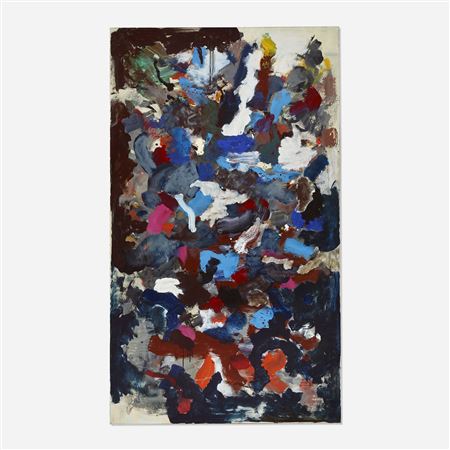
1888 Holstein, Germany - 1970 Brooklyn, New York. Known for: Non objective, mural, graphics, mosaics.
A painter of abstraction expression, muralist, mosaic and stained glass artist and printmaker, John Von Wicht was born in Germany and in 1923, immigrated to New York City where he was based during... Read full biography
A painter of abstraction expression, muralist, mosaic and stained glass artist and printmaker, John Von Wicht was born in Germany and in 1923, immigrated to New York City where he was based during most of his career. In Darmstadt, he attended the Bauhaus School and in Berlin, the Academy of Fine... Read full biography
A painter of abstraction expression, muralist, mosaic and stained glass artist and printmaker, John Von Wicht was born in Germany and in 1923, immigrated to New York City where he was based during most of his career. In Darmstadt, he attended the Bauhaus School and in Berlin, the Academy of Fine Arts. He also studied in a private school of the Grand Duke of Hesse in 1908. During World War I, serving in the German army, he was wounded, which left him partially paralyzed. In New York City in the... Read full biography
A painter of abstraction expression, muralist, mosaic and stained glass artist and printmaker, John Von Wicht was born in Germany and in 1923, immigrated to New York City where he was based during most of his career. In Darmstadt, he attended the Bauhaus School and in Berlin, the Academy of Fine Arts. He also studied in a private school of the Grand Duke of Hesse in 1908. During World War I, serving in the German army, he was wounded, which left him partially paralyzed. In New York City in the 1930s, John Von Wicht was a WPA (Federal Arts Project) artist for radion station WNYC and worked with Stuart Davis, Byron Browne and Louis Schanker. His murals, mosaics and stained glass are in many cities including the Federal Court House in... Read full biography
A painter of abstraction expression, muralist, mosaic and stained glass artist and printmaker, John Von Wicht was born in Germany and in 1923, immigrated to New York City where he was based during most of his career. In Darmstadt, he attended the Bauhaus School and in Berlin, the Academy of Fine Arts. He also studied in a private school of the Grand Duke of Hesse in 1908. During World War I, serving in the German army, he was wounded, which left him partially paralyzed. In New York City in the 1930s, John Von Wicht was a WPA (Federal Arts Project) artist for radion station WNYC and worked with Stuart Davis, Byron Browne and Louis Schanker. His murals, mosaics and stained glass are in many cities including the Federal Court House in Knoxville, Tennessee and the Pennsylvania Railroad Station in Trenton, New Jersey. In 1954, Von Wicht was honored with a residency at the... Read full biography
Artist Biography
Biography page for John Von Wicht ((1888 - 1970)), known for Non objective, mural, graphics, mosaics. Showing 3 biographical entries and 0 sample artworks.
John Von Wicht - Artist Info
About John Von Wicht
Name variants
John Von Vicht, John Von Wicht
Biography from the Archives of askART
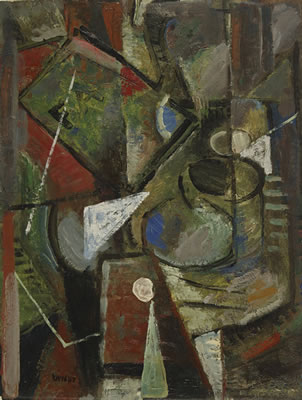 A painter of abstraction expression, muralist, mosaic and stained glass artist and printmaker, John Von Wicht was born in Germany and in 1923, immigrated to New York City where he was based during most of his career.
In Darmstadt, he attended the Bauhaus School and in Berlin, the Academy of Fine Arts. He also studied in a private school of the Grand Duke of Hesse in 1908. During World War I, serving in the German army, he was wounded, which left him partially paralyzed.
In New York City in the 1930s, John Von Wicht was a WPA (Federal Arts Project) artist for radion station WNYC and worked with Stuart Davis, Byron Browne and Louis Schanker. His murals, mosaics and stained glass are in many cities including the Federal Court House in Knoxville, Tennessee and the Pennsylvania Railroad Station in Trenton, New Jersey.
In 1954, Von Wicht was honored with a residency at the MacDowell Colony. In 1951 and 1952, he taught at the Art Students League in New York and in 1953, the John Herron Art Institute.
Source:
Peter Falk, "Who Was Who in American Art"
Marika Herskovic, Editor, "American Abstract Expressionism of the 1950s"Biography from Caldwell Gallery Hudson
John Von Wicht was born in Holstein, Germany in 1888. He studied at the Private Art School of the Grand Duke of Hesse in Darmstadt, Germany, and at the Royal School for Fine and Applied Arts in Berlin. At the age of 17, he served as an apprentice in a painting and decorating shop, and spent his spare time drawing. He began painting in oil about 1908 and sold his first canvas soon thereafter.
During World War I, Von Wicht was wounded and partially paralyzed. While recovering, he did book designs and illustration work, and discovered the artists Mondrian and Malevich. In 1923, Von Wicht emigrated to the United States, settling in New York where he worked for a lithography company and then joined a firm making stained glass and mosaics.
It was during this time that the artist began executing abstractions in a linear, geometric style. During the 1930's, Von Wicht joined the AAA (American Abstract Artist group), and during the 40's his work ranged from abstract to semi-abstract, cubist inspired work.
During World War II, he served as captain of a supply barge ferrying food to army transport ships in New York harbor, and harbor motifs began appearing in his abstractions. In the mid-1950's, Von Wicht developed his mature abstract style, which can be best described as lyrical expressionism. It is with these unique pieces that Von Wicht's life-long struggle to achieve a personal artistic breakthrough is finally achieved.
In 1936, Von Wicht had his first solo show of mural designs at the Architect's Building. In 1939, there was an exhibition of his paintings at the Theodor A. Kohn Gallery, and the following year he exhibited at the Whitney Museum of American Art. During his career, Von Wicht had more than 30 one-man shows, exhibited at countless museum group shows, and won more than 25 art awards. He is remembered by those who knew him as an "artist's artist".
Von Wicht died in 1970.Biography from ACME Fine Art
John Von Wicht
1888-1970
In Ad Reinhardt's landmark cartoon from 1946, "How to Look at Modern Art in America", John Von Wicht shares a branch with Hans Hofmann, Jackson Pollock, Robert Motherwell, William Baziotes, and Arthur Dove. Such is the company he kept.
Von Wicht was a Modernist before it became fashionable. He was painting in an abstract geometric style upon emmigrating from Germany in the 1920's. During the 1930's and early 1940's Von Wicht's work reflects a keen interest in cubism; however, it was cubism interpreted in a fresh expressionistic manner all his own. In his later work Von Wicht adopted an abstract expressionist mode of painting. Today Von Wicht is regarded as master of all of the painting idioms he pursued, and his work from all periods is highly regarded.
Education:
Darmstadt-Bauhaus School
Berlin Academy of Fine Art
Selected Exhibitions:
Brooklyn Museum, 1924-25, 1939, 1943, 1950 (prize), 1951,
1955 (prize), 1958 (prize), 1960, 1964
Whitney Museum of American Art, 1940-67
Pennsylvania Academy of Fine Art, 1947-68
Art Institute of Chicago, 1947
Worlds Fair, New York, 1939
Corcoran Gallery of Art, 1947-61
Metropolitan Museum of Art, 1941
Salons of America, 1927, 1931, 1934
Audubon Artists, 1952-55, 1958 (medal)
Boston Art Festival, 1958 (prize)
Art USA, 1959
Ford Foundation, 1960 (purchase prize)
Santa Barbara Museum, 1959 (retrospective)
Artists Gallery, NY
Bertha Schaefer Gallery
Passedoit Gallery
Martin Diamond Fine Art
Selected Collections:
National Museum, Stockholm
Musee National d'Art Moderne, Paris
National Gallery, Berlin
Museo d'Art Contemporains, Madrid
Metropolitan Museum of Art
Whitney Museum of American Art
Museum of Modern Art
Cincinnati Art Museum
Collections cont'd.
Brooklyn Museum
Library of Congress
Museum of Fine Art, Boston
Chrysler Museum
University of Illinois
Yale University
Jewish Museum
Herron Art Institute
Kansas State University
Pittsburgh Museum of Art
Bradley University