Page loaded successfully. Showing biography for Joseph Decker.
Joseph Decker BIOGRAPHY
1853 Wurttemburg, Germany - 1924 Brooklyn, NY.. Known for: Still life, genre, landscape, animal.
A creator of still life in the 1880s and 1890s, Joseph Decker painted in both hard-edged and soft styles that conveyed sentimentality and included subjects that ranged from fruit still lifes to his... Read full biography
A creator of still life in the 1880s and 1890s, Joseph Decker painted in both hard-edged and soft styles that conveyed sentimentality and included subjects that ranged from fruit still lifes to his pet squirrel. He was first known for his harsh paintings that were full of vibrating color, but his... Read full biography
A creator of still life in the 1880s and 1890s, Joseph Decker painted in both hard-edged and soft styles that conveyed sentimentality and included subjects that ranged from fruit still lifes to his pet squirrel. He was first known for his harsh paintings that were full of vibrating color, but his later works were more misty, soft, and conventional. He was born the son of a carpenter in Wurttemburg, Germany. In 1867, he traveled to the United States where he first took up residency in Reading,... Read full biography
A creator of still life in the 1880s and 1890s, Joseph Decker painted in both hard-edged and soft styles that conveyed sentimentality and included subjects that ranged from fruit still lifes to his pet squirrel. He was first known for his harsh paintings that were full of vibrating color, but his later works were more misty, soft, and conventional. He was born the son of a carpenter in Wurttemburg, Germany. In 1867, he traveled to the United States where he first took up residency in Reading, Pennsylvania. He soon settled permanently in Brooklyn. He studied art at night at the National Academy of Design, and in 1877 began showing paintings at the annual Brooklyn Art Association show. During the day he was an apprentice to a house painter... Read full biography
A creator of still life in the 1880s and 1890s, Joseph Decker painted in both hard-edged and soft styles that conveyed sentimentality and included subjects that ranged from fruit still lifes to his pet squirrel. He was first known for his harsh paintings that were full of vibrating color, but his later works were more misty, soft, and conventional. He was born the son of a carpenter in Wurttemburg, Germany. In 1867, he traveled to the United States where he first took up residency in Reading, Pennsylvania. He soon settled permanently in Brooklyn. He studied art at night at the National Academy of Design, and in 1877 began showing paintings at the annual Brooklyn Art Association show. During the day he was an apprentice to a house painter and also worked as a sign painter. In 1879, Decker returned to Germany where he studied at the Munich Academy, studying under his... Read full biography
Artist Biography
Biography page for Joseph Decker ((1853 - 1924)), known for Still life, genre, landscape, animal. Showing 1 biographical entries and 0 sample artworks.
Joseph Decker - Artist Info
About Joseph Decker
Biography from the Archives of askART
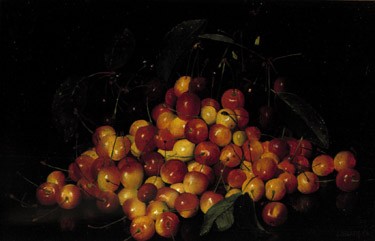 A creator of still life in the 1880s and 1890s, Joseph Decker painted in both hard-edged and soft styles that conveyed sentimentality and included subjects that ranged from fruit still lifes to his pet squirrel. He was first known for his harsh paintings that were full of vibrating color, but his later works were more misty, soft, and conventional.
He was born the son of a carpenter in Wurttemburg, Germany. In 1867, he traveled to the United States where he first took up residency in Reading, Pennsylvania. He soon settled permanently in Brooklyn.
He studied art at night at the National Academy of Design, and in 1877 began showing paintings at the annual Brooklyn Art Association show. During the day he was an apprentice to a house painter and also worked as a sign painter.
In 1879, Decker returned to Germany where he studied at the Munich Academy, studying under history painter Wilhelm Lingerschmidt. There he was introduced to the fluid, dark-toned, bravura style that represented the school. When he returned to the United States a year later, he proceeded to paint still lifes with the same bold, full of vibrate colors as he did before he left.
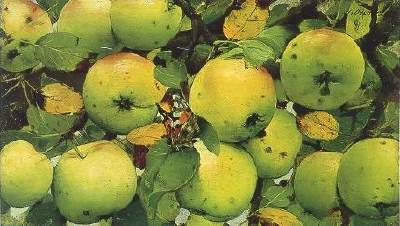
Decker early works, mostly still life and some genre, have an unsettling detachment of viewpoint, as a close focus and a dramatically cropped composition that was similar to the twentieth-century photography of Alfred Stieglitz and others. The flatness of the picture plan and the boldness of Decker's colors repelled the art critics of his time but appealed to a modern eye.
Decker's later work was much influenced by impressionism: his landscapes followed the style of George Inness, and his still lifes adopted a balanced, classical composition.
----------------------------------------------------------------------
One of the most interesting artists this country has ever produced, Joseph Decker lived on the periphery of the Brooklyn art world in the 1880's and 1890's as a still life painter. He was born the son of a carpenter in Wurttemburg, Germany. In 1867, he traveled to the United States where he first took up residency in Reading, Pennsylvania. He soon settled permanently in Brooklyn.
He studied art at night at the National Academy of Design, and in 1877 began showing paintings at the annual Brooklyn Art Association show. During the day he was an apprentice to a house painter and also worked as a sign painter. In 1879, Decker returned to Germany where he studied at the Munich Academy, studying under history painter Wilhelm Lingerschmidt. There he was introduced to the fluid, dark-toned, bravura style that represented the school. When he returned to the United States a year later, he proceeded to paint still lifes with the same bold, vibrate colors as he did before he left.
His work is often said as falling into of two different periods or categories, the Hard and the Soft. Hard early and the Soft later, Concurrent with the arrival of Impressionism in this country he was a product of his time, as he adapted to the changing market circumstances. Decker's early works, mostly still life and some genre, have an unsettling detachment of viewpoint, as a close focus and a dramatically cropped composition that was similar to the twentieth-century photography of Alfred Stieglitz and others. The flatness of the picture plane and the boldness of Decker's colors bothered the art critics of his time but appeal to the modern eye.
Decker's later work was much influenced by impressionism: his landscapes followed the style of George Inness, and his still lifes adopted a balanced, classical composition.
While the rarest of his works are the "Hard" scenes of hanging apples, his images of squirrels gathering nuts are considered no less desirable. According to family lore the artist had a pet squirrel in the last decade of the 19th century named Bonnie, whom the artist fed chocolate covered almonds. Bonnie was the subject for many of his finest works, including the famous one in the collection of the Terra Museum in Evanston, Illinois. Judging by the date and subject matter, "Squirrel with Nuts, 1899", is perhaps the final example from this series. As such it might well be regarded as punctuation mark of sorts symbolizing the end of an era.
Source:
Alexander Boyle, who was featured on the television show "America's First River, Bill Moyers on the Hudson. Boyle worked with the Metropolitan Museum of Art as the Assistant Director of a film, "American Paradise, the World of the Hudson River School" and from 1988 to 2001 was Vice-President of Godel & Co. Fine Art in New York where he bought, sold and wrote about the artists of the Hudson River School, American marine painting, and American Impressionism.