Page loaded successfully. Showing biography for Joseph Kleitsch.
Joseph Kleitsch BIOGRAPHY
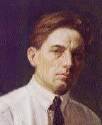
1882 Banat, Hungary - 1931 Santa Ana, California. Known for: Impressionist painting-sea-landscape, portrait and interiors.
Born in the Banat region of Hungary on June 6, 1882, Joseph Kleitsch began painting at age seven and was awarded a scholarship by his village to study art. He continued his training in Budapest,... Read full biography
Born in the Banat region of Hungary on June 6, 1882, Joseph Kleitsch began painting at age seven and was awarded a scholarship by his village to study art. He continued his training in Budapest, Munich, and Paris. By age 17 he was an accomplished portraitist with such sitters as Emperor Franz... Read full biography
Born in the Banat region of Hungary on June 6, 1882, Joseph Kleitsch began painting at age seven and was awarded a scholarship by his village to study art. He continued his training in Budapest, Munich, and Paris. By age 17 he was an accomplished portraitist with such sitters as Emperor Franz Joseph of Austria. He immigrated to the U.S. in 1901 and established a studio in Cincinnati; during 1906-07 he was a resident of Denver. He then traveled to Mexico City where he was the official... Read full biography
Born in the Banat region of Hungary on June 6, 1882, Joseph Kleitsch began painting at age seven and was awarded a scholarship by his village to study art. He continued his training in Budapest, Munich, and Paris. By age 17 he was an accomplished portraitist with such sitters as Emperor Franz Joseph of Austria. He immigrated to the U.S. in 1901 and established a studio in Cincinnati; during 1906-07 he was a resident of Denver. He then traveled to Mexico City where he was the official portraitist to President Madero. Kleitsch painted portraits of many prominent citizens of Chicago while further studying at the AIC. Upon moving to California in 1920, he settled in Laguna Beach and, with his wife Edna, established the Kleitsch Academy. He... Read full biography
Born in the Banat region of Hungary on June 6, 1882, Joseph Kleitsch began painting at age seven and was awarded a scholarship by his village to study art. He continued his training in Budapest, Munich, and Paris. By age 17 he was an accomplished portraitist with such sitters as Emperor Franz Joseph of Austria. He immigrated to the U.S. in 1901 and established a studio in Cincinnati; during 1906-07 he was a resident of Denver. He then traveled to Mexico City where he was the official portraitist to President Madero. Kleitsch painted portraits of many prominent citizens of Chicago while further studying at the AIC. Upon moving to California in 1920, he settled in Laguna Beach and, with his wife Edna, established the Kleitsch Academy. He taught there and was active in the local art scene while exhibiting in Los Angeles at Ste. Source: Edan Hughes, "Artists in California, 1786-1940". Plein... Read full biography
Artist Biography
Biography page for Joseph Kleitsch ((1882 - 1931)), known for Impressionist painting-sea-landscape, portrait and interiors. Showing 7 biographical entries and 0 sample artworks.
Joseph Kleitsch - Artist Info
About Joseph Kleitsch
Biography from the Archives of askART
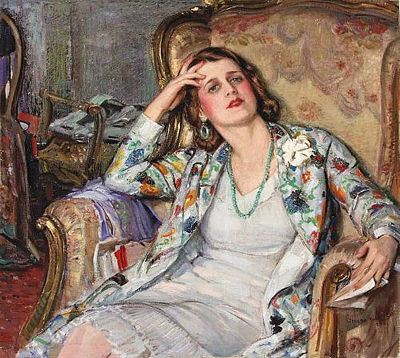 Born in the Banat region of Hungary on June 6, 1882, Joseph Kleitsch began painting at age seven and was awarded a scholarship by his village to study art. He continued his training in Budapest, Munich, and Paris. By age 17 he was an accomplished portraitist with such sitters as Emperor Franz Joseph of Austria.
He immigrated to the U.S. in 1901 and established a studio in Cincinnati; during 1906-07 he was a resident of Denver. He then traveled to Mexico City where he was the official portraitist to President Madero. Kleitsch painted portraits of many prominent citizens of Chicago while further studying at the AIC. Upon moving to California in 1920, he settled in Laguna Beach and, with his wife Edna, established the Kleitsch Academy.
He taught there and was active in the local art scene while exhibiting in Los Angeles at Stendahl and Hatfield galleries. Trips were made to San Francisco, Carmel, and Europe in search of subject matter. Inspired by the local scenery, he could often be seen in and around Laguna painting street scenes with figures, gardens in bloom, coastals, and landscapes.
Kleitsch died of a heart attack in Santa Ana, CA on Nov. 16, 1931.
Exhibitions:
AIC, 1914 (gold medal); Palette & Chisel Club, 1914-19; Stendahl Gallery (LA), 1922-29; Painters & Sculptors of LA, 1922-23; Leonard's (LA), 1923; Ambassador Hotel (LA), 1924; Biltmore Salon (LA), 1924; Ebell Club (LA), 1924; PAFA, 1925; Pasadena Public Library, 1928; Laguna Beach AA, 1928-30; LACMA, 1933 (memorial).
Collections:
Orange Co. (CA) Museum; Laguna Beach Museum; Irvine (CA) Museum; Federal Bank Bldg. (Laguna).Biography from Steven Stern Fine Arts
Joseph Kleitsch is widely regarded as one of the most gifted colorists of the California Impressionist movement and among the most accomplished painters working in Southern California during the early twentieth century. Celebrated for his radiant landscapes, vibrant garden scenes, and masterful portraits, Kleitsch possessed a remarkable ability to capture the brilliance of California’s light through rich color harmonies and expressive brushwork. His paintings remain among the most admired works produced during the height of the California plein-air tradition.
Kleitsch was born in Deutsch-Tschantschendorf, Austria (then part of the Austro-Hungarian Empire) in 1882. Demonstrating exceptional artistic talent at a young age, he entered the prestigious Academy of Fine Arts in Vienna, where he received rigorous academic training in drawing, painting, and composition. His early work focused primarily on portraiture and figure painting, and even as a young artist he gained recognition for his technical skill and sensitivity to color and form. During the first decade of the twentieth century, Kleitsch traveled widely throughout Europe, working as both a portrait painter and landscape artist. In 1909 he immigrated to the United States and settled in Chicago, where he quickly established himself as a respected portraitist.
His work attracted favorable attention, and he exhibited successfully in major exhibitions, including those organized by the Art Institute of Chicago. In 1920 Kleitsch moved to Laguna Beach, California, a small coastal community that had become an important gathering place for artists drawn to the region’s remarkable light and natural beauty. The move proved transformative for his artistic career. The intense clarity of California sunlight and the vivid colors of the coastal landscape inspired Kleitsch to expand his palette and embrace the plein-air approach that characterized the California Impressionist movement. Laguna Beach soon became the primary subject of Kleitsch’s work. He painted the village’s cottages, gardens, eucalyptus trees, and sunlit hillsides with extraordinary vitality and color.
His landscapes often feature shimmering passages of paint that convey the movement of light across foliage, architecture, and sky. Through bold brushwork and luminous color, Kleitsch captured the vibrant atmosphere of coastal Southern California with remarkable immediacy. In addition to landscapes, Kleitsch produced numerous portraits that demonstrate his exceptional technical mastery. His training in European academic traditions allowed him to combine strong draftsmanship with a painterly Impressionist surface. These works reveal his ability to balance structural precision with expressive color, making him equally successful as both a portraitist and landscape painter.
Kleitsch quickly became an influential member of the Laguna Beach art community. He served as president of the Laguna Beach Art Association and played a significant role in establishing the artistic reputation of the region. His enthusiasm, generosity, and dedication to painting made him a respected figure among fellow artists and collectors alike. Despite his relatively short life, Kleitsch achieved considerable recognition during his career. His paintings were widely exhibited and collected, and he received numerous awards for his work. Critics frequently praised his extraordinary use of color and his ability to translate the brilliance of California sunlight into paint. Joseph Kleitsch died in 1931 at the age of forty-nine. Although his career was brief, his artistic legacy remains profound.
Today he is remembered as one of the finest painters of the California Impressionist movement and as a master colorist whose paintings continue to captivate collectors, scholars, and museum audiences alike. © Steven Stern Fine Arts • Los AngelesBiography from Mark Sublette Medicine Man Gallery
Joseph Kleitsch was considered one of the premier painters in the early California School of Impressionism. Born in Deutsch St. Michael, Banat, Hungary on June 6, 1882, he began painting at the age of seven. After being awarded a scholarship by his village to study art, he continued his training in Budapest, Munich and Paris. Around 1901, he immigrated to Germany and then to Cincinnati, Ohio. In 1905 he moved to Denver. Between 1907 and 1909 he visited and painted in Chicago, Kansas and Mexico City. He was honored in 1912 for his portraits of Mexico's President Francisco Madero and his family.
Around 1914 Kleitsch moved to Chicago where besides painting portraits of many prominent citizens, he taught at the Art Institute of Chicago from 1914 to 1919. While there he joined the Palette and Chisel Club and participated in exhibitions where his new style of painting interior scenes with figures was shown. In 1914 he was awarded the Gold Medal by the Art Institute of Chicago.
In 1920 Joseph and his wife, Edna, moved to Laguna Beach and started the Kleitsch Academy. Although he was at the height of his art career in Chicago, he found the rustic local street scenes in his new home to be extremely inspiring and his painting flourished. He was soon exhibiting his work at Stendahl and Hatfield Galleries in Los Angeles while also making trips to San Francisco, Carmel and Europe in search of the next painting subject. Arthur Millier of the Los Angeles Times was quoted saying of Kleitsch, "He was a born colorist; he seemed to play on canvas with the abandon of a gypsy violinist."
Kleitsch became an avid plein air painter and helped to cofound the Painters' and Sculptors' Club in 1923. It was a men's only group patterned after the Salmagundi Club of New York. They worked with studio models and also had a sketching camp for landscape painting. He was awarded their Silver Medal.
From 1926 to 1929 Joseph returned to Europe, painting in Giverny to experience first hand the inspiration for Monet's works and then traveling on to Hungary and to Spain before returning to Laguna Beach where he had a successful showing at the Stendahl. A few years later Kleitsch died suddenly at the age of 49 from a heart attack.
During his life he was also a member of the Chicago Society of Artists and the Laguna Beach Art Association, which awarded him the Grand Prize and Figure Prize.
Bibliography
1. Fleischer Museum of California
2. Irvine Museum
3. "Plein Air Painters of the Southland" by Ruth Lily Westphal
4. "Artists in California, 1786-1940" by Edan Milton Hughes
5. Laguna Art Museum
6. Los Angeles TimesBiography from William A. Karges Fine Art
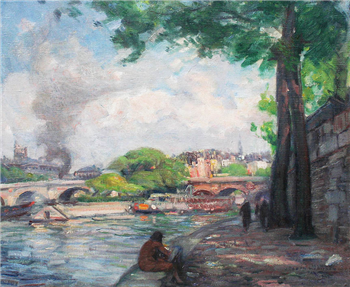 Joseph Kleitsch is considered to be one of the most important and influential of the early Southern California Impressionists. Born in Hungary in 1882, he began painting at age seven, and trained in Budapest, Munich and Paris. By the age of 17, he was an accomplished portraitist, with sitters such as Franz Josef of Austria.
Furthering his studies, Kleitsch immigrated to the United States around 1901, first setting in Ohio, then in Denver in 1905. He married his first wife, Emma Multner, in October of 1904, and they moved to Mexico City in 1909. His outstanding portraits of Mexico's President Francisco Madero were highly regarded. In 1913 his wife, Emma, passed away.
After 1914 Kleitsch painted many prominent local citizens while studying at the Art Institute of Chicago. He became a teacher at the well known school, where he taught until 1919, and was awarded the Gold Medal in 1914 when he exhibited his work there. In 1914 he married an art teacher named Edna Gregatis, and their son Eugene was born in 1915.
Settling in Laguna Beach in 1920, he established the Kleitsch Academy of Art. He had become acquainted in Chicago with the important southern California Impressionist painter, Edgar Payne, who had already settled in the Laguna Beach area. Kleitsch's California works, exhibited at the Stendahl Galleries in Los Angeles, were focused on the landscape, gardens, and architecture around his home in Laguna Beach, as well as coastal scenes. He traveled to various locations in California including Carmel, Mission San Juan Capistrano and San Francisco in search of interesting and inspiring subjects.
He traveled to Europe between 1926 and 1929, including to Giverny, France, where he was inspired by the dramatic setting of Claude Monet's acclaimed works.
Kleitsch, a master colorist, is celebrated for his bold, energetic brushwork, and his unique and elegant style. He often painted outdoors, “en plein-air”, and was one of the founders of the Painters' and Sculptors' Club in 1923. Throughout the course of his successful career, he also was a member of the Chicago Society of Artists, The Palette and Chisel Club of Chicago, and the Laguna Beach Art Association. His work was awarded the Grand Prize and the Figure Prize by Laguna Beach Art Association.
His paintings can be found in the collections of the Laguna Beach Museum of Art, the Irvine Museum, and the Fleischer Museum.
The artist died on November 16th, 1931 at the age of forty-nine of a heart attack, while he was in front of the Courthouse in Santa Ana, California.Biography from Lawrence Beebe Fine Art
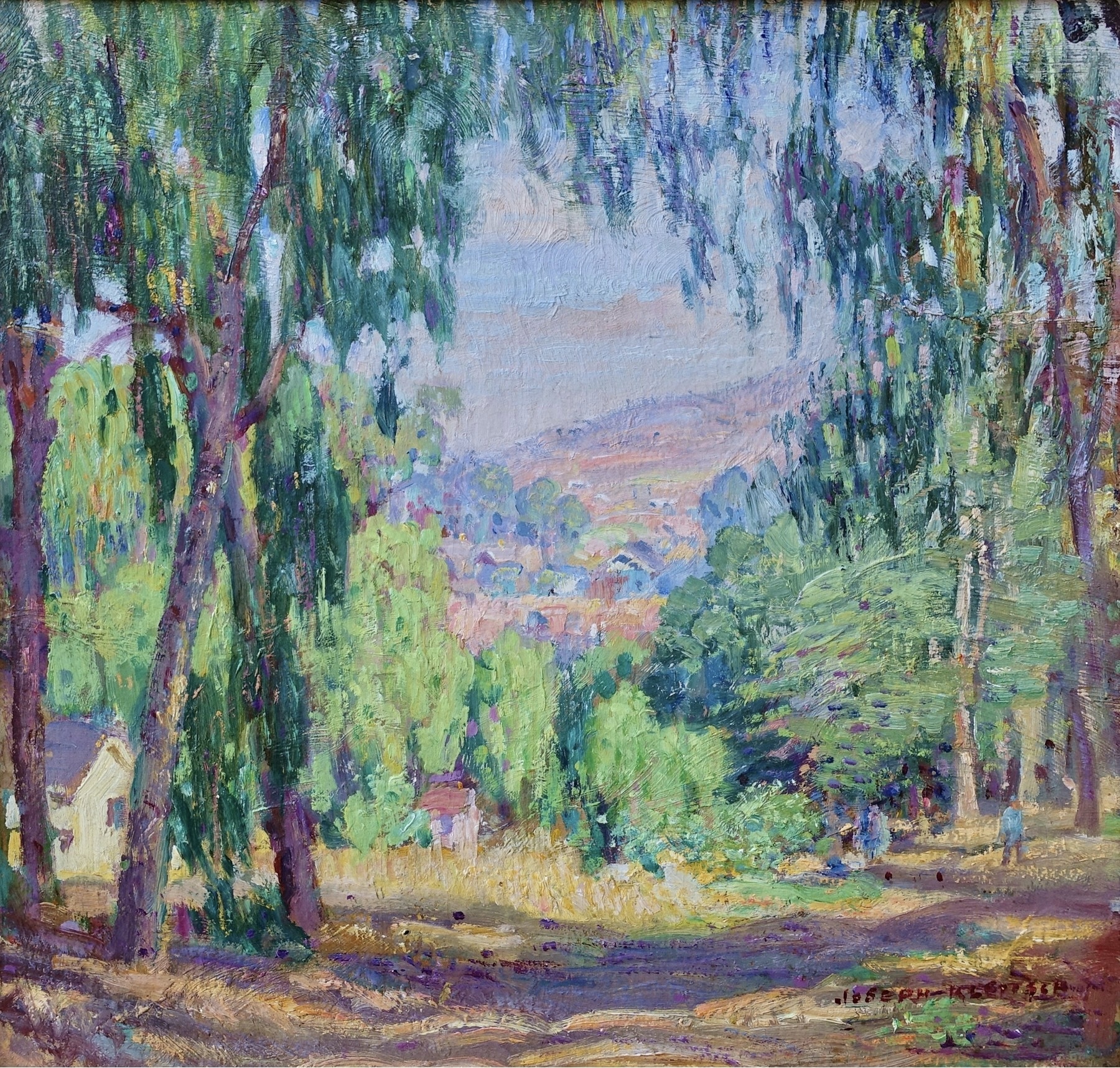 Joseph Kleitsch was born on June 6, 1882 in Banat, Hungary. He trained and studied at schools in Budapest, Munich and Paris. Between 1907 and 1909 he was known to have visited and painted in Mexico City, (Hutchinson) Kansas and Chicago. Mexican President Francisco Madero and his wife honored Kleitsch in 1912 for his commissioned portraits of the royal family.
In 1920 Kleitsch arrived in southern California, deciding to reside in Laguna Beach and Los Angeles. As an avid plein-air painter, he was inspired by the streets and shores of Laguna Beach, and took frequent painting trips to nearby Mission San Juan Capistrano, to northern California's San Francisco and Carmel. Later in his career, in 1925, he traveled to Hungary, Spain and France, and he returned to Laguna Beach in November of 1927.
He has been characterized as a "master of gorgeous color". Arthur Millier, art critic for the "Los Angeles Times", in 1933, said of Kleitsch that he was"a born colorist; he seemed to play on canvas with the abandon of a gypsy violinist". Earlier Anthony Anderson, also an art critic for the "Los Angeles Times" in 1922, was quoted as saying: "Kleitsch has discovered more varieties of loveliness in Laguna Beach than any other artist...he explored little intimate places, he painted quaint old streets with towering eucalyptus, the gardens rioting with bloom, and he introduced feminine figures straying through these charming purlieus...".
During his career, he held memberships at the Chicago Society of Artists, the Laguna Beach Art Association, the Painters' and Sculptors' Club and the Palette and Chisel Club of Chicago. He exhibited and then won the Gold Medal at the Art Institute of Chicago in 1914, the Silver Medal at the Painters' and Sculptors' Club and the Grand Prize and Figure Prize at the Laguna Beach Art Association.
Works by Joseph Kleitsch can be found at the Laguna Beach Museum of Art, the Irvine Museum, the Fleischer Museum and important private collections.
He died at the early age of forty-nine on November 16, 1931 in Santa Ana, California.Biography from Thomas Lawrence Fine Art
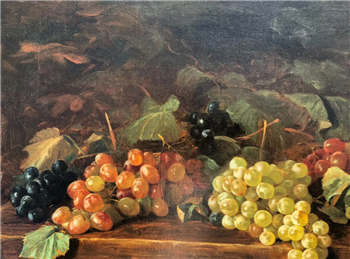 Joseph Kleitsch was one of Laguna Beach's most notable early residents and painters. He was born in Banad, Hungary in 1885, and as a young child began art studies in Budapest, Munich, and Paris.
Excelling at portraiture he was commissioned to paint royalty and dignitaries of his time. Kleitsch emigrated to Chicago, a destination for many eastern European immigrants at the turn of the twentieth century, and there began studies at the Art Institute.
He moved permanently to California in 1920 and settled in Laguna Beach where he established the Kleitsch Academy. He exhibited regularly with the Stendahl Galleries of Los Angeles, becoming a favorite of the art scene of Southern California. He made painting trips to San Francisco, Carmel, France and Mexico.
It was in France that he created an important body of work that was sent to Stendahl in the late 1920's. Initiating his career as an impressionist, Kleitsch eventually pushed his art in the direction of the moderns. His tendencies to explore newer techniques made him one of the most innovative California Impressionists.
He died untimely in Mexico on a painting excursion in 1931.Biography from Kelley Gallery - Pasadena
Joseph Kleitsch came to the U.S. from Hungary in the early 1900s, settling in California around 1920. Joseph Kleitsch's works span a broad spectrum of subjects and styles, beginning with early academic pictures consisting of still life, landscape, and genre subjects painted in a late 19th-century manner. Once in California, Joseph Kleitsch developed a bold, Post-Impressionist style characterized by a high-keyed palette and loose, energetic brush work. Joseph Kleitsch's subjects continued to include portraits and informal figurative works, along with plein- air landscapes, coastal scenes, genre compositions, and street scenes.
In 1926 Joseph Kleitsch traveled to Europe for a period of nearly two years and produced a similarly eclectic body of work, returning to California in 1928. The following few years in Joseph Kleitsch's career indicate that he was moving in a direction that was increasingly influenced by emerging modernist trends. A number of Joseph Kleitsch's post-European works from 1928 onward are marked by a streamlined approach utilizing simplified forms and expressionist distortions. Joseph Kleitsch also broadened his palette at this time, ranging from somber and low-keyed tonalism to a luminescent high-keyed approach. Joseph Kleitsch died in 1931 at the age of 49.