Page loaded successfully. Showing biography for Juanita Rogers.
Juanita Rogers BIOGRAPHY
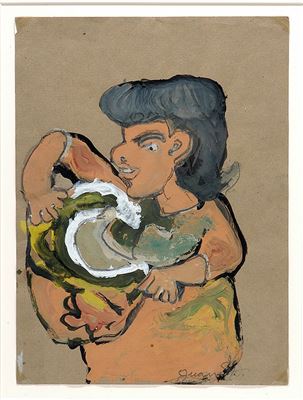
1934 - 1985. Known for: Naive ethnic figure.
Born May 12, l934 in the rural community of Tintop, Alabama, Juanita Rogers began "making mud" at an early age. Living in a small wooden house without benefit of running water, isolated, and without... Read full biography
Born May 12, l934 in the rural community of Tintop, Alabama, Juanita Rogers began "making mud" at an early age. Living in a small wooden house without benefit of running water, isolated, and without access to conventional art materials, she first used animal bones, mud and found objects to create... Read full biography
Born May 12, l934 in the rural community of Tintop, Alabama, Juanita Rogers began "making mud" at an early age. Living in a small wooden house without benefit of running water, isolated, and without access to conventional art materials, she first used animal bones, mud and found objects to create fanciful creatures she called "funny brick." Her house was filled with these creations, when she was discovered by Anton Haardt in the early 1980's. Juanita never married or had children. When her art... Read full biography
Born May 12, l934 in the rural community of Tintop, Alabama, Juanita Rogers began "making mud" at an early age. Living in a small wooden house without benefit of running water, isolated, and without access to conventional art materials, she first used animal bones, mud and found objects to create fanciful creatures she called "funny brick." Her house was filled with these creations, when she was discovered by Anton Haardt in the early 1980's. Juanita never married or had children. When her art was discovered, she was ill with a cancerous tumor. Haardt provided Juanita with drawing materials and the encouragement to experiment. Her works on paper became an interpretation of her surroundings, a curious blend drawn from TV and her vivid... Read full biography
Born May 12, l934 in the rural community of Tintop, Alabama, Juanita Rogers began "making mud" at an early age. Living in a small wooden house without benefit of running water, isolated, and without access to conventional art materials, she first used animal bones, mud and found objects to create fanciful creatures she called "funny brick." Her house was filled with these creations, when she was discovered by Anton Haardt in the early 1980's. Juanita never married or had children. When her art was discovered, she was ill with a cancerous tumor. Haardt provided Juanita with drawing materials and the encouragement to experiment. Her works on paper became an interpretation of her surroundings, a curious blend drawn from TV and her vivid imagination. Juanita created around 300 works before she died on January 26, l985. Source: . Marcia Weber Art Objects
Artist Biography
Biography page for Juanita Rogers ((1934 - 1985)), known for Naive ethnic figure. Showing 1 biographical entries and 0 sample artworks.
Juanita Rogers - Artist Info
About Juanita Rogers
Biography
Born May 12, l934 in the rural community of Tintop, Alabama, Juanita Rogers began "making mud" at an early age. Living in a small wooden house without benefit of running water, isolated, and without access to conventional art materials, she first used animal bones, mud and found objects to create fanciful creatures she called "funny brick." Her house was filled with these creations, when she was discovered by Anton Haardt in the early 1980's. Juanita never married or had children. When her art was discovered, she was ill with a cancerous tumor. Haardt provided Juanita with drawing materials and the encouragement to experiment. Her works on paper became an interpretation of her surroundings, a curious blend drawn from TV and her vivid imagin...But wait, there's more...
Displaying 870 of 870 characters.
Subscriber Members, please Sign In for full artist biographies and all services.
For non-paying users, good news! Full text bios for all artists are available every Friday.
If you are not currently a member, please See Details about membership.