Page loaded successfully. Showing biography for Jules Alexandre Grun.
Jules Alexandre Grun BIOGRAPHY
1868 - 1934. Known for: Painting, illustration poster artist-automobiles.
Jules Grun, once a student of Jean Baptiste Guillemet's, was a French painter from the turn of the century. Thanks to his talent, Grun not only participated in the Salon des Artistes Francais, but... Read full biography
Jules Grun, once a student of Jean Baptiste Guillemet's, was a French painter from the turn of the century. Thanks to his talent, Grun not only participated in the Salon des Artistes Francais, but also served as a member of the Salon committee as well as a jury member for a museum. In addition to... Read full biography
Jules Grun, once a student of Jean Baptiste Guillemet's, was a French painter from the turn of the century. Thanks to his talent, Grun not only participated in the Salon des Artistes Francais, but also served as a member of the Salon committee as well as a jury member for a museum. In addition to being an accomplished painter, Grun also produced advertisement posters. Some of his best-known work includes the poster for Monaco's "Exposition et Concours de Canots Automobiles" and a decorative... Read full biography
Jules Grun, once a student of Jean Baptiste Guillemet's, was a French painter from the turn of the century. Thanks to his talent, Grun not only participated in the Salon des Artistes Francais, but also served as a member of the Salon committee as well as a jury member for a museum. In addition to being an accomplished painter, Grun also produced advertisement posters. Some of his best-known work includes the poster for Monaco's "Exposition et Concours de Canots Automobiles" and a decorative signpost for the Paris Tavern. His works can be seen in numerous locations including the Lisieux Museum in France. This particular pastel was created for Mrs. Margaine-Lacroix as the white text on it indicates: "To Mrs. Margaine-Lacroix after one of her... Read full biography
Jules Grun, once a student of Jean Baptiste Guillemet's, was a French painter from the turn of the century. Thanks to his talent, Grun not only participated in the Salon des Artistes Francais, but also served as a member of the Salon committee as well as a jury member for a museum. In addition to being an accomplished painter, Grun also produced advertisement posters. Some of his best-known work includes the poster for Monaco's "Exposition et Concours de Canots Automobiles" and a decorative signpost for the Paris Tavern. His works can be seen in numerous locations including the Lisieux Museum in France. This particular pastel was created for Mrs. Margaine-Lacroix as the white text on it indicates: "To Mrs. Margaine-Lacroix after one of her creations." Margaine-Lacroix was a well-recognized clothing designer from the Belle Epoque. This particula... Read full biography
Artist Biography
Biography page for Jules Alexandre Grun ((1868 - 1934)), known for Painting, illustration poster artist-automobiles. Showing 1 biographical entries and 0 sample artworks.
Jules Alexandre Grun - Artist Info
About Jules Alexandre Grun
Name variants
Alexandre Grun, J A Grun
Biography from Anderson Galleries, Inc.
Jules Grun, once a student of Jean Baptiste Guillemet's, was a French painter from the turn of the century. Thanks to his talent, Grun not only participated in the Salon des Artistes Francais, but also served as a member of the Salon committee as well as a jury member for a museum. In addition to being an accomplished painter, Grun also produced advertisement posters. Some of his best-known work includes the poster for Monaco's "Exposition et Concours de Canots Automobiles" and a decorative signpost for the Paris Tavern. His works can be seen in numerous locations including the Lisieux Museum in France.
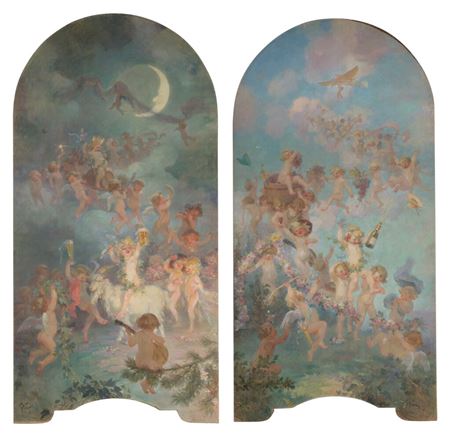
This particular pastel was created for Mrs. Margaine-Lacroix as the white text on it indicates: "To Mrs. Margaine-Lacroix after one of her creations." Margaine-Lacroix was a well-recognized clothing designer from the Belle Epoque. This particular period was a time during which Paris was the center for arts, and a time of peace and financial stability allowing for the development of fashion in all social classes.