Page loaded successfully. Showing biography for Jules Worms.
Jules Worms BIOGRAPHY
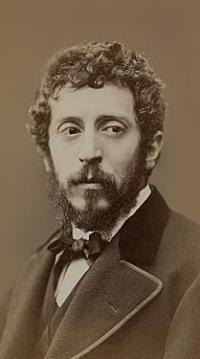
1832 Paris, France - 1924. Known for: Figure and genre paintings, lithography, illustrations.
During the 19th century a type of gallant painting was developed, in which luxurious interiors were represented, profusely decorated, with characters in theatrical attitudes. This work in particular... Read full biography
During the 19th century a type of gallant painting was developed, in which luxurious interiors were represented, profusely decorated, with characters in theatrical attitudes. This work in particular follows the precepts of this trend, although it is true that the main character is a harlequin,... Read full biography
During the 19th century a type of gallant painting was developed, in which luxurious interiors were represented, profusely decorated, with characters in theatrical attitudes. This work in particular follows the precepts of this trend, although it is true that the main character is a harlequin, however, it is necessary to pay attention to the unplaced cap of the protagonist, the woman's shoe, which he holds in his hand and especially in the female clothes arranged on the chest of drawers and the... Read full biography
During the 19th century a type of gallant painting was developed, in which luxurious interiors were represented, profusely decorated, with characters in theatrical attitudes. This work in particular follows the precepts of this trend, although it is true that the main character is a harlequin, however, it is necessary to pay attention to the unplaced cap of the protagonist, the woman's shoe, which he holds in his hand and especially in the female clothes arranged on the chest of drawers and the armchair. Elements that indicate that the harlequin has been an accomplice of a scene that is no longer visible to the spectator and that remains at the mercy of his own imagination. Born in Paris, Jules Worms was the son of a family of Parisian... Read full biography
During the 19th century a type of gallant painting was developed, in which luxurious interiors were represented, profusely decorated, with characters in theatrical attitudes. This work in particular follows the precepts of this trend, although it is true that the main character is a harlequin, however, it is necessary to pay attention to the unplaced cap of the protagonist, the woman's shoe, which he holds in his hand and especially in the female clothes arranged on the chest of drawers and the armchair. Elements that indicate that the harlequin has been an accomplice of a scene that is no longer visible to the spectator and that remains at the mercy of his own imagination. Born in Paris, Jules Worms was the son of a family of Parisian shopkeepers at the time of the July Monarchy, a period in the history of France characterized by the impulse of the comic tradition within the pl... Read full biography
Artist Biography
Biography page for Jules Worms ((1832 - 1924)), known for Figure and genre paintings, lithography, illustrations. Showing 3 biographical entries and 0 sample artworks.
Jules Worms - Artist Info
About Jules Worms
Biography from Odon Wagner Gallery
Jules Worms was a French genre painter and illustrator, born in Paris on December 16, 1832. He began to study at the Ecole des Beaux-Arts in 1849 under Jean-Baptiste-Adolf Lafrosse, a painter of historical scenes, and consequently developed his own history scenes with comedic overtones.
Worms made his debut at the Salon in 1859 and achieved great success with paintings of Spanish subjects with a subtle humorous comment on contemporary romance. Something of a storyteller, Worms painted animated pictures of gypsies and bullfighters that felt more like stills from comic-operas, than from real life.
In the early 1860s, Worms made the first of many trips to Spain in the early 1860's along with many young French artists of the time, and was immediately drawn to Spanish culture and customs. Following his initial trip to Spain, Worms returned repeatedly, even living for six weeks in Grenada in 1871 with the Catalan painter, Jose Marià Fortuny whom he had met in Paris. Paintings from the 1870s and 1880s were largely based on Spanish subject matter, revealing the universality of everyday human experiences.
Worms became a member of the Society of French Artists in 1883. He won awards in 1867, 1868, 1869 and was made a member of the Legion of Honour in 1876. Worms died on November 25, 1924. His work is held in the permanent collections of the Dijon Museum, the Museum of Modern Art in Paris and at the Nancy Museum.Biography from Setdart
During the 19th century a type of gallant painting was developed, in which luxurious interiors were represented, profusely decorated, with characters in theatrical attitudes. This work in particular follows the precepts of this trend, although it is true that the main character is a harlequin, however, it is necessary to pay attention to the unplaced cap of the protagonist, the woman's shoe, which he holds in his hand and especially in the female clothes arranged on the chest of drawers and the armchair.
Elements that indicate that the harlequin has been an accomplice of a scene that is no longer visible to the spectator and that remains at the mercy of his own imagination. Born in Paris, Jules Worms was the son of a family of Parisian shopkeepers at the time of the July Monarchy, a period in the history of France characterized by the impulse of the comic tradition within the plastic arts.
Thus, Worms began his artistic career as an illustrator of satirical newspapers, after having been trained in the field of lithography. However, his great aptitudes allowed him to enter the Ecole des Beaux-Arts in Paris in 1849, when he was seventeen years old. There he was encouraged by Jean-Baptiste-Adolf Lafosse, a history painter who introduced him to this genre, to which Worms brought a certain comic nuance. In fact, the first work he presented at the Paris Salon, in 1859, was entitled A dragon making love to a maiden on a bench in the Place Royale, and it was a comic vision of the romances of the time.
In the early 1860s he made the first of his trips to Spain, becoming fascinated by its traditions, people and culture, like many romantic painters of his time. Like many of his colleagues, Worms must have spent many hours studying the work of the Spanish painters exhibited in the Galerie Espagnole, created in the Louvre in 1838. This collection of works by El Greco, Goya, Murillo, Ribera, Valdés Leal, Velázquez and Zurbarán, among others, had a profound and immediate influence on the French painters of the time, who learned to appreciate the dramatic light, the expressive brushwork and the themes of everyday life.
His trips to Spain became very popular, and Worms himself worked as the graphic correspondent of L'Illustration in our country. He also took part in the National Exhibitions of Fine Arts in Madrid in 1864 and 1866, obtaining a first class medal on both occasions. He returned to France and exhibited his works at the Salon, winning medals in 1867, 1868 and 1869. But Worms would often return to Spain, and even lived for six weeks in 1871 in Granada with the painter Mariano Fortuny, whom he had met in Paris.
On his return to his native city he continued to collaborate with various publications and illustrate books, while continuing to paint pictures on Spanish themes. His fame and clientele continued to grow, and in 1876 he was named Knight of the Legion of Honor. In 1883 he was appointed Secretary of the French Arts, and continued to exhibit annually at the Salon until the mid-1890s. He was also awarded prizes at the Universal Exhibitions of 1878 (third class medal) and 1889 (medal). Worms is currently represented in the Museums of Fine Arts in Rennes, the Legion of Honor in San Francisco, the Sterling and Francine Clark Art Institute in Willismtown (Massachusetts) and in numerous private collections, such as the Bellver in Seville.Biography from Auctionata
Jules Worms was born in Paris in 1832. His artistic training began at the studio of the renowned historical painter Jean-Baptiste-Adolf Lafosse (1814-1879), but in 1849 he felt prepared to attend the Academy des Beaux-Arts. Specialized as a painter of Spanish genre scenes, Worms had his debut at the Paris Salon in 1859.
Worms traveled in various countries, including especially Spain. His artistic output was repeatedly awarded with medals in 1867, 1868 and 1878. Besides, he also became Chevalier of the Legion of Honour in 1876. Worms died in 1924.
His works are today preserved, for instance, at the Musée des Beaux-Arts in Nancy, at the Museum of Fine Arts in San Francisco as well as at The Haggin Museum in Stockton, California.