Page loaded successfully. Showing biography for Julius Paul Junghanns.
Julius Paul Junghanns BIOGRAPHY
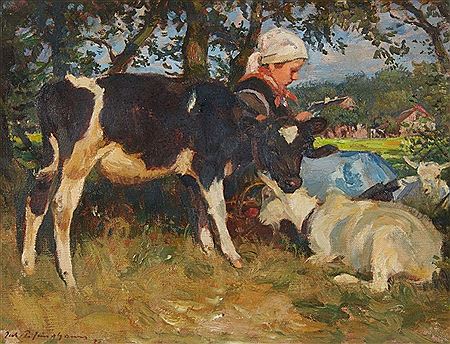
1876 Vienna, Austria - 1958 Dusseldorf, Germany. Known for: Plein aire landscape, animal paintings, lithography.
Julius Paul Junghanns (born June 8, 1876 in Vienna , † April 3, 1958 in Düsseldorf ) was a German painter who gained fame especially in animal painting. Since the parents of Julius Paul Junghanns... Read full biography
Julius Paul Junghanns (born June 8, 1876 in Vienna , † April 3, 1958 in Düsseldorf ) was a German painter who gained fame especially in animal painting. Since the parents of Julius Paul Junghanns came from Saxony and only stayed in Vienna for a short time, Junghanns called himself a Saxon. He grew... Read full biography
Julius Paul Junghanns (born June 8, 1876 in Vienna , † April 3, 1958 in Düsseldorf ) was a German painter who gained fame especially in animal painting. Since the parents of Julius Paul Junghanns came from Saxony and only stayed in Vienna for a short time, Junghanns called himself a Saxon. He grew up in Dresden , where he completed his training as a lithographer in 1895. A year later he began his studies at the Dresden Art Academy with Max Frey and Leon Pohle In 1898 he did military service... Read full biography
Julius Paul Junghanns (born June 8, 1876 in Vienna , † April 3, 1958 in Düsseldorf ) was a German painter who gained fame especially in animal painting. Since the parents of Julius Paul Junghanns came from Saxony and only stayed in Vienna for a short time, Junghanns called himself a Saxon. He grew up in Dresden , where he completed his training as a lithographer in 1895. A year later he began his studies at the Dresden Art Academy with Max Frey and Leon Pohle In 1898 he did military service with the Royal Saxon Grenadier Regiment No. 1. From 1899 he continued his studies at the Academy of Fine Arts in Munich with the animal painter Heinrich von Zügelcontinued until 1904. Junghanns described his studies with Zügel as the greatest experience... Read full biography
Julius Paul Junghanns (born June 8, 1876 in Vienna , † April 3, 1958 in Düsseldorf ) was a German painter who gained fame especially in animal painting. Since the parents of Julius Paul Junghanns came from Saxony and only stayed in Vienna for a short time, Junghanns called himself a Saxon. He grew up in Dresden , where he completed his training as a lithographer in 1895. A year later he began his studies at the Dresden Art Academy with Max Frey and Leon Pohle In 1898 he did military service with the Royal Saxon Grenadier Regiment No. 1. From 1899 he continued his studies at the Academy of Fine Arts in Munich with the animal painter Heinrich von Zügelcontinued until 1904. Junghanns described his studies with Zügel as the greatest experience of his apprenticeship. In 1902 he worked for the magazine Jugend. In 1903 he became a member of the Association of Drawing Artists in Mun... Read full biography
Artist Biography
Biography page for Julius Paul Junghanns ((1876 - 1958)), known for Plein aire landscape, animal paintings, lithography. Showing 2 biographical entries and 0 sample artworks.
Julius Paul Junghanns - Artist Info
About Julius Paul Junghanns
Name variants
Paul Julius Junghans
Biography from the Archives of askART
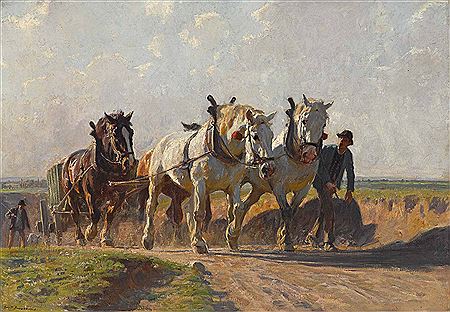 Julius Paul Junghanns (born June 8, 1876 in Vienna , † April 3, 1958 in Düsseldorf ) was a German painter who gained fame especially in animal painting.
Since the parents of Julius Paul Junghanns came from Saxony and only stayed in Vienna for a short time, Junghanns called himself a Saxon. He grew up in Dresden , where he completed his training as a lithographer in 1895. A year later he began his studies at the Dresden Art Academy with Max Frey and Leon Pohle In 1898 he did military service with the Royal Saxon Grenadier Regiment No. 1. From 1899 he continued his studies at the Academy of Fine Arts in Munich with the animal painter Heinrich von Zügelcontinued until 1904. Junghanns described his studies with Zügel as the greatest experience of his apprenticeship. In 1902 he worked for the magazine Jugend. In 1903 he became a member of the Association of Drawing Artists in Munich .
In 1904 he married Maria Buchner, daughter of a respected Munich veterinarian and great-granddaughter of the painter Domenico Quaglio . In the same year - only 28 years old - at the suggestion of his teacher Heinrich von Zügel, he was appointed head of the master class for animal and outdoor painting at the Düsseldorf Art Academy for the winter semester In 1905 he joined the Hagenbund. In 1906 he was awarded the professorship at the Düsseldorf Academy. In 1907 he received on the Great Berlin Art Exhibition a small gold medal. During the First World War he served as a soldier.
The relationship with Walter Kaesbach who headed the Düsseldorf Art Academy from 1924 and introduced various innovations, was characterized by personal conflicts. In March 1933, shortly after power was handed over to the National Socialists, Junghanns became the acting director of the Düsseldorf Academy after Kaesbach's dismissal. In this position, which lasted until the new director Peter Grund took office in October 1933, he was obliged to dismiss numerous colleagues.
Junghanns enjoyed the trust and appreciation of the National Socialist regime due to his traditional painting style He regularly took part in the Great German Art Exhibition , which presented art under National Socialism Six of his pictures alone were shown at the first Great German Art Exhibition in 1937. This still affects the reception of his work today. Junghanns only recognized the abuse that was being carried out with his work at a late stage and, after his youngest son Rudolf had fallen in 1941, experienced the collapse in 1945 as a serious personal crisis. He retired and moved to Erwitteback, where he lived for almost four years under medical care in the Marienhospital.
With the help of friends and collectors, he was able to return to Düsseldorf in 1949 and set up a new studio. There he died at the age of 82.
Junghanns was an internationally known, traditional animal and outdoor painter who sometimes referred to himself as Pictor antiquus (old painter). Pinacoteca , art galleries and museums in Berlin, Hagen, Munich, Düsseldorf, Bonn, Krefeld, Chemnitz, Karlsruhe, Mannheim, Vienna, London, Madrid, Antwerp, Pittsburgh, Chicago, Boston, formerly also Gdansk, Königsberg, as well as private collections are owned by Junghanns pictures.
The Düsseldorf architect Hans Junghanns (1906–1989) was his son.
Source:
https://second.wiki/wiki/julius_paul_junghannsBiography from Auctionata
Julius Paul Junghanns was born in 1876 in Vienna. He was educated as a lithographer in Dresden, followed by studies at the Dresden Academy of Arts which he continued at the Munich Academy. There he studied with the animal painter Heinrich Zügel, a period which influenced him very much. Zügel recommended Junghanns to take a lectureship for plein-air painting at the Düsseldorf Academy of Arts, which resulted into a professorship.
Junghanns also took part regularly in the Great German Art Exhibition at Haus der Kunst in Munich. His works are now in renowned collections such as the Pinakothek in Munich, Kunsthalle Dusseldorf as well as museums in Berlin, Vienna, London and others. Junghanns died in 1958. (tfa)