Page loaded successfully. Showing biography for Karl (Carl) Hofer.
Karl (Carl) Hofer BIOGRAPHY
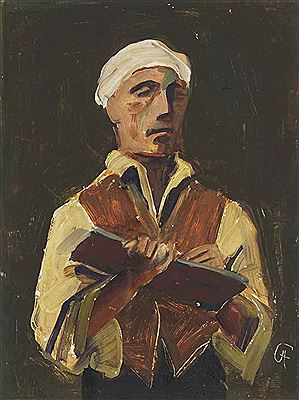
1878 Karlsruhe, Germany - 1955 Berlin, Germany. Known for: Expressionist painting.
Karl (Carl) Johannes Christian Hofer (1878-1955). Hofer was born in 1878 in Karlsruhe, Germany. He was strongly influenced by the classical idealism of Hans von Marees; also Cezanne. He lived in... Read full biography
Karl (Carl) Johannes Christian Hofer (1878-1955). Hofer was born in 1878 in Karlsruhe, Germany. He was strongly influenced by the classical idealism of Hans von Marees; also Cezanne. He lived in Paris between 1908 to 1913, then settled in Berlin, where he achieved considerable success. At the end... Read full biography
Karl (Carl) Johannes Christian Hofer (1878-1955). Hofer was born in 1878 in Karlsruhe, Germany. He was strongly influenced by the classical idealism of Hans von Marees; also Cezanne. He lived in Paris between 1908 to 1913, then settled in Berlin, where he achieved considerable success. At the end of World War II, he was appointed Director of the Hochschule Fur Bildende Kunste in Berlin. His painting was expressionist in style but more restrained and poetic. Hofer was the first German ever to... Read full biography
Karl (Carl) Johannes Christian Hofer (1878-1955). Hofer was born in 1878 in Karlsruhe, Germany. He was strongly influenced by the classical idealism of Hans von Marees; also Cezanne. He lived in Paris between 1908 to 1913, then settled in Berlin, where he achieved considerable success. At the end of World War II, he was appointed Director of the Hochschule Fur Bildende Kunste in Berlin. His painting was expressionist in style but more restrained and poetic. Hofer was the first German ever to win first prize at the Carnegie International Exhibition. He was not a Nazi, and was forbidden to exhibit in Germany as a "degenerate" artist during the Nazi regime. He died in Berlin in 1955. Exhibited:. Art Institute of Chicago 1931, 1932, 1938, 1940... Read full biography
Karl (Carl) Johannes Christian Hofer (1878-1955). Hofer was born in 1878 in Karlsruhe, Germany. He was strongly influenced by the classical idealism of Hans von Marees; also Cezanne. He lived in Paris between 1908 to 1913, then settled in Berlin, where he achieved considerable success. At the end of World War II, he was appointed Director of the Hochschule Fur Bildende Kunste in Berlin. His painting was expressionist in style but more restrained and poetic. Hofer was the first German ever to win first prize at the Carnegie International Exhibition. He was not a Nazi, and was forbidden to exhibit in Germany as a "degenerate" artist during the Nazi regime. He died in Berlin in 1955. Exhibited:. Art Institute of Chicago 1931, 1932, 1938, 1940... Read full biography
Artist Biography
Biography page for Karl (Carl) Hofer ((1878 - 1955)), known for Expressionist painting. Showing 3 biographical entries and 0 sample artworks.
Karl (Carl) Hofer - Artist Info
About Karl (Carl) Hofer
Name variants
Carl Hofer
Biography from the Archives of askART
 Karl (Carl) Johannes Christian Hofer (1878-1955)
Hofer was born in 1878 in Karlsruhe, Germany. He was strongly influenced by the classical idealism of Hans von Marees; also Cezanne. He lived in Paris between 1908 to 1913, then settled in Berlin, where he achieved considerable success. At the end of World War II, he was appointed Director of the Hochschule Fur Bildende Kunste in Berlin.
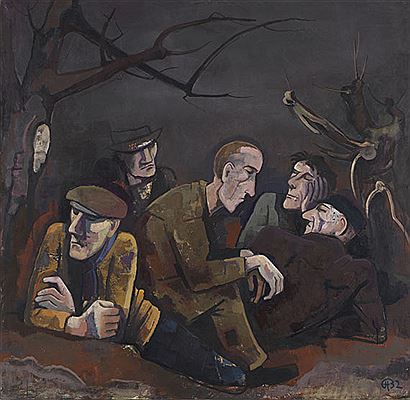
His painting was expressionist in style but more restrained and poetic. Hofer was the first German ever to win first prize at the Carnegie International Exhibition. He was not a Nazi, and was forbidden to exhibit in Germany as a "degenerate" artist during the Nazi regime. He died in Berlin in 1955.
Exhibited:
Art Institute of Chicago 1931, 1932, 1938, 1940Biography from Auctionata
Carl (or Karl) Hofer (1878-1955) first studied at the Academy of Arts in Karlsruhe before traveling to Rome and Paris, where he became acquainted with the naive paintings by Henri Rousseau and later the work by Cézanne, the French Impressionists and El Greco. In 1913 Hofer settled in Berlin and taught at the art school in Berlin-Charlottenburg. In 1928 a large retrospective took place at the Kunsthalle Mannheim, the Berlin Secession and the Berlin gallery of Alfred Flechtheim.
During the Third Reich his art was classified as ‘degenerate’. Hofer was prohibited from working and exhibiting. In 1943 almost his entire oeuvre was destroyed during a bomb attack. After the war he was appointed director of the Academy of Fine Arts in Berlin.
Hofer was an exponent of the realist tradition. His oeuvre occupies a special position within classical modernism. His work is defined on the one hand by his pursuit of an ideal classical form, which can be seen in his landscapes, still lifes and interiors, and on the other hand by the unadorned representation of the real world, as depicted in his visionary paintings and melancholic portraits of women.Biography from Lehr Kunstauktionen
Karl Hofer was born in 1878 in Karlsruhe, Germany. He became an expressionist painter whose central concern was people. In countless pictures he explored gestures, positions, couples and groups, gave them accessories, depicted them on windows, in interiors or landscapes and never seemed to get tired of exploring the human cosmos of mood and action. His style ranged from a realistic, personal portrait to a painterly, free gesture and a color palette that varied from cheerful sensuality to brittle angularity.