Page loaded successfully. Showing biography for Kurt Schwitters.
Kurt Schwitters BIOGRAPHY
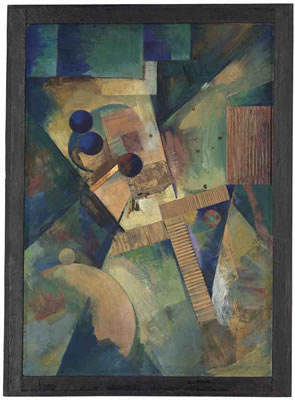
1887 Hanover, Germany - 1948 near Ambleside, Lake District, England. Known for: Abstract painting, collage, poetry, environmental sculpture.
Kurt Schwitters creator of the magazine MERZ spent his life creating works of art and literature following this form. This art consists of discarded and rejected objects which the artist found or... Read full biography
Kurt Schwitters creator of the magazine MERZ spent his life creating works of art and literature following this form. This art consists of discarded and rejected objects which the artist found or received from friends and associates. Born in 1887 in Hanover, Germany Schwitters' parents encouraged... Read full biography
Kurt Schwitters creator of the magazine MERZ spent his life creating works of art and literature following this form. This art consists of discarded and rejected objects which the artist found or received from friends and associates. Born in 1887 in Hanover, Germany Schwitters' parents encouraged him in his art studies. He attended the Kunstgewerbeschule in Hanover and the Kunstakademie in Dresden until 1914. He returned to Hanover and married Helma Fischer. His works followed an Expressionist... Read full biography
Kurt Schwitters creator of the magazine MERZ spent his life creating works of art and literature following this form. This art consists of discarded and rejected objects which the artist found or received from friends and associates. Born in 1887 in Hanover, Germany Schwitters' parents encouraged him in his art studies. He attended the Kunstgewerbeschule in Hanover and the Kunstakademie in Dresden until 1914. He returned to Hanover and married Helma Fischer. His works followed an Expressionist style until his brief time in the army during WWI when they took on a more modern style. In the early 1920s these works gained him recognition with the Dada movement. In 1923 Schwitters began publication of MERZ which brought forth constructivism in... Read full biography
Kurt Schwitters creator of the magazine MERZ spent his life creating works of art and literature following this form. This art consists of discarded and rejected objects which the artist found or received from friends and associates. Born in 1887 in Hanover, Germany Schwitters' parents encouraged him in his art studies. He attended the Kunstgewerbeschule in Hanover and the Kunstakademie in Dresden until 1914. He returned to Hanover and married Helma Fischer. His works followed an Expressionist style until his brief time in the army during WWI when they took on a more modern style. In the early 1920s these works gained him recognition with the Dada movement. In 1923 Schwitters began publication of MERZ which brought forth constructivism in art. His work on the magazine allowed him to branch into the advertising and desi. Source: Edan Hughes, author of the book "Artists in California,... Read full biography
Artist Biography
Biography page for Kurt Schwitters ((1887 - 1948)), known for Abstract painting, collage, poetry, environmental sculpture. Showing 4 biographical entries and 0 sample artworks.
Kurt Schwitters - Artist Info
About Kurt Schwitters
Biography from the Archives of askART
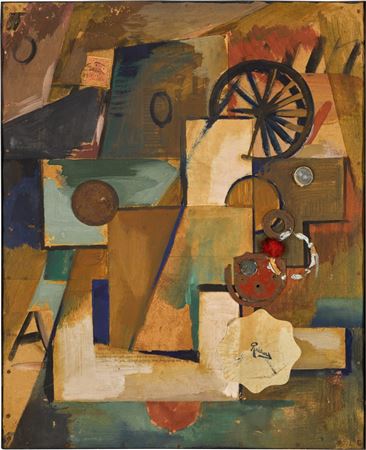 Kurt Schwitters creator of the magazine MERZ spent his life creating works of art and literature following this form. This art consists of discarded and rejected objects which the artist found or received from friends and associates.
Born in 1887 in Hanover, Germany Schwitters' parents encouraged him in his art studies. He attended the Kunstgewerbeschule in Hanover and the Kunstakademie in Dresden until 1914. He returned to Hanover and married Helma Fischer. His works followed an Expressionist style until his brief time in the army during WWI when they took on a more modern style. In the early 1920s these works gained him recognition with the Dada movement.
In 1923 Schwitters began publication of MERZ which brought forth constructivism in art. His work on the magazine allowed him to branch into the advertising and design business as well. He established in 1927 with the help of Friedrich Vordemberge-Gildewart the "Ring neue Werbegestalter".
During this time he began work on his sculpture the Merzbau or Cathedral of Erotic Misery. The sculpture was constructed in his studio out of various materials and became large enough that the ceiling was removed to continue the project. Many of the materials used for this project were personal belongings of friends, family and from himself. A bombing raid destroyed this work in 1943.
Before the onset of WWII, many of Schwitters' works were confiscated by the Nazi regime with some being exhibited in the "Degenerate Art Exhibit" forcing the artist with his son to flee to Norway. Residing in Norway, the artist returned to the use of natural materials and landscapes. His second sculpture of the Merzbau was constructed in Lysakar and was destroyed by fire in 1951. The German invasion of Norway forced Schwitters and his son to flee again, this time to England.
In England Kurt Schwitters spent some time in an internment camp before moving to London in 1941. He continued to create sculptures and began a third form of the Merzbau in an old barn he used for a studio located in the Lake District near Ambleside. He died on January 8, 1948 near Ambleside of a prolonged illness.
In early 2009 artist Damien Hirst and Ian Hunter began efforts to restore the barn studio Schwitters used in the Lake District. The restoration project will house a replica of the Merzbau built there and serve as a community gallery.
Sources:
Art Directory - www.schitters-kurt.com
Oxford University Press article by Richard Humphreys from Grove Art Online - www.merzbau.org/Schwitters.html
Bookrags - www.bookrags.com
Guardian article "Kurt Schwitters, the great Dadaist of Cumbria" by Philip Oltermann, April 28, 2009 - www.guardian.co.uk/artanddesign/2009/apr/28/kurt-schwitters-dadaism-barn-cumbriaBiography from Dorotheum, Vienna
Kurt Schwitters, a Hanoverian artist, was born the son of a businessman and became one of the most experimental and innovative artists of Classical Modernism. His diverse oeuvre includes collages, assemblages, painting, sculpture, and installation art. Schwitters' work spans various styles such as impressionism, expressionism, constructivism, Dadaism, and surrealism, which he playfully and self-deprecatingly addressed throughout his career.Biography from Auctionata
Kurt Schwitters was born in Hanover, where he first studied at the arts school in 1908. In 1909 he moved to the Academy in Dresden, which he attended until 1914. Initially working in different styles, Schwitters came to a Dadaist workings without directly joining a Dadaist group. Presumably in 1919 originated the first so-called ‘MERZ’ works, drawings, collages and assemblages, named after a fragment of the word ‘Commerz’, which later extended to extensive large-scale installations. In addition, Kurt Schwitters also created phonetic poetry, ‘collages’ of word fragments, syllables and letters. He is one of the most influential artists of the 20th century. (fea)Biography from Tennants
Kurt Schwitters (1887-1948) was a highly influential European avant-garde artist associated with movements such as Dada, De Stijl, and Constructivism. Forced to flee Germany in 1937, he was interned as an enemy alien on the Isle of Man during WWII. After his release in 1941, Schwitters moved to London where he met Edith "Wantee" Thomas. Following the war, they settled in the Lake District, where Schwitters lived and worked until his death.