Page loaded successfully. Showing biography for Leon Biju.
Leon Biju BIOGRAPHY
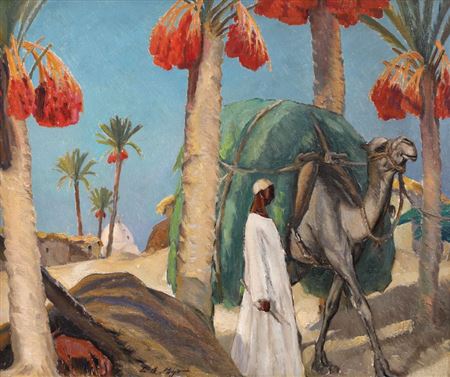
1880 Bucharest - 1970 Bucharest. Known for: Painting.
In 1899, Leon Biju enrolled in the School of Fine Arts in Bucharest, where he was admitted first out of a total of 19 competitors and will audit the courses of George Demetrescu Mirea, Ipolit Strâmbu... Read full biography
In 1899, Leon Biju enrolled in the School of Fine Arts in Bucharest, where he was admitted first out of a total of 19 competitors and will audit the courses of George Demetrescu Mirea, Ipolit Strâmbu and Dimitrie Serafim. He graduated in 1906 under the auspices of the distinction and award offered... Read full biography
In 1899, Leon Biju enrolled in the School of Fine Arts in Bucharest, where he was admitted first out of a total of 19 competitors and will audit the courses of George Demetrescu Mirea, Ipolit Strâmbu and Dimitrie Serafim. He graduated in 1906 under the auspices of the distinction and award offered by the Bucharest educational unit. Additionally, he simultaneously studied in the singing section of the Conservatory, but focused mainly on painting studies and did not graduate from the Conservatory... Read full biography
In 1899, Leon Biju enrolled in the School of Fine Arts in Bucharest, where he was admitted first out of a total of 19 competitors and will audit the courses of George Demetrescu Mirea, Ipolit Strâmbu and Dimitrie Serafim. He graduated in 1906 under the auspices of the distinction and award offered by the Bucharest educational unit. Additionally, he simultaneously studied in the singing section of the Conservatory, but focused mainly on painting studies and did not graduate from the Conservatory as well. Biju was a member of the Artistic Youth Society, where he frequently exhibited, but also the founder of the Fine Arts Union, alongside other artists of the time such as Adam Balatu, Paul Molda or Lucian Grigorescu. With his professor Jean... Read full biography
In 1899, Leon Biju enrolled in the School of Fine Arts in Bucharest, where he was admitted first out of a total of 19 competitors and will audit the courses of George Demetrescu Mirea, Ipolit Strâmbu and Dimitrie Serafim. He graduated in 1906 under the auspices of the distinction and award offered by the Bucharest educational unit. Additionally, he simultaneously studied in the singing section of the Conservatory, but focused mainly on painting studies and did not graduate from the Conservatory as well. Biju was a member of the Artistic Youth Society, where he frequently exhibited, but also the founder of the Fine Arts Union, alongside other artists of the time such as Adam Balatu, Paul Molda or Lucian Grigorescu. With his professor Jean Paul Laurens and colleagues in Paris, Biju undertook journeys in Morocco and Algeria, trips that transposed themselves through vast inf... Read full biography
Artist Biography
Biography page for Leon Biju ((1880 - 1970)), known for Painting. Showing 1 biographical entries and 0 sample artworks.
Leon Biju - Artist Info
About Leon Biju
Biography from Artmark
In 1899, Leon Biju enrolled in the School of Fine Arts in Bucharest, where he was admitted first out of a total of 19 competitors and will audit the courses of George Demetrescu Mirea, Ipolit Strâmbu and Dimitrie Serafim. He graduated in 1906 under the auspices of the distinction and award offered by the Bucharest educational unit. Additionally, he simultaneously studied in the singing section of the Conservatory, but focused mainly on painting studies and did not graduate from the Conservatory as well.
Biju was a member of the Artistic Youth Society, where he frequently exhibited, but also the founder of the Fine Arts Union, alongside other artists of the time such as Adam Balatu, Paul Molda or Lucian Grigorescu.
With his professor Jean Paul Laurens and colleagues in Paris, Biju undertook journeys in Morocco and Algeria, trips that transposed themselves through vast influences in his canvases.
Eager to discover the oriental space, Biju also traveled to Egypt, where, fascinated by the richness of the natural environment, he stayed for four years. Here he discovered a rich nature, varied human types, surprising architectural remains and overflowing sunny landscapes.
Biju stopped on the banks of the Nile, in Cairo, Aswan or Luxor and often directed his attention towards the representation of female types. He was fascinated by the beauty of the Nile, which reflects the clear sky, by the protagonists covered in black veils, caught standing or sitting down.
Biju was also interested in the contrasts between the dark clothes of the female characters and the predominantly white clothes of his male models. In addition to the richness of nature and clothing details, Biju often introduced architectural elements such as stone houses or the fascinating Egyptian pyramids in his works.
Works made during the previously mentioned period were presented to the public at the exhibition "Biju. Egypt"; an exhibition organized in February 1934 at the Dalles Hall in Bucharest. Biju presented here 146 paintings and 100 drawings and enjoyed the appreciation of critics and the public.