Page loaded successfully. Showing biography for Louis Gabriel Moreau.
Louis Gabriel Moreau BIOGRAPHY
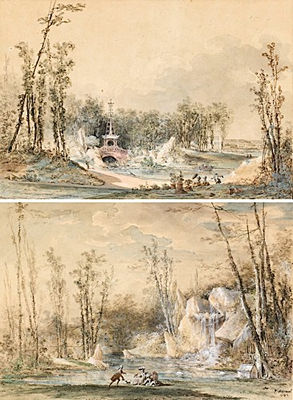
1740 Paris - 1806. Known for: Painting, draftsman, etching, landscape painting.
Louis Gabriel Moreau was born in 1740 in Paris. He became a gifted draughtsman, etcher and painter of landscapes and had a prodigious career. After studying with Pierre-Antoine de Machy, who... Read full biography
Louis Gabriel Moreau was born in 1740 in Paris. He became a gifted draughtsman, etcher and painter of landscapes and had a prodigious career. After studying with Pierre-Antoine de Machy, who specialized in painting Grand Tour themes, landscapes redolent with Classical ruins and tromp-l'oeil... Read full biography
Louis Gabriel Moreau was born in 1740 in Paris. He became a gifted draughtsman, etcher and painter of landscapes and had a prodigious career. After studying with Pierre-Antoine de Machy, who specialized in painting Grand Tour themes, landscapes redolent with Classical ruins and tromp-l'oeil architectural scenes, Moreau went on to become a member of the Academie de St. Luc, artist to Comte d'Artois (later King Charles X), and curator of the National Museum in Paris. Moreau, a master of... Read full biography
Louis Gabriel Moreau was born in 1740 in Paris. He became a gifted draughtsman, etcher and painter of landscapes and had a prodigious career. After studying with Pierre-Antoine de Machy, who specialized in painting Grand Tour themes, landscapes redolent with Classical ruins and tromp-l'oeil architectural scenes, Moreau went on to become a member of the Academie de St. Luc, artist to Comte d'Artois (later King Charles X), and curator of the National Museum in Paris. Moreau, a master of watercolors and gouaches, combined the picturesque architectures of his master de Machy with naturalistically, almost plein-air-rendered, topographical landscapes in the Ile-de-France region just outside of Paris. Moreau's fascination with the effects of... Read full biography
Louis Gabriel Moreau was born in 1740 in Paris. He became a gifted draughtsman, etcher and painter of landscapes and had a prodigious career. After studying with Pierre-Antoine de Machy, who specialized in painting Grand Tour themes, landscapes redolent with Classical ruins and tromp-l'oeil architectural scenes, Moreau went on to become a member of the Academie de St. Luc, artist to Comte d'Artois (later King Charles X), and curator of the National Museum in Paris. Moreau, a master of watercolors and gouaches, combined the picturesque architectures of his master de Machy with naturalistically, almost plein-air-rendered, topographical landscapes in the Ile-de-France region just outside of Paris. Moreau's fascination with the effects of light at different times of the day precipitated his use of a lighter palette, characterized by warm yellows and verdant foliage punctuated by... Read full biography
Artist Biography
Biography page for Louis Gabriel Moreau ((1740 - 1806)), known for Painting, draftsman, etching, landscape painting. Showing 1 biographical entries and 0 sample artworks.
Louis Gabriel Moreau - Artist Info
About Louis Gabriel Moreau
Name variants
Gabriel Louis Moreau I, Louis-Gabriel Moreau L'Aîné
Biography from New Orleans Auction Galleries Inc
Louis Gabriel Moreau was born in 1740 in Paris. He became a gifted draughtsman, etcher and painter of landscapes and had a prodigious career. After studying with Pierre-Antoine de Machy, who specialized in painting Grand Tour themes, landscapes redolent with Classical ruins and tromp-l'oeil architectural scenes, Moreau went on to become a member of the Academie de St. Luc, artist to Comte d'Artois (later King Charles X), and curator of the National Museum in Paris. Moreau, a master of watercolors and gouaches, combined the picturesque architectures of his master de Machy with naturalistically, almost plein-air-rendered, topographical landscapes in the Ile-de-France region just outside of Paris. Moreau's fascination with the effects of light at different times of the day precipitated his use of a lighter palette, characterized by warm yellows and verdant foliage punctuated by deep ultramarine blues instead of browns. Moreau's predilection for natural light made him equally successful following the French Revolution, in which the Third Estate toppled the landed gentry and their royal established academies. Before 1789, French castles and estates in lush settings of abundance were Moreau's preferred subject, a style upon which he established himself as an artist for nearly twenty-five years exhibiting annually at the Academie de St. Luc. Following the Revolution, Moreau's, bright palette and light drenched compositions with voluminous clouds and ruins dotting the low horizon remained. His subjects, on the other hand, became distinctly more humble, showcasing the daily life of farmers, fishermen, modest structures and gardens. Both Moreau's pre- and post-Revolutionary paintings are equally desired by collectors and institutions.