Page loaded successfully. Showing biography for Mahmoud Mokhtar.
Mahmoud Mokhtar BIOGRAPHY
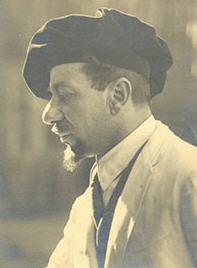
1891 Tanbara, Egypt - 1934 Cairo, Egypt. Known for: Allegorical Egyptian motif figural sculpture.
Lots Sold: 78%, High Price: Subscribe.
Mahmoud Mokhtar. Written by Alexandra Dika Seggerman. Born on 10 May 1891 in Tanbara, Egypt; died 27 March 1934 in Cairo, Egypt. Mahmoud Mokhtar is considered a pioneer of modern Egyptian art, yet he... Read full biography
Mahmoud Mokhtar. Written by Alexandra Dika Seggerman. Born on 10 May 1891 in Tanbara, Egypt; died 27 March 1934 in Cairo, Egypt. Mahmoud Mokhtar is considered a pioneer of modern Egyptian art, yet he also occupies a prominent place in the history of the modern Egyptian nation. Self-styled as the... Read full biography
Mahmoud Mokhtar. Written by Alexandra Dika Seggerman. Born on 10 May 1891 in Tanbara, Egypt; died 27 March 1934 in Cairo, Egypt. Mahmoud Mokhtar is considered a pioneer of modern Egyptian art, yet he also occupies a prominent place in the history of the modern Egyptian nation. Self-styled as the first Egyptian sculptor in over two millennia, Mahmoud Mokhtar deftly blended Pharaonic imagery with a modern European sculptural aesthetic to create quintessentially nationalist Egyptian artwork.... Read full biography
Mahmoud Mokhtar. Written by Alexandra Dika Seggerman. Born on 10 May 1891 in Tanbara, Egypt; died 27 March 1934 in Cairo, Egypt. Mahmoud Mokhtar is considered a pioneer of modern Egyptian art, yet he also occupies a prominent place in the history of the modern Egyptian nation. Self-styled as the first Egyptian sculptor in over two millennia, Mahmoud Mokhtar deftly blended Pharaonic imagery with a modern European sculptural aesthetic to create quintessentially nationalist Egyptian artwork. Mokhtar was born in 1891 into a fellaheen/peasant family in the town of Tunbarah near the central Delta town of al-Mahallah al-Kubra, son of an omdah [local village mayor], named Ibrahim el-Essaoui. The artist would later recall molding figurines out of... Read full biography
Mahmoud Mokhtar. Written by Alexandra Dika Seggerman. Born on 10 May 1891 in Tanbara, Egypt; died 27 March 1934 in Cairo, Egypt. Mahmoud Mokhtar is considered a pioneer of modern Egyptian art, yet he also occupies a prominent place in the history of the modern Egyptian nation. Self-styled as the first Egyptian sculptor in over two millennia, Mahmoud Mokhtar deftly blended Pharaonic imagery with a modern European sculptural aesthetic to create quintessentially nationalist Egyptian artwork. Mokhtar was born in 1891 into a fellaheen/peasant family in the town of Tunbarah near the central Delta town of al-Mahallah al-Kubra, son of an omdah [local village mayor], named Ibrahim el-Essaoui. The artist would later recall molding figurines out of mud from the Nile riverbanks during his childhood. Around 1900, he moved with his mother and his two sisters, Hafeethah and Badee'... Read full biography
Artist Biography
Biography page for Mahmoud Mokhtar ((1891 - 1934)), known for Allegorical Egyptian motif figural sculpture. Showing 1 biographical entries and 0 sample artworks.
Mahmoud Mokhtar - Artist Info
About Mahmoud Mokhtar
Name variants
Mahmoud Moukhtar, Mahmoud Mouktar, Mahmoud Mukhtar
Biography from the Archives of askART
 Mahmoud Mokhtar
Written by Alexandra Dika Seggerman
Born on 10 May 1891 in Tanbara, Egypt; died 27 March 1934 in Cairo, Egypt.
Mahmoud Mokhtar is considered a pioneer of modern Egyptian art, yet he also occupies a prominent place in the history of the modern Egyptian nation. Self-styled as the first Egyptian sculptor in over two millennia, Mahmoud Mokhtar deftly blended Pharaonic imagery with a modern European sculptural aesthetic to create quintessentially nationalist Egyptian artwork.
Mokhtar was born in 1891 into a fellaheen/peasant family in the town of Tunbarah near the central Delta town of al-Mahallah al-Kubra, son of an omdah [local village mayor], named Ibrahim el-Essaoui. The artist would later recall molding figurines out of mud from the Nile riverbanks during his childhood. Around 1900, he moved with his mother and his two sisters, Hafeethah and Badee'a, to Cairo where he attended primary school, learned Arabic and French, and experienced the modern and traditional architecture of the city of Cairo.
In 1908, Mokhtar joined the first class at the École Égyptienne des Beaux-Arts when it opened in Darb al-Gamameez. There, he studied the traditional curriculum of the French Beaux-Arts, and began sculpting allegorical figures of Islamic history in a classic academic style. After graduating top of his class in 1912, Mokhtar travelled on scholarship funded by Prince Youssef Kamal to attend the École des Beaux-Arts in Paris. He enrolled in the studio of French sculptor, Jules-Felix Coutan, as a visiting student. As the pedagogical methods were based in the study of ancient art, he increasingly incorporated ancient Egyptian themes into his work.
Mokhtar lived a meager existence for the remainder of the 1910s in Paris and worked various menial jobs while continuing to sculpt. He briefly replaced Guillaume Laplange as interim artistic director of a wax museum, Musée Grévin, at the end of World War I. At the museum, Mokhtar sculpted statues of political leaders, such as Georges Clemenceau and Woodrow Wilson, and celebrities such as ballerina Anna Pavalova and the Egyptian singer Oum Kalthoum.
Mokhtar was deeply moved by the 1919 Revolution in Egypt against the British occupation, and sculpted a small model called Nahdat Misr [Egypt Awakening], for the Salon des Artistes Français in 1920. The work, which Saad Zaghloul considered an expression of national revival, depicts a fellaha and a sphinx, representing the magnificent history of ancient Egypt and the agricultural prowess of the Nile Valley. The piece immediately drew attention from a group of visiting Egyptian students, including noted politician Wissa Wassef. The students returned to Cairo with a campaign to commission, fund, and erect a monumental version of the sculpture.
After eight years of fundraising and unpredictable political upheaval, the sculpture was unveiled on Sunday, 20 May 1928 in Bab el-Hadid Square (currently Ramses Square), facing the Cairo railway station (later to be moved outside Cairo University in 1955). Nahdat Misr was the first publically exhibited sculpture by an Egyptian artist, and continues to be a powerful symbol of the modern nation to this day.
During visits to Egypt, Mokhtar assumed a leading position in the nationalist art movement, distinguishing him from the pioneer painters, such as Youssef Kamel, Ragheb Ayad, Ahmed Sabry, Mahmoud Said, and Mohamed Naghi. Mokhtar participated in demonstrations for independence and created statues to express national identity, calling for social and political reform.
An influential member of the Wafd Party, Mokhtar and prominent writers including Abbas Mahmoud el-Aqqad, Abdelqader al-Mazani, and Mahmoud Azmi wrote critical newspaper articles aimed at enhancing art appreciation among intellectual elites. Mokhtar was not simply an artist, rather he mobilized his art for the larger anti-imperialist nationalist movement.
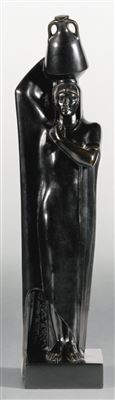
Because of Nahdat Misr, Mokhtar rose to national prominence, gaining the ability to maintain studios in both Cairo and Paris. In 1930, he exhibited bronze, marble, and stone pieces at the renowned Bernheim-Jeune Gallery in Paris. In these works, he blended Pharaonic imagery with a classicist aesthetic. The most famous, al-Khamaseen (1929), portrays a fellaha moving against the sand storms that blow for fifty days during Egyptian spring. As she battles forward, her cloak billows behind her, revealing the contours of her body. The press lauded the exhibit, and the French government purchased the stone copy of Arous al-Nil (Bride of the Nile), currently in the Centre Georges Pompidou in Paris.
In 1934, Mokhtar died of leukemia. Afterwards, prominent intellectuals along with the Society of Mokhtar's Friends, headed by Egyptian feminist Huda Sha'arawi, campaigned tirelessly to open a museum for his work. In 1952, the Mahmoud Mokhtar Museum, designed by Ramses Wissa Wassef, opened on Gezirah Island in Cairo. It continues to hold the majority of the artist's works.
Mokhtar continues to be esteemed as Egypt's most famous sculptor despite his relatively short career. Not only did his art and writing set the stage for modern Egyptian art history, his works, Nahdat Misr in particular, played an active role in larger history of modern Egypt.
Exhibitions
2014
Summary, Part 1 exhibition, Mathaf permanent collection, Mathaf: Arab Museum of Modern Art, Doha, Qatar
2012 - 2013
Tea with Nefertiti: The Making of the Artwork by the Artist, the Museum and the Public, exhibition 17 November 2012 – 31 March 2013, Mathaf: Arab Museum of Modern Art, Doha, Qatar
2012
Le Corps découvert , 27 March - 15 July, Institut du Monde Arab, Paris, France
2010 - 2011
Sajjil: A Century of Modern Art, exhibition 30 December 2010 – 1 October 2011, Mathaf: Arab Museum of Modern Art, Doha, Qatar
2008
Exhibition of the Centennial of the Faculty of Fine Arts, Palace of the Arts, Opera House, Cairo, Egypt
1930
Exhibition 10 -21 March, Galerie Bernheim-Jeune, Paris, France
1929
Exhibition at the Salon de Paris, France
1913
Annual Exhibit of French artists, Salon de Paris, France
Awards and Honors
1929
Gold Medal of the Annual exhibition, The Grand Palais, Paris, France
1925
Prize of the Salon de Paris, France
1920
Honorable Mention, Salon of French Artists, Paris, France
Source:
Website of Mathaf Encyclopedia of Modern Art and the Arab World, 2019