Page loaded successfully. Showing biography for Mary Proctor.
Mary Proctor BIOGRAPHY
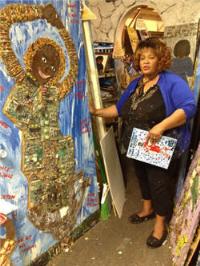
Born 1960 Lloyd, Florida. Known for: African-American genre, figure, whimsical, religious themes, outsider art.
The following biographical information has been supplied by Lauris Mason, author of Missionary Mary L. Proctor: The Doors (Coral Springs, Florida: Fine Prints Press, 2014.). Mary Louise Proctor was... Read full biography
The following biographical information has been supplied by Lauris Mason, author of Missionary Mary L. Proctor: The Doors (Coral Springs, Florida: Fine Prints Press, 2014.). Mary Louise Proctor was born in 1960, in Lloyd, Florida to a 16 year old mother, and raised by a loving grandmother. She... Read full biography
The following biographical information has been supplied by Lauris Mason, author of Missionary Mary L. Proctor: The Doors (Coral Springs, Florida: Fine Prints Press, 2014.). Mary Louise Proctor was born in 1960, in Lloyd, Florida to a 16 year old mother, and raised by a loving grandmother. She dropped out of school in 9th grade and had her first child, Christopher Kinta (b. 1978- d. 2011). She married Tyrone Proctor in 1980, and they had two sons, Tyrone DeWayne (b. 1981), and Curtis Lamar... Read full biography
The following biographical information has been supplied by Lauris Mason, author of Missionary Mary L. Proctor: The Doors (Coral Springs, Florida: Fine Prints Press, 2014.). Mary Louise Proctor was born in 1960, in Lloyd, Florida to a 16 year old mother, and raised by a loving grandmother. She dropped out of school in 9th grade and had her first child, Christopher Kinta (b. 1978- d. 2011). She married Tyrone Proctor in 1980, and they had two sons, Tyrone DeWayne (b. 1981), and Curtis Lamar (b.1983). In 1987, they adopted a daughter, Sophie Ticole Denise (b.1987). Mary worked at various jobs as a caregiver and operated a flea market in her yard. In 1994 her grandparents, aunt and uncle were killed in a devastating fire in their mobile home.... Read full biography
The following biographical information has been supplied by Lauris Mason, author of Missionary Mary L. Proctor: The Doors (Coral Springs, Florida: Fine Prints Press, 2014.). Mary Louise Proctor was born in 1960, in Lloyd, Florida to a 16 year old mother, and raised by a loving grandmother. She dropped out of school in 9th grade and had her first child, Christopher Kinta (b. 1978- d. 2011). She married Tyrone Proctor in 1980, and they had two sons, Tyrone DeWayne (b. 1981), and Curtis Lamar (b.1983). In 1987, they adopted a daughter, Sophie Ticole Denise (b.1987). Mary worked at various jobs as a caregiver and operated a flea market in her yard. In 1994 her grandparents, aunt and uncle were killed in a devastating fire in their mobile home. The door, swollen from the heat of the flames, prevented their escape. Deeply spiritual, Mary sought solace i... Read full biography
Artist Biography
Biography page for Mary Proctor ((Born 1960)), known for African-American genre, figure, whimsical, religious themes, outsider art. Showing 1 biographical entries and 0 sample artworks.
Mary Proctor - Artist Info
About Mary Proctor
Name variants
Missionary Mary Louise Proctor, Missionary Mary L Proctor
Biography from the Archives of askART
 The following biographical information has been supplied by Lauris Mason, author of Missionary Mary L. Proctor: The Doors (Coral Springs, Florida: Fine Prints Press, 2014.)
Mary Louise Proctor was born in 1960, in Lloyd, Florida to a 16 year old mother, and raised by a loving grandmother. She dropped out of school in 9th grade and had her first child, Christopher Kinta (b. 1978- d. 2011).
She married Tyrone Proctor in 1980, and they had two sons, Tyrone DeWayne (b. 1981), and Curtis Lamar (b.1983). In 1987, they adopted a daughter, Sophie Ticole Denise (b.1987).
Mary worked at various jobs as a caregiver and operated a flea market in her yard. In 1994 her grandparents, aunt and uncle were killed in a devastating fire in their mobile home. The door, swollen from the heat of the flames, prevented their escape.
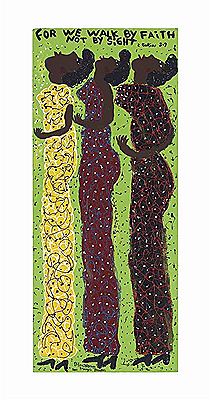
Deeply spiritual, Mary sought solace in prayer and fasting. It was then that she heard a voice telling her to paint on doors. She took house paint and started creating art on the old doors that she had accumulated in her flea market, adding religious messages, mosaic, and collage decoration.
Believing that she is divinely inspired to spread her message, she signs her work Missionary Mary L. Proctor.
Her themes, other than religion and faith, include memories of her grandmother and her childhood, overcoming tragedy, patriotism, feminist ideals, and optimism.
Stylistically Mary is grouped with Outsider, Visionary, Untaught, and Folk artists.
Her first one-woman show was in Tallahassee in 1995. A year later she was shown at the Tricia Collins Grand Salon in New York City.
Missionary Mary has been the subject of at least twelve one-woman museum exhibitions, and has been included in more than 40 group shows.
MUSEUMS; (permanent collections)
American Visionary Art Museum, Baltimore, Maryland (16 works)
Asheville Art Museum, Ashville, North Carolina
Polk Museum of Art, Lakeland, Florida
Museum of Fine Arts, St. Petersburg, Florida; Morris Museum of Art, Augusta, Georgia
Smithsonian Institution Anacostia Museum and Center for African American History and Culture, Washington, DC.
Sources:(selected)
Arnett, William and Paul Arnett. Souls Grown Deep: African American Vernacular Art, Atlanta: Tinwood Books, 2001. Vol. 2. Pages 448-453
Condon, Kristin and Kara Kelley Hallmark. American Folk Art: A Regional Reference. Santa Barbara, California: ABC-CLIO, 2012. Vol. 1. Pages 134, 197, 265-267. Vol. 2. Page 435
Conwill, Kinshasha and Arthur C. Danto. Testimony: Vernacular Art in the African American South: The Ronald and June Shelp Collection. New York: Abrams, 2001. (exhibition catalog).
Kistulentz, Steve. "Mary Proctor's Vision" (cover story). Raw Vision Vol 29 Winter, 1999-2000.
Mason, Lauris. Missionary Mary L. Proctor: the doors. Coral Springs, Florida: Fine Prints Press, 2014
Smith, Bonnie G. ed. The Oxford Encyclopedia of Women in World History. New York: Oxford University Press, 2008. Vol. 1. Page 151.