Page loaded successfully. Showing biography for Max Liebermann.
Max Liebermann BIOGRAPHY
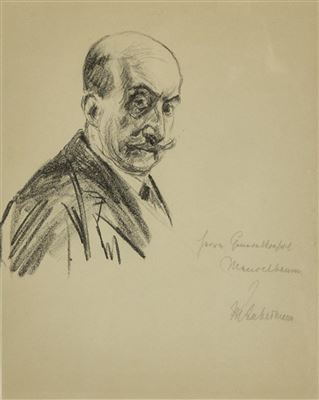
1847 Berlin, Germany - 1935 Berlin, Germany. Known for: German impressionist painting.
The foremost painter of the German School of Impressionism, Liebermann was a co-founder of " Die Gruppe XI", and in 1898 of the "Berlin Secession", a group which provided a forum for German artists... Read full biography
The foremost painter of the German School of Impressionism, Liebermann was a co-founder of " Die Gruppe XI", and in 1898 of the "Berlin Secession", a group which provided a forum for German artists who wanted to be free of the traditional academic confines.Max Liebermann was born on July 20, 1847... Read full biography
The foremost painter of the German School of Impressionism, Liebermann was a co-founder of " Die Gruppe XI", and in 1898 of the "Berlin Secession", a group which provided a forum for German artists who wanted to be free of the traditional academic confines.Max Liebermann was born on July 20, 1847 in Berlin, Germany, the son of Jewish industrialist Louis Liebermann and his wife Philippe. In 1859, the Liebermann's and their four children moved to a palatial home at Pariser Platz. Already as a... Read full biography
The foremost painter of the German School of Impressionism, Liebermann was a co-founder of " Die Gruppe XI", and in 1898 of the "Berlin Secession", a group which provided a forum for German artists who wanted to be free of the traditional academic confines.Max Liebermann was born on July 20, 1847 in Berlin, Germany, the son of Jewish industrialist Louis Liebermann and his wife Philippe. In 1859, the Liebermann's and their four children moved to a palatial home at Pariser Platz. Already as a nine year old, Max displayed considerable talent in drawing scenes from his environment, and received lessons by renowned painters Eduard Holbein and Carl Steffeck until 1869, when he entered the Weimar Academy with the encouragement of Steffeck.... Read full biography
The foremost painter of the German School of Impressionism, Liebermann was a co-founder of " Die Gruppe XI", and in 1898 of the "Berlin Secession", a group which provided a forum for German artists who wanted to be free of the traditional academic confines.Max Liebermann was born on July 20, 1847 in Berlin, Germany, the son of Jewish industrialist Louis Liebermann and his wife Philippe. In 1859, the Liebermann's and their four children moved to a palatial home at Pariser Platz. Already as a nine year old, Max displayed considerable talent in drawing scenes from his environment, and received lessons by renowned painters Eduard Holbein and Carl Steffeck until 1869, when he entered the Weimar Academy with the encouragement of Steffeck. Liebermann studied in Weimar until 1872, and after a trip to Düsseldorf in 1871, where he met Hungarian painter Mihály Munkácsy, he painted... Read full biography
Artist Biography
Biography page for Max Liebermann ((1847 - 1935)), known for German impressionist painting. Showing 4 biographical entries and 0 sample artworks.
Max Liebermann - Artist Info
About Max Liebermann
Name variants
Max Libermann, Maksas Lybermanas
Biography from the Archives of askART
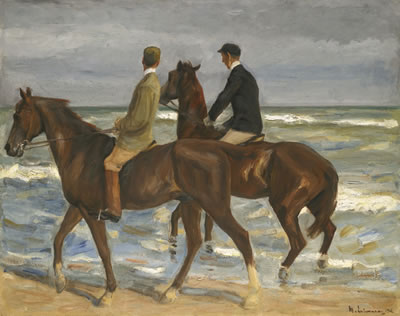 The foremost painter of the German School of Impressionism, Liebermann was a co-founder of " Die Gruppe XI", and in 1898 of the "Berlin Secession", a group which provided a forum for German artists who wanted to be free of the traditional academic confines.Max Liebermann was born on July 20, 1847 in Berlin, Germany, the son of Jewish industrialist Louis Liebermann and his wife Philippe. In 1859, the Liebermann's and their four children moved to a palatial home at Pariser Platz. Already as a nine year old, Max displayed considerable talent in drawing scenes from his environment, and received lessons by renowned painters Eduard Holbein and Carl Steffeck until 1869, when he entered the Weimar Academy with the encouragement of Steffeck. Liebermann studied in Weimar until 1872, and after a trip to Düsseldorf in 1871, where he met Hungarian painter Mihály Munkácsy, he painted his first large painting "Die Gänserupferinnen", a work very much inspired by Munkácsy's Realism. Liebermann went on to study and live in France from 1873 to 1878, in Paris and the Barbizon artist colony. He also took frequent trips to the Netherlands beginning in 1871, and the biggest influences on his work were Jean Millet, Edgar Degas, Edouard Manet, and the Dutch painter Frans Hals.
Liebermanns's portrayal of the life and work of the simple man in an unpretentious way did not win him much acceptance, and it was only when he turned to scenes of bourgeois life that he won broader acclaim. He lived in Munich from 1878 to 1884, where he co-founded "Die Gruppe XI" as a protest against the closing of an avant garde exhibition in Munich. In 1884 he returned to Berlin, where he continued as an important figure in the art world, co-founding the "Berlin Secession" through his studies of the French Impressionists and Post-Impressionists. Liebermann chaired the organization from 1898 to 1911. He was appointed a professor at the Royal Academy of Art in Berlin, and served as President of the Prussian Academy for the Arts from 1920 to 1932.
Max Liebermann became severly ill in 1934, and died in 1935, in the Wannsee District of Berlin where he lived. Thankfully, he was spared to witness the removal of his work from German museums by the Nazi regime.
Sources include:
http://www.liebermann-max.com
http://www.3d-dali.com/Artist-Biographies/Max_Liebermann.htmlBiography from Christie's London, King Street
Max Liebermann was born into a wealthy German-Jewish family of textile manufacturers and bankers. He spent much of his early life in Berlin, and travelled extensively in his adulthood. He first went to Paris in 1872, and exhibited at the Salon two years later, at the age of twenty-five. His earliest meaningful exposure to French Impressionism came later, in 1883, when the Fritz Gurlitt Gallery mounted the first exhibition of impressionist art in Berlin. Two years on, Liebermann began attending the weekly salon of Carl and Felicie Bernstein, whose collection of modern French art, assembled under the guidance of Carl's Parisian cousin Charles Ephrussi, was the most significant in Berlin at the time.
After Liebermann's father died in 1894, leaving him a sizable inheritance, the painter began to amass his own major collection of Impressionist art, with particular emphasis on the work of Manet. Beginning in the 1890s, Liebermann was also passionately engaged in the promotion of modern art in Berlin, championing an international perspective and offering staunch resistance to the cultural conservatism of the Wilhelmine government. From 1899 until 1911, he was the president and most innovative voice of the Berlin Secession, which served as an alternative venue for modern art, open to a range of foreign influences.
Liebermann first travelled to Italy in 1893, and returned on a number of occasions, including 1911, following his appointment as honorary president of the Berlin Secession. He arrived in April and spent most of his four-week stay in Rome, where he worked on his sketches The work represents an urban scene on Monte Pincio, one of Rome’s hills, within a park that would, especially on warm evenings such as the one depicted, become a promenade for the city’s elegantly attired, wealthy inhabitants and their horses and carriages. In contrast to Liebermann's early paintings of the 1880s and 1890s, where motifs were predominantly taken from rural life, his subsequent work was characterised by themes drawn from urban leisure in much the same way as Manet, Monet and Renoir had overturned the hierarchy of subject matter in French painting at the end of the Second Empire. Liebermann thus turned his attention to scenes of elegant bourgeois families strolling through zoos and parks, tennis players, beer gardens, and become the leading proponent of Impressionism in Germany, gaining critical and commercial acclaim early on in his life.Biography from Ketterer Kunst, Munich
Max Liebermann's stays in the Netherlands were of crucial importance for the artist's pictorial works. Not only did he make the local peasants subject of his paintings, he was also able to liberate his overall style from the constraints of historical Realism prevailing in the late 19\20th century.
In Holland Liebermann payed very close attention to his surroundings, particularly when observing country folk performing their everyday chores, which the artist depicted with great empathy. It's the unspectacular events, the daily routines, that Liebermann captures in a rather prosaic manner which allows him to add even more significance to the depiction. Liebermann had sketched the figure of the knitting cowgirl on may occasions, but the oil on board study from1886 (Eberle 1886/12) is the actual model. With this work he renders a new interpretation in a new context, works by the Dutch painter Anton Mauve can be seen as a source of inspiration. He describes the heroism of the simple and natural country life, however, without any religious pathos as it is the case with, for instance, Jean François Millet. Max Liebermann's excellent technical skills become evident in the pastel, which, owed to the strong presence of the subject - almost like in an oil painting - deserves a special place in the artist's oeuvre. [KD/JS]Biography from Grisebach
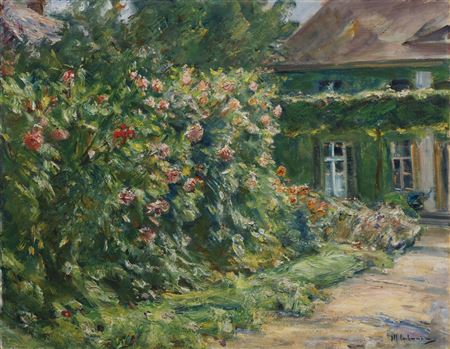 Max Liebermann was a German painter and printmaker, and one of the leading proponents of Impressionism in Germany and continental Europe. In addition to his activity as an artist, he also assembled an important collection of French Impressionist works.
Source: Wikipedia