Page loaded successfully. Showing biography for Mihaly von Zichy.
Mihaly von Zichy BIOGRAPHY
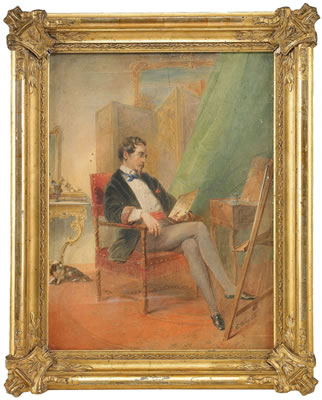
1827 Zala, Hungary - 1906 St. Petersburg, Russia. Known for: Romantic genre painting, history, portraits, illustration, court painter.
Mihaly Zichy was a Hungarian painter and graphic artist. He was a significant representative of Hungarian romantic painting. During his law studies in Pest from 1842, he attended Jakab Marastoni's... Read full biography
Mihaly Zichy was a Hungarian painter and graphic artist. He was a significant representative of Hungarian romantic painting. During his law studies in Pest from 1842, he attended Jakab Marastoni's school as well. In Vienna he was Ferdinand Waldmüller's pupil in 1844. Lifeboat, his first major work,... Read full biography
Mihaly Zichy was a Hungarian painter and graphic artist. He was a significant representative of Hungarian romantic painting. During his law studies in Pest from 1842, he attended Jakab Marastoni's school as well. In Vienna he was Ferdinand Waldmüller's pupil in 1844. Lifeboat, his first major work, comes from this time. On Waldmüller's recommendation, he became an art teacher in St. Petersburg. He swore allegiance to freedom by painting the portrait of Lajos Batthyány, the first Hungarian Prime... Read full biography
Mihaly Zichy was a Hungarian painter and graphic artist. He was a significant representative of Hungarian romantic painting. During his law studies in Pest from 1842, he attended Jakab Marastoni's school as well. In Vienna he was Ferdinand Waldmüller's pupil in 1844. Lifeboat, his first major work, comes from this time. On Waldmüller's recommendation, he became an art teacher in St. Petersburg. He swore allegiance to freedom by painting the portrait of Lajos Batthyány, the first Hungarian Prime Minister, in 1849. From 1850 onwards, he worked as a retoucher, but he also did pencil drawings, water colours and portraits in oil. The series on the Gatchina hunting ordered by the Russian Tsar raised him to a court artist. He founded a society to... Read full biography
Mihaly Zichy was a Hungarian painter and graphic artist. He was a significant representative of Hungarian romantic painting. During his law studies in Pest from 1842, he attended Jakab Marastoni's school as well. In Vienna he was Ferdinand Waldmüller's pupil in 1844. Lifeboat, his first major work, comes from this time. On Waldmüller's recommendation, he became an art teacher in St. Petersburg. He swore allegiance to freedom by painting the portrait of Lajos Batthyány, the first Hungarian Prime Minister, in 1849. From 1850 onwards, he worked as a retoucher, but he also did pencil drawings, water colours and portraits in oil. The series on the Gatchina hunting ordered by the Russian Tsar raised him to a court artist. He founded a society to support painters in need. Autodafé on the horrors of Spanish Inquisition was painted in 18... Read full biography
Artist Biography
Biography page for Mihaly von Zichy ((1827 - 1906)), known for Romantic genre painting, history, portraits, illustration, court painter. Showing 2 biographical entries and 0 sample artworks.
Mihaly von Zichy - Artist Info
About Mihaly von Zichy
Name variants
Mikhail Aleksandrov Zichi
Biography from the Archives of askART
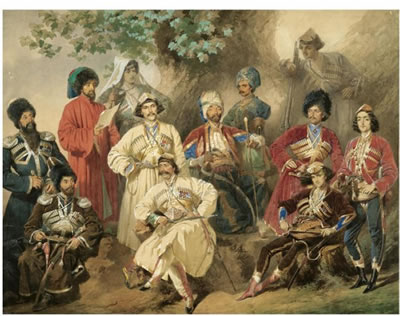 Mihaly Zichy was a Hungarian painter and graphic artist. He was a significant representative of Hungarian romantic painting. During his law studies in Pest from 1842, he attended Jakab Marastoni's school as well. In Vienna he was Ferdinand Waldmüller's pupil in 1844. Lifeboat, his first major work, comes from this time.
On Waldmüller's recommendation, he became an art teacher in St. Petersburg. He swore allegiance to freedom by painting the portrait of Lajos Batthyány, the first Hungarian Prime Minister, in 1849. From 1850 onwards, he worked as a retoucher, but he also did pencil drawings, water colours and portraits in oil. The series on the Gatchina hunting ordered by the Russian Tsar raised him to a court artist. He founded a society to support painters in need.
Autodafé on the horrors of Spanish Inquisition was painted in 1868. He travelled around Europe in 1871, and settled down in Paris in 1874.
He painted Queen Elisabeth Laying Flowers by the Coffin of Ferenc Deák to a commission from Treffort. Drinking Bout of Henry III, his next large-scale picture, came in 1875. The Victory of the Genius of Destruction, painted for the Paris Exhibition, was banned by French authorities because of its daring anti-militarist message.
He left Paris in 1881 and returned to St. Petersburg after short stays in Nice, Vienna and his native Zala. From this time onwards, he was mostly engaged in illustrations (The Tragedy of Man by Madách, 1887, and twenty-four ballads of János Arany, 1894-98).
Source:
Wikipedia,
http://en.wikipedia.org/wiki/Mih%C3%A1ly_ZichyBiography from the Archives of askART
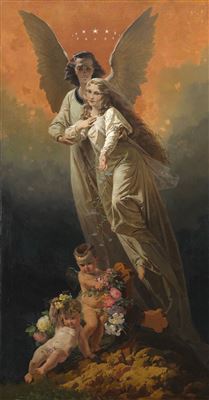 One of the most important Hungarian romantic painters, Mihaly von Zichy started studying law before studying painting in Vienna under G.F. Waldmüller in 1844. In 1849, he became drawing teacher of the Tsar's daughter, and in 1859 he was appointed painter to the court in St. Petersburg.
In 1874, he moved to Paris where he met F. Rops a. G. Doré; later he returned to St. Petersburg. His most famous work is the series "Liebe" showing explicit erotical scenes. -
Museums: Leningrad, Moskau (Tretjakow-Gal.), Budapest, Wien. -
Literature: Boetticher, Thieme-Becker, Bénézit.
Source:
German's Auction House data feed (STH)