Page loaded successfully. Showing biography for Mohammad Ehsai.
Mohammad Ehsai BIOGRAPHY
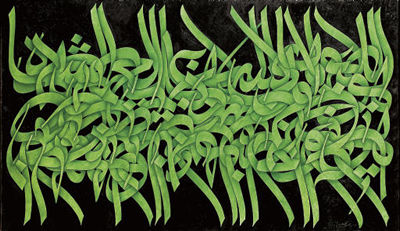
Born 1939 Qazvin, Iran. Known for: Symbolic painting, calligraphy, teaching.
Mohammad Ehsai was born in Qazvin, Iran in 1939. Ehsai was classically trained in traditional calligraphy, such as Nastaliq and Muhaqqaq. He was one of the leading artists incorporating Persian... Read full biography
Mohammad Ehsai was born in Qazvin, Iran in 1939. Ehsai was classically trained in traditional calligraphy, such as Nastaliq and Muhaqqaq. He was one of the leading artists incorporating Persian script, into new artistic expressions shaped by symbolic art forms found in Shi'i religious works. As an... Read full biography
Mohammad Ehsai was born in Qazvin, Iran in 1939. Ehsai was classically trained in traditional calligraphy, such as Nastaliq and Muhaqqaq. He was one of the leading artists incorporating Persian script, into new artistic expressions shaped by symbolic art forms found in Shi'i religious works. As an intellectually curious artist, his desire to know more about the way in which art is expressed in different cultures led him to travel and study in several European and Asian countries, where he also... Read full biography
Mohammad Ehsai was born in Qazvin, Iran in 1939. Ehsai was classically trained in traditional calligraphy, such as Nastaliq and Muhaqqaq. He was one of the leading artists incorporating Persian script, into new artistic expressions shaped by symbolic art forms found in Shi'i religious works. As an intellectually curious artist, his desire to know more about the way in which art is expressed in different cultures led him to travel and study in several European and Asian countries, where he also exhibited widely. From 1958 to 1978 he taught in schools in Tehran for the Ministry of Culture and Education. He entered Tehran University as a student in the Fine Art Department in 1966. After graduating in 1971 he was asked to join the Faculty of... Read full biography
Mohammad Ehsai was born in Qazvin, Iran in 1939. Ehsai was classically trained in traditional calligraphy, such as Nastaliq and Muhaqqaq. He was one of the leading artists incorporating Persian script, into new artistic expressions shaped by symbolic art forms found in Shi'i religious works. As an intellectually curious artist, his desire to know more about the way in which art is expressed in different cultures led him to travel and study in several European and Asian countries, where he also exhibited widely. From 1958 to 1978 he taught in schools in Tehran for the Ministry of Culture and Education. He entered Tehran University as a student in the Fine Art Department in 1966. After graduating in 1971 he was asked to join the Faculty of Fine Art, Tehran University. In addition to teaching, Ehsai was the Designer, Calligrapher, Art Expert and Editor of art... Read full biography
Artist Biography
Biography page for Mohammad Ehsai ((Born 1939)), known for Symbolic painting, calligraphy, teaching. Showing 1 biographical entries and 0 sample artworks.
Mohammad Ehsai - Artist Info
About Mohammad Ehsai
Name variants
Mohammed Eshai
Biography from the Archives of askART
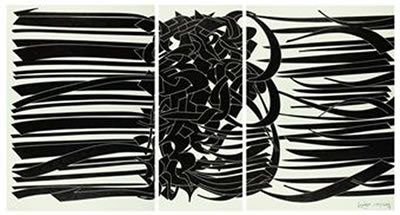 Mohammad Ehsai was born in Qazvin, Iran in 1939. Ehsai was classically trained in traditional calligraphy, such as Nastaliq and Muhaqqaq. He was one of the leading artists incorporating Persian script, into new artistic expressions shaped by symbolic art forms found in Shi'i religious works. As an intellectually curious artist, his desire to know more about the way in which art is expressed in different cultures led him to travel and study in several European and Asian countries, where he also exhibited widely.
From 1958 to 1978 he taught in schools in Tehran for the Ministry of Culture and Education. He entered Tehran University as a student in the Fine Art Department in 1966. After graduating in 1971 he was asked to join the Faculty of Fine Art, Tehran University. In addition to teaching, Ehsai was the Designer, Calligrapher, Art Expert and Editor of art books for Iran Education Books Organization.
Ehsai is a member of the Board of the Iranian Institute of Calligraphy, Iranian Calligraphers Society, Iranian Graphic Designers Society (IGDS), the Board of IGDS, member of the Iranian Academy of Art, and an art consultant to Tehran Contemporary Art Museum.
Ehsai's awards and honors are numerous in Iran and elsewhere; among his many awards are the Award for the Best Designer of the Year (1973), French National Award, International Painting Festival, First Prize (1974); Honorable Mention, ISESCO (2005), National Award for Art and Culture (2005), and the National Award (First Degree Medal) of Art and Culture, from the President of Iran (July 14, 2005).
Because his artistic vision moves seamlessly across the boundary of traditional calligraphy and new modes of creating design, he has been extremely influential on the younger generation of artists and graphic designers. He has written articles on calligraphy, and Iranian and Islamic art, and lectured widely in Iran and elsewhere.
Ehsai's artworks have been shown in many important sites including The State Hermitage Museum (The Dance of Quill and Ink. Contemporary Art of the Middle East, 2007). An example of his work is included on the Time Line of Art History on the Metropolitan Museum of Art web site. The excitement that his work has garnered among discerning collectors of Middle Eastern art is reflected in the recent Christie's Art Auction, Dubai (April 2008). Clearly the significance of his art production is being acknowledged on an international level.
Ehsai has been prolific in all areas of art making, from teaching students to consulting on various art projects. His art work ranges from calligraphic paintings to calligraphic murals on architectural structures such as the Iranian Embassy in Abu Dhabi, United Arab Emirates (1988-1991), and other important architectural spaces in Tehran (Natural Museum of Iran and University of Tehran Academy of Theology). Over the course of his career he has moved from traditional calligraphy to the development of a blending of traditional with contemporary modes of artistic production. His importance to the development of modern graphic design in Iran and elsewhere should not be underestimated.
Source;
Dr. Sharon LaVon Parker
http://www.arteeast.org/pages/artists/Mohammad-Ehsai/