Page loaded successfully. Showing biography for Moshe Mokady.
Moshe Mokady BIOGRAPHY
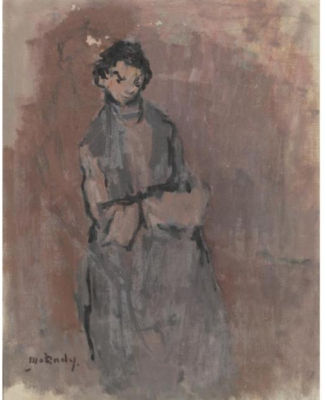
1902 Tarnow, Galicia - 1975. Known for: Abstract landscape, figure and still life painting, stage designs.
Moshe Mokady (ne Brandstatter) was born on June 5th, 1902 in Tarnow, Galicia. Between 1914-1920, Mokady lived in Vienna and Zurich and studied painting with Lazar Krestin. He also studied music and... Read full biography
Moshe Mokady (ne Brandstatter) was born on June 5th, 1902 in Tarnow, Galicia. Between 1914-1920, Mokady lived in Vienna and Zurich and studied painting with Lazar Krestin. He also studied music and the piano. In 1920 the family migrated to Eretz-Israel and settled initially in Haifa, and from... Read full biography
Moshe Mokady (ne Brandstatter) was born on June 5th, 1902 in Tarnow, Galicia. Between 1914-1920, Mokady lived in Vienna and Zurich and studied painting with Lazar Krestin. He also studied music and the piano. In 1920 the family migrated to Eretz-Israel and settled initially in Haifa, and from 1922-1923 Mokady studied at the Art Academy in Vienna. From 1927-1933, he lived and worked in Paris, and then returned to live in Jerusalem and then in Tel-Aviv. Between 1946-1965, he traveled frequently... Read full biography
Moshe Mokady (ne Brandstatter) was born on June 5th, 1902 in Tarnow, Galicia. Between 1914-1920, Mokady lived in Vienna and Zurich and studied painting with Lazar Krestin. He also studied music and the piano. In 1920 the family migrated to Eretz-Israel and settled initially in Haifa, and from 1922-1923 Mokady studied at the Art Academy in Vienna. From 1927-1933, he lived and worked in Paris, and then returned to live in Jerusalem and then in Tel-Aviv. Between 1946-1965, he traveled frequently to Europe and the U.S.A., visiting New York for the first time in 1947. He was first Director on the Art Department of the Ministry of Education and Culture (1950-1952) and first Director of the Avni Institute of Painting and Sculpture in Tel-Aviv... Read full biography
Moshe Mokady (ne Brandstatter) was born on June 5th, 1902 in Tarnow, Galicia. Between 1914-1920, Mokady lived in Vienna and Zurich and studied painting with Lazar Krestin. He also studied music and the piano. In 1920 the family migrated to Eretz-Israel and settled initially in Haifa, and from 1922-1923 Mokady studied at the Art Academy in Vienna. From 1927-1933, he lived and worked in Paris, and then returned to live in Jerusalem and then in Tel-Aviv. Between 1946-1965, he traveled frequently to Europe and the U.S.A., visiting New York for the first time in 1947. He was first Director on the Art Department of the Ministry of Education and Culture (1950-1952) and first Director of the Avni Institute of Painting and Sculpture in Tel-Aviv (1952-1965). From 1953, Mokady was active in the founding of the first Israeli artists village in Ein Hod. He moved to live there permanently in 1... Read full biography
Artist Biography
Biography page for Moshe Mokady ((1902 - 1975)), known for Abstract landscape, figure and still life painting, stage designs. Showing 2 biographical entries and 0 sample artworks.
Moshe Mokady - Artist Info
About Moshe Mokady
Name variants
Moshe Mokadi
Biography from the Archives of askART
 Moshe Mokady (ne Brandstatter) was born on June 5th, 1902 in Tarnow, Galicia. Between 1914-1920, Mokady lived in Vienna and Zurich and studied painting with Lazar Krestin. He also studied music and the piano. In 1920 the family migrated to Eretz-Israel and settled initially in Haifa, and from 1922-1923 Mokady studied at the Art Academy in Vienna. From 1927-1933, he lived and worked in Paris, and then returned to live in Jerusalem and then in Tel-Aviv.
Between 1946-1965, he traveled frequently to Europe and the U.S.A., visiting New York for the first time in 1947. He was first Director on the Art Department of the Ministry of Education and Culture (1950-1952) and first Director of the Avni Institute of Painting and Sculpture in Tel-Aviv (1952-1965). From 1953, Mokady was active in the founding of the first Israeli artists village in Ein Hod. He moved to live there permanently in 1965 and died in September 1975 in Ein Hod after a short illness.
Between 1934-1958 Mokady did stage designs for the Eretz-Israeli theatre numerous productions for the Cameri, Ohel and Habimah theatres.
Mokady received various national and international prizes, including the Dizengoff prizes in 1937, 1942, 1951. Numerous one-artist exhibitions for him have been held in Israel, Paris, New York, Geneva. The last major retrospective was in 1999 at the Tel-Aviv Museum of Art. Numerous Group Exhibitions were held, among them in Israel, at the Venice Biennale (1952, 1958) World Fair in New York, Metropolitan Museum in New York, Paris, Philadelphia, Pittsburg, Sao Paulo, Montevideo, Toronto, Winnepeg, Vancouver, Johannesburg, London, Los Angeles, Gotesburg, Helsinki, Athens, Washinton, D.C.
Source:
"Moshe Mokady, Painter", http://ein-hod.info/artists/mokady/Biography from Montefiore Auction House
Moshe Mokady was born in Tarnow, Poland, and moved with his family to Vienna in 1914 where he studied painting under Lasar Krestin. His family later moved to Zurich where they stayed for four years between 1916 and 1920. During this time Mokady studied music and painting, becoming particularly interested in the work of Swiss symbolist artist Fredinand Hodler.
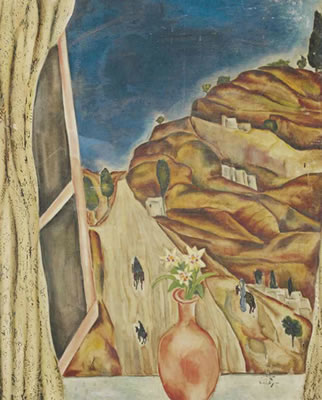
Tulips clearly demonstrates the influence that Hodler had on Mokady’s art. In 1920 Mokady immigrated to Palestine and between 1920 and 1927 he became a prominent participant in the first exhibitions of Israeli art.
In a review of Mokady’s exhibition at Roger Breval Gallery in Cairo in 1926, Paul Haessaerts writes:”... Mokady’s development reveals the influences he absorbed. On seeing his work, one recalls all the young painting in Europe- Hodler, Schiele, ...the objects do not receive their light from the outside: they them self radiate light through the gentle impact of their colour.” (Paul Haessaerts, ‘Le peintre Mokady’, Le Magazine Egyptien, 23 November 1926, quoted in Moshe Mokady, Tel Aviv Museum of Art, exhibition catalogue, 1999, p.65).