Page loaded successfully. Showing biography for Olof Jernberg.
Olof Jernberg BIOGRAPHY
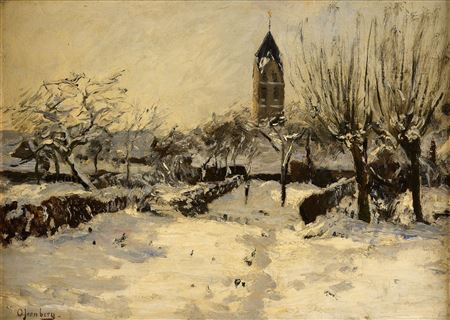
1855 - 1935. Known for: Painting.
Olof Jernberg was born 1855 in Düsseldorf to the famous Swedish genre painter August Jernberg. He first studied at the Academy in Düsseldorf before settling in Paris in 1880, where he was strongly... Read full biography
Olof Jernberg was born 1855 in Düsseldorf to the famous Swedish genre painter August Jernberg. He first studied at the Academy in Düsseldorf before settling in Paris in 1880, where he was strongly influenced by the Barbizon school. He began teaching at the Academy in Düsseldorf and received the... Read full biography
Olof Jernberg was born 1855 in Düsseldorf to the famous Swedish genre painter August Jernberg. He first studied at the Academy in Düsseldorf before settling in Paris in 1880, where he was strongly influenced by the Barbizon school. He began teaching at the Academy in Düsseldorf and received the title of Professor in 1897. In 1901, he was appointed by the Arts Academy in Königsberg, and from 1918, he directed the landscape class of the Berlin Arts Academy, resulting in an artistic reorientation.... Read full biography
Olof Jernberg was born 1855 in Düsseldorf to the famous Swedish genre painter August Jernberg. He first studied at the Academy in Düsseldorf before settling in Paris in 1880, where he was strongly influenced by the Barbizon school. He began teaching at the Academy in Düsseldorf and received the title of Professor in 1897. In 1901, he was appointed by the Arts Academy in Königsberg, and from 1918, he directed the landscape class of the Berlin Arts Academy, resulting in an artistic reorientation. He was cofounder of the Berlin Secession and the club 'St. Lucas', belonged to the artist group 'Orient' and was a member of the artists association 'Malkasten'. In 1922, he was honored with a solo exhibition in the Kunstpalast in Düsseldorf.... Read full biography
Olof Jernberg was born 1855 in Düsseldorf to the famous Swedish genre painter August Jernberg. He first studied at the Academy in Düsseldorf before settling in Paris in 1880, where he was strongly influenced by the Barbizon school. He began teaching at the Academy in Düsseldorf and received the title of Professor in 1897. In 1901, he was appointed by the Arts Academy in Königsberg, and from 1918, he directed the landscape class of the Berlin Arts Academy, resulting in an artistic reorientation. He was cofounder of the Berlin Secession and the club 'St. Lucas', belonged to the artist group 'Orient' and was a member of the artists association 'Malkasten'. In 1922, he was honored with a solo exhibition in the Kunstpalast in Düsseldorf. Jernberg's works are found today in important museum collections, including the Berlin Gemäld... Read full biography
Artist Biography
Biography page for Olof Jernberg ((1855 - 1935)), known for Painting. Showing 2 biographical entries and 0 sample artworks.
Olof Jernberg - Artist Info
About Olof Jernberg
Biography from Auctionata
Olof Jernberg was born 1855 in Düsseldorf to the famous Swedish genre painter August Jernberg. He first studied at the Academy in Düsseldorf before settling in Paris in 1880, where he was strongly influenced by the Barbizon school. He began teaching at the Academy in Düsseldorf and received the title of Professor in 1897. In 1901, he was appointed by the Arts Academy in Königsberg, and from 1918, he directed the landscape class of the Berlin Arts Academy, resulting in an artistic reorientation.
He was cofounder of the Berlin Secession and the club 'St. Lucas', belonged to the artist group 'Orient' and was a member of the artists association 'Malkasten'.
In 1922, he was honored with a solo exhibition in the Kunstpalast in Düsseldorf. Jernberg's works are found today in important museum collections, including the Berlin Gemäldegalerie, the Munich State Gallery and the Museum Kunstpalast in Düsseldorf. (cko)Biography from Hauff & Auvermann (CLOSED)
Olof August Jernberg (1855-1935) was in Paris under the influence of the Barbizon school, especially of Corot and Daubigny. In Berlin, in 1918, he took over the landscape class at the Academy of Fine Arts as a successor of Friedrich Kallmorgen.