Page loaded successfully. Showing biography for Onib Olmedo.
Onib Olmedo BIOGRAPHY
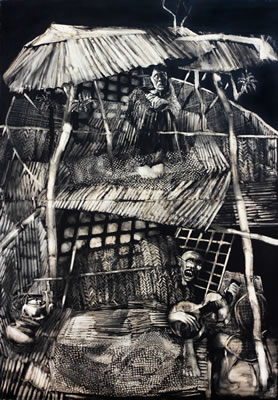
1937 Manila, Philippines - 1996. Known for: Expressionist and surreal figure and still-life painting.
Born in Manila in 1937, Onib Olmedo always created portraits that are as eerie as they are compelling. In the beginning his colors were moody, dark, and often black. In the mid-1990s his colors... Read full biography
Born in Manila in 1937, Onib Olmedo always created portraits that are as eerie as they are compelling. In the beginning his colors were moody, dark, and often black. In the mid-1990s his colors brightened up a little, allowing a little sunlight into the interiors. Just like looking at Francesco... Read full biography
Born in Manila in 1937, Onib Olmedo always created portraits that are as eerie as they are compelling. In the beginning his colors were moody, dark, and often black. In the mid-1990s his colors brightened up a little, allowing a little sunlight into the interiors. Just like looking at Francesco Clemente’s equally distorted faces in the late-90s, one can wallow for days in these mellower faces in domestic settings. The artist adheres to the Expressionist bent, contorted, and bizarre for a normal... Read full biography
Born in Manila in 1937, Onib Olmedo always created portraits that are as eerie as they are compelling. In the beginning his colors were moody, dark, and often black. In the mid-1990s his colors brightened up a little, allowing a little sunlight into the interiors. Just like looking at Francesco Clemente’s equally distorted faces in the late-90s, one can wallow for days in these mellower faces in domestic settings. The artist adheres to the Expressionist bent, contorted, and bizarre for a normal person’s understanding of what a portrait is. With hollowed eyes and oblivious to the viewer’s stares, the subject is caught in his inner world, soul searching in his reverie. These characters have otherworld shades, passing through life, alienated... Read full biography
Born in Manila in 1937, Onib Olmedo always created portraits that are as eerie as they are compelling. In the beginning his colors were moody, dark, and often black. In the mid-1990s his colors brightened up a little, allowing a little sunlight into the interiors. Just like looking at Francesco Clemente’s equally distorted faces in the late-90s, one can wallow for days in these mellower faces in domestic settings. The artist adheres to the Expressionist bent, contorted, and bizarre for a normal person’s understanding of what a portrait is. With hollowed eyes and oblivious to the viewer’s stares, the subject is caught in his inner world, soul searching in his reverie. These characters have otherworld shades, passing through life, alienated and alienating. A moody energy is released by the architectural and furnishing elements, the checkered floor spreading over the lower area of the c... Read full biography
Artist Biography
Biography page for Onib Olmedo ((1937 - 1996)), known for Expressionist and surreal figure and still-life painting. Showing 1 biographical entries and 0 sample artworks.
Onib Olmedo - Artist Info
About Onib Olmedo
Biography from Leon Gallery
Born in Manila in 1937, Onib Olmedo always created portraits that are as eerie as they are compelling. In the beginning his colors were moody, dark, and often black. In the mid-1990s his colors brightened up a little, allowing a little sunlight into the interiors. Just like looking at Francesco Clemente’s equally distorted faces in the late-90s, one can wallow for days in these mellower faces in domestic settings. The artist adheres to the Expressionist bent, contorted, and bizarre for a normal person’s understanding of what a portrait is. With hollowed eyes and oblivious to the viewer’s stares, the subject is caught in his inner world, soul searching in his reverie. These characters have otherworld shades, passing through life, alienated and alienating. A moody energy is released by the architectural and furnishing elements, the checkered floor spreading over the lower area of the composition, the Vienna chairs hinting of Olmedo’s rare foray into “normal” domesticity.