Page loaded successfully. Showing biography for Paul Burlin.
Paul Burlin BIOGRAPHY
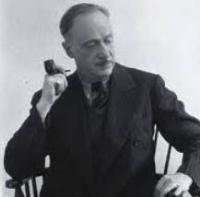
1886 New York City - 1969 New York City. Known for: Modernist-leaning landscape, figure and mural painting.
Born in New York City, Paul Berlin was a semi-abstract painter who achieved early success as a landscape, portrait, and mural painter in New York. His early art education was at the National Academy... Read full biography
Born in New York City, Paul Berlin was a semi-abstract painter who achieved early success as a landscape, portrait, and mural painter in New York. His early art education was at the National Academy of Design, and he also studied art in England. In the 1920s, 30s and 40s, he exhibited and lectured... Read full biography
Born in New York City, Paul Berlin was a semi-abstract painter who achieved early success as a landscape, portrait, and mural painter in New York. His early art education was at the National Academy of Design, and he also studied art in England. In the 1920s, 30s and 40s, he exhibited and lectured widely and was well known nationally. Inspired by a 1913 visit to the Southwest, he became an early member of the Santa Fe school of western painting and did Indian portraits and landscapes including... Read full biography
Born in New York City, Paul Berlin was a semi-abstract painter who achieved early success as a landscape, portrait, and mural painter in New York. His early art education was at the National Academy of Design, and he also studied art in England. In the 1920s, 30s and 40s, he exhibited and lectured widely and was well known nationally. Inspired by a 1913 visit to the Southwest, he became an early member of the Santa Fe school of western painting and did Indian portraits and landscapes including the Grand Canyon. In the 1912 Armory Show exhibition, he was one of the youngest members in the exhibition and the only painter who had visited the Southwest. However, his abstract, expressionistic style was viewed suspiciously by other painters in... Read full biography
Born in New York City, Paul Berlin was a semi-abstract painter who achieved early success as a landscape, portrait, and mural painter in New York. His early art education was at the National Academy of Design, and he also studied art in England. In the 1920s, 30s and 40s, he exhibited and lectured widely and was well known nationally. Inspired by a 1913 visit to the Southwest, he became an early member of the Santa Fe school of western painting and did Indian portraits and landscapes including the Grand Canyon. In the 1912 Armory Show exhibition, he was one of the youngest members in the exhibition and the only painter who had visited the Southwest. However, his abstract, expressionistic style was viewed suspiciously by other painters in the West. Burlin continued to visit the Southwest, and in 1917 married Natalie Curtis, a woman from N... Read full biography
Artist Biography
Biography page for Paul Burlin ((1886 - 1969)), known for Modernist-leaning landscape, figure and mural painting. Showing 3 biographical entries and 0 sample artworks.
Paul Burlin - Artist Info
About Paul Burlin
Name variants
Harry Berlin, Harry Paul Burlin
Biography from the Archives of askART
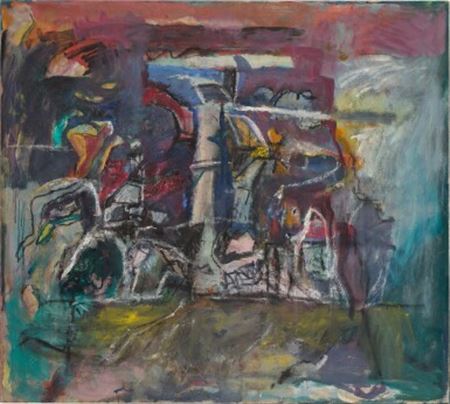 Born in New York City, Paul Berlin was a semi-abstract painter who achieved early success as a landscape, portrait, and mural painter in New York.
His early art education was at the National Academy of Design, and he also studied art in England. In the 1920s, 30s and 40s, he exhibited and lectured widely and was well known nationally.
Inspired by a 1913 visit to the Southwest, he became an early member of the Santa Fe school of western painting and did Indian portraits and landscapes including the Grand Canyon. In the 1912 Armory Show exhibition, he was one of the youngest members in the exhibition and the only painter who had visited the Southwest. However, his abstract, expressionistic style was viewed suspiciously by other painters in the West.
Burlin continued to visit the Southwest, and in 1917 married Natalie Curtis, a woman from New York who had studied in Europe and who subsequently lived in New Mexico and Arizona and devoted herself to preserving the culture, language and traditions of Native Americans. She was especially focused on the songs and chants of the Hopi Indians. Curtis and Burlin lived in Santa Fe, but in 1921, Curtis, age 46, was killed in Paris by an automobile when she and her husband were in Paris attending an International Congress on the History of Art.
Burlin taught at the Art Students League summer school in Woodstock, New York after it was re-established, following World War II, in 1947. He was a member of the American Congress of Artists and was active in the Provincetown Art Colony. He taught at the Colorado Springs Fine Art Center, the University of Wyoming, and Washington University in St. Louis.
A fellow of the MacDowell Colony, in Peterborough, New Hampshire, Burlin was represented in an exhibition in 1997, "Community of Creativity: A Century of MacDowell Colony Artists," that traveled from the National Academy of Design, New York City, to the Wichita Art Museum, Kansas.
In 1962, the Whitney Museum of American Art, New York City, held a retrospective exhibition of Burlin's work.
Collections include the Museum of Modern Art, New York City; Whitney Museum of American Art; Provincetown Art Association and Museum, Massachusetts; and the Museum of New Mexico, Santa Fe.
Paul Burlin died in 1969.
Sources include:
http://www.artincontext.org/artist/b/paul_burlin/index.htm
http://www.gis.net/scatt/heller/artists_related.htm
http://www.arttimesjournal.com/aslbook.htm
Lesley Poling-Kempes, Ghost Ranch, pp. 24, 32Biography from Peyton Wright Gallery
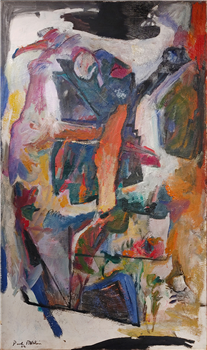 Paul Burlin (1886- 1969) was born in New York. Though he had some training at the National Academy of Design, he later dropped out to pursue his studies informally. He visited the Southwest for the first time in 1910, and paintings from this visit were received warmly in New York and shown in a 1911 exhibition. As a result of this early success, he was one of the youngest artists (at age twenty-six), along with Randall Davey, to participate in the 1913 Armory Show – the revolutionary exhibition of avant-garde European work that can be credited with introducing modern art to the United States and stimulating the development of modernism in America. There, Burlin’s work was exhibited alongside works by such artists as Picasso, Monet, Cézanne, and Duchamp.
His move to Santa Fe, subsequent his participation in the Armory Show, would herald a new era of modernism in New Mexico. The Armory Show, he later recalled, had little impact on his work and yet he was affected; simultaneously unsettled and yet galvanized by the event.
Returning to the Southwest to live, he drew inspiration from the culture and the landscape. Like many modernists of the day, Burlin was fascinated by so-called “primitive” art, particularly the designs and palette of the Native cultures he encountered in New Mexico. In 1917 he met and married Natalie Curtis, a highly regarded ethnomusicologist specializing in Native American music.
In 1921, Paul and Natalie Burlin moved to Paris as part of an exodus of expatriate artists responding to the provincialism of America after World War I, exemplified by the hostile reaction to his abstract work and other modern art. In Paris, Burlin found himself in the cultural center of modern art. He studied European abstract artists, working with the Cubist Albert Gleizes, and further developed some of the intellectual and symbolic elements that he had begun in the Southwest.
Later that year, Natalie was killed in an automobile accident. Burlin was devastated. He moved back to the Southwest, but found no solace there, and soon returned to Europe. He continued to live in Paris until 1932, when he moved back to the United States in the midst of the Great Depression to work for the WPA.
During this time, Burlin’s work tended toward social-realism, experimenting with political and urban themes. Throughout the war, Burlin employed themes of war and persecution, drawing much of his inspiration from Picasso’s war paintings. Later years would see him visited by visual difficulties, undergoing early cornea transplants in the mid 1960’s, and at times legally blind but,. . . still painting.
Endeavoring to calculate Burlin’s contributions to early modernism/expressionism in New Mexico one-hundred and ten years after the fact is challenging, but it can be said Burlin was not only the first Armory Show participant to arrive in New Mexico, but the earliest painter of Modernism in the region.Biography from Swann Galleries
Paul Burlin (1886-1969), born in New York as Isodore Berlin, began his career in the first decades of the 20th Century studying at the National Academy of Design and the Art Students League, traveling in Europe and the southwestern United States and showing his work as one of the youngest exhibitors in the celebrated Armory Show in 1913. Burlin continued to follow avant-garde trends through the 1950s and 60s, working in the style of Abstract Expressionism. Towards the end of his life and up to his death in 1969, Burlin continued to draw and paint despite loss of eyesight.