Page loaded successfully. Showing biography for Paul Frenzeny.
Paul Frenzeny BIOGRAPHY
1840 France - 1902 London, England. Known for: Western genre-views, illustrator.
Paul Frenzeny is known primarily as an illustrator and painter who completed many illustrations for "Harper's Weekly". Frenzeny was born in France and reportedly served in the French cavalry in... Read full biography
Paul Frenzeny is known primarily as an illustrator and painter who completed many illustrations for "Harper's Weekly". Frenzeny was born in France and reportedly served in the French cavalry in Mexico during Maximilian's reign. Harper's hired Frenzeny and Jules Tavernier to make a sketching tour... Read full biography
Paul Frenzeny is known primarily as an illustrator and painter who completed many illustrations for "Harper's Weekly". Frenzeny was born in France and reportedly served in the French cavalry in Mexico during Maximilian's reign. Harper's hired Frenzeny and Jules Tavernier to make a sketching tour across the continent to San Francisco beginning in 1873. Frenzeny used his excellent drawing skills in executing the foreground details, with the whole being made on woodblocks and sent to the engraver... Read full biography
Paul Frenzeny is known primarily as an illustrator and painter who completed many illustrations for "Harper's Weekly". Frenzeny was born in France and reportedly served in the French cavalry in Mexico during Maximilian's reign. Harper's hired Frenzeny and Jules Tavernier to make a sketching tour across the continent to San Francisco beginning in 1873. Frenzeny used his excellent drawing skills in executing the foreground details, with the whole being made on woodblocks and sent to the engraver for reproduction. During their journey, Frenzeny and Tavernier rode the Missouri, Kansas and Texas Railway from Parsons, Kansas, across Indian Territory, to Denison, Texas. Frenzeny and Tavernier arrived in Denison, Texas in 1873 and completed... Read full biography
Paul Frenzeny is known primarily as an illustrator and painter who completed many illustrations for "Harper's Weekly". Frenzeny was born in France and reportedly served in the French cavalry in Mexico during Maximilian's reign. Harper's hired Frenzeny and Jules Tavernier to make a sketching tour across the continent to San Francisco beginning in 1873. Frenzeny used his excellent drawing skills in executing the foreground details, with the whole being made on woodblocks and sent to the engraver for reproduction. During their journey, Frenzeny and Tavernier rode the Missouri, Kansas and Texas Railway from Parsons, Kansas, across Indian Territory, to Denison, Texas. Frenzeny and Tavernier arrived in Denison, Texas in 1873 and completed several sketches of scenes in and around Denison. Frenzeny settled in San Francisco and continued to supply illustrations for Harper's and for... Read full biography
Artist Biography
Biography page for Paul Frenzeny ((1840 - 1902)), known for Western genre-views, illustrator. Showing 3 biographical entries and 0 sample artworks.
Paul Frenzeny - Artist Info
About Paul Frenzeny
Biography from the Archives of askART
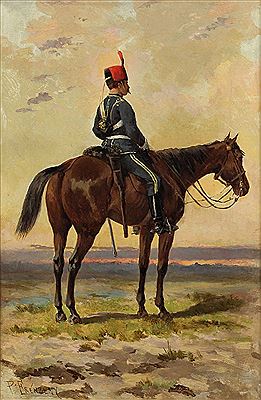 Born France, 1840; died London, England, 1902. Illustrator. Served in the French cavalry in Mexico about 1865. Working as an illustrator for Harpers by 1868. Traveled with Jules Tavernier on an expedition sponsored by Harpers Weekly that visited Kansas in 1873. Joined the Bohemian Club of San Francisco in 1874. Continued to work for Harpers publishing California and Nevada sketches until 1878. In 1879 produced views of Central America. From 1882-87 Frenzeny's work appeared in Leslie's Weekly. In 1889 he illustrated the book, Fifty Years on the Trail.
Biography from the Archives of askART
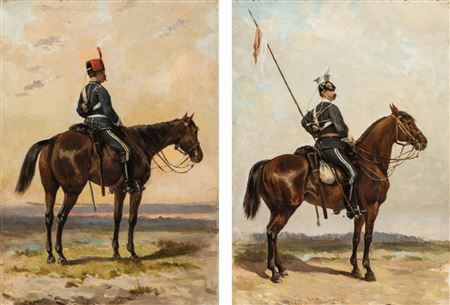 Paul Frenzeny is known primarily as an illustrator and painter who completed many illustrations for "Harper's Weekly".
Frenzeny was born in France and reportedly served in the French cavalry in Mexico during Maximilian's reign. Harper's hired Frenzeny and Jules Tavernier to make a sketching tour across the continent to San Francisco beginning in 1873. Frenzeny used his excellent drawing skills in executing the foreground details, with the whole being made on woodblocks and sent to the engraver for reproduction. During their journey, Frenzeny and Tavernier rode the Missouri, Kansas and Texas Railway from Parsons, Kansas, across Indian Territory, to Denison, Texas. Frenzeny and Tavernier arrived in Denison, Texas in 1873 and completed several sketches of scenes in and around Denison.
Frenzeny settled in San Francisco and continued to supply illustrations for Harper's and for Leslie's Weekly into the 1880's. During the six years Frenzeny remained in San Francisco, he became a member and trustee of the Bohemian Club. He was also active on the Monterey Peninsula where Tavernier had established an art colony. He also did many sketches and illustrations of San Francisco's Chinatown and exhibited at the San Francisco Art Association.
After his time in California, his whereabouts are vague; he is believed to have returned to New York City and eventually to London where he died about 1902.
His works continued to appear in Harper's during the 1880s, and 150 of his illustrations were included in a book on western life entitled "Fifty Years on the Trail" published in 1889.
Source:
John and Deborah Powers, "Texas Painters, Sculptors, and Graphic Artists"
Edan Hughes, "Artists in California, 1786-1940"Biography from Charleston Renaissance Gallery
The Florida Everglades in the 1880s was a vast, unsurveyed wilderness, still inhabited in its deepest reaches by Seminole Indians. The first expedition to penetrate the wild, densely vegetated area was launched by the Forest and Stream Publishing Company on December 1, 1873. In the preface to a collection of articles that chronicled that four-month long expedition, editor Charles Hallock described how tough the going was:
"More than twenty miles of the journey was accomplished by wading and pushing their boat by hand through swamps swarming with alligators, and infested with poisonous snakes and all kinds of creeping, stinging, and flying vermin. Mud, water, and heat made the transit most fatiguing, trailing vines that constantly barred their progress had to be cleared away, and whenever they found a bit of terra firma solid enough to camp on, it was scarcely more than six inches above the surrounding mire." (1)
Such were the conditions that French soldier and explorer Paul Frenzeny must have put up with when he did his sketch, "Moonlight" on the Everglades, sometime in the 1880s. Because he painted his little canvas "en grisaille," Frenzeny probably intended for it to be engraved and published as an illustration in one of the contemporary periodicals or travel books on Florida.
Frenzeny came to North America in the 1860s to serve under Marshall Bazaine, commander of the French army in Mexico. It seems that sometime in the late sixties he went to New York City, for between 1868 and 1873, "Harper's Weekly" published about twenty of his sketches, showing New York views as well as events in the Mexican war and the Pennsylvania coal fields. (2)
He was commissioned by "Harper's" with Jules Tavernier, another Frenchman, to travel across the country and record the landscape in remote, unexplored areas. Harper's informed its readers, "These gentlemen will not restrict themselves to the ordinary routes of travel. They will make long excursions on horseback into regions where railroads have not penetrated, where even the hardy squatter, the pioneer of civilization, has not yet erected his rude log-cabin." (3) The men left New York in the fall of 1873 and reached San Francisco the following summer.
It seems that Frenzeny lingered in San Francisco a few years. He participated in the art life of that city, becoming a member of the Bohemian Club. His partnership with Tavernier may have ended shortly after the men arrived in San Francisco, for Harper's ran illustrations of California and Nevada subjects between 1876 and 1878 and in the early eighties, which were signed by Frenzeny alone. In 1879 Harper's published some drawings by him of Central America, the route he took back to New York, while between 1882 and 1887 Frenzeny's work appeared in "Leslie's Weekly".
Though we cannot as yet pinpoint exactly when Frenzeny was in Florida, the late 1880s is the most likely time frame. Frenzeny provided seven illustrations for "The Campfires of the Everglades" or "Wild Sports in the South" by Charles N. Whitehead, a book published in Edinburgh in 1891 followed by an American edition six years later. Frenzeny's illustrations included: "The Hunter's Camp Fire", "Negro Quarters", "The Panther's Cub", and "Old Spanish Church of St. Augustine". The preface to the book gives no indication on when the illustrations were made, but the publication date suggests that they were done in the late eighties or around 1890.
Frenzeny provided more than one hundred illustrations for Harrington O'Reilly's "Fifty Years on the Trail", Frenzeny's last known publication. The last decade or so of Paul Frenzeny's life is undocumented. It is believed that he died in London in 1902.
1Charles Hallock, Camp Life in Florida: A Handbook for Sportsmen and Settlers, Forest and Stream Publishing Company, 1876, pp. 13-14.
2For a summary of Frenzeny's life in America, see M. and M. Karolik Collection of American Water Colors and Drawings, 1800-1875, vol. 1, Boston: Museum of Fine Arts, 1962, pp. 163-164.
3Harper's Weekly, November 8, 1873, p. 994, as quoted Ibid.
Cynthia Seibels
Copyright 1990 Robert M. Hicklin Jr., Inc.
This essay and its contents are the property of Robert M. Hicklin Jr., Inc. and may not be reproduced in part or in full without express written permission.