Page loaded successfully. Showing biography for Paul Huet.
Paul Huet BIOGRAPHY
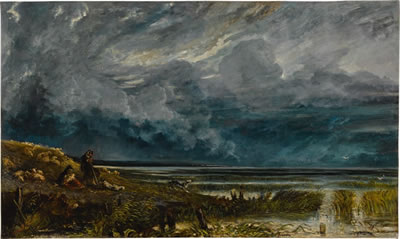
1803 Paris, France - 1869 Paris, France. Known for: Plein-air landscape painting, lithography, etching.
French, 1803-69. Born in Paris on October 3, 1803, Paul Huet spent most of his life traveling throughout France. By the time of his death in Paris on January 9, 1869, he had painted much of the... Read full biography
French, 1803-69. Born in Paris on October 3, 1803, Paul Huet spent most of his life traveling throughout France. By the time of his death in Paris on January 9, 1869, he had painted much of the French landscape, as well as Italian views, and was admired by painters of the flourishing Barbizon... Read full biography
French, 1803-69. Born in Paris on October 3, 1803, Paul Huet spent most of his life traveling throughout France. By the time of his death in Paris on January 9, 1869, he had painted much of the French landscape, as well as Italian views, and was admired by painters of the flourishing Barbizon school. The young Huet, with the help of his uncle, was able to attain an apprenticeship with Jaques-Louis David's former pupil, Jean-Julien Deltil. He went on to study at the École des Beaux-Arts with... Read full biography
French, 1803-69. Born in Paris on October 3, 1803, Paul Huet spent most of his life traveling throughout France. By the time of his death in Paris on January 9, 1869, he had painted much of the French landscape, as well as Italian views, and was admired by painters of the flourishing Barbizon school. The young Huet, with the help of his uncle, was able to attain an apprenticeship with Jaques-Louis David's former pupil, Jean-Julien Deltil. He went on to study at the École des Beaux-Arts with Pierre Guérin in 1818 and Antoine-Jean Gros from 1819-22. At the same time, he attended the Académie Suisse where he befriended Eugène Delacroix. Greatly influenced by Rembrandt and other Dutch Masters, Huet created romantic plein-air paintings in Ile... Read full biography
French, 1803-69. Born in Paris on October 3, 1803, Paul Huet spent most of his life traveling throughout France. By the time of his death in Paris on January 9, 1869, he had painted much of the French landscape, as well as Italian views, and was admired by painters of the flourishing Barbizon school. The young Huet, with the help of his uncle, was able to attain an apprenticeship with Jaques-Louis David's former pupil, Jean-Julien Deltil. He went on to study at the École des Beaux-Arts with Pierre Guérin in 1818 and Antoine-Jean Gros from 1819-22. At the same time, he attended the Académie Suisse where he befriended Eugène Delacroix. Greatly influenced by Rembrandt and other Dutch Masters, Huet created romantic plein-air paintings in Ile Seguin near Paris. At the Salon of 1824, Huet saw his first work by John Constable, which led to a great adm... Read full biography
Artist Biography
Biography page for Paul Huet ((1803 - 1869)), known for Plein-air landscape painting, lithography, etching. Showing 1 biographical entries and 0 sample artworks.
Paul Huet - Artist Info
About Paul Huet
Biography from Schiller & Bodo European Paintings
French, 1803-69
Born in Paris on October 3, 1803, Paul Huet spent most of his life traveling throughout France. By the time of his death in Paris on January 9, 1869, he had painted much of the French landscape, as well as Italian views, and was admired by painters of the flourishing Barbizon school.
The young Huet, with the help of his uncle, was able to attain an apprenticeship with Jaques-Louis David's former pupil, Jean-Julien Deltil. He went on to study at the École des Beaux-Arts with Pierre Guérin in 1818 and Antoine-Jean Gros from 1819-22. At the same time, he attended the Académie Suisse where he befriended Eugène Delacroix.
Greatly influenced by Rembrandt and other Dutch Masters, Huet created romantic plein-air paintings in Ile Seguin near Paris. At the Salon of 1824, Huet saw his first work by John Constable, which led to a great admiration for the English landscape painters. By 1827 Huet was exhibiting in the Salon; winning a second place medal in 1833, made Chevalier de la Légion d'honneur in 1841, and obtaining first place medals in 1848 and 1855.
Along with his famous watercolors, Paul Huet also produced wood engravings, lithographs, etchings and "cliché-verres". He was fascinated with capturing the changing "moods" of nature, especially those resulting from natural disasters. His lively sketches take on an almost abstract quality. Huet's work went on to influence members of the Barbizon school, who were captivated with his romantic vision and early impressionistic-like light and bravura.
Museums:
Avignon; Bordeaux; Bremen, Germany, Kunsthalle; Caen; Los Angeles County Museum of Art; Orléans; Paris, Musée duLouvre; Reims; Rouen; Fine Arts Museums of San Francisco; Washington D.C., National Gallery of Art; Montpellier;