Page loaded successfully. Showing biography for Paul Terence Feeley.
Paul Terence Feeley BIOGRAPHY
1910 Des Moines, Iowa - 1966 Bennington, Vermont. Known for: Modernist figure-portrait, op-abstract.
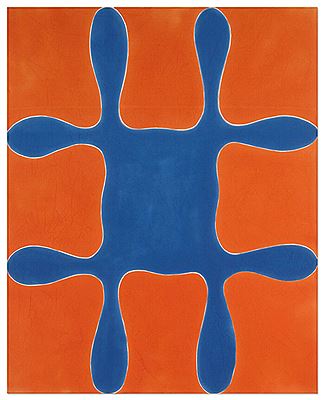
Primarily a painter, he favored canvases with simple geometric forms in repeating groups. He used upright bluster shapes, oblongs, etc. and the impression is much softer than hard edged geometry. His... Read full biography
Primarily a painter, he favored canvases with simple geometric forms in repeating groups. He used upright bluster shapes, oblongs, etc. and the impression is much softer than hard edged geometry. His sculpture was free standing symmetrical wood structures. A retrospective of his work was held in... Read full biography
Primarily a painter, he favored canvases with simple geometric forms in repeating groups. He used upright bluster shapes, oblongs, etc. and the impression is much softer than hard edged geometry. His sculpture was free standing symmetrical wood structures. A retrospective of his work was held in Spring, 1998 at Lawrence Mareky Gallery in New York.
Primarily a painter, he favored canvases with simple geometric forms in repeating groups. He used upright bluster shapes, oblongs, etc. and the impression is much softer than hard edged geometry. His sculpture was free standing symmetrical wood structures. A retrospective of his work was held in Spring, 1998 at Lawrence Mareky Gallery in New York.
Primarily a painter, he favored canvases with simple geometric forms in repeating groups. He used upright bluster shapes, oblongs, etc. and the impression is much softer than hard edged geometry. His sculpture was free standing symmetrical wood structures. A retrospective of his work was held in Spring, 1998 at Lawrence Mareky Gallery in New York.
Artist Biography
Biography page for Paul Terence Feeley ((1910 - 1966)), known for Modernist figure-portrait, op-abstract. Showing 1 biographical entries and 0 sample artworks.
Paul Terence Feeley - Artist Info
About Paul Terence Feeley
Biography
Primarily a painter, he favored canvases with simple geometric forms in repeating groups. He used upright bluster shapes, oblongs, etc. and the impression is much softer than hard edged geometry. His sculpture was free standing symmetrical wood structures. A retrospective of his work was held in Spring, 1998 at Lawrence Mareky Gallery in New York.