Page loaded successfully. Showing biography for Peter Lodato.
Peter Lodato BIOGRAPHY
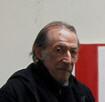
1946 - 2025. Known for: Geometric minimalist painting, light and space installations.
It is with profound sadness that William Turner Gallery announces the passing of Peter Lodato—beloved artist, friend, and a vital figure in the Venice and greater Los Angeles art communities. Peter... Read full biography
It is with profound sadness that William Turner Gallery announces the passing of Peter Lodato—beloved artist, friend, and a vital figure in the Venice and greater Los Angeles art communities. Peter was a defining presence at the gallery for nearly 30 years, and his loss is deeply felt. Peter’s... Read full biography
It is with profound sadness that William Turner Gallery announces the passing of Peter Lodato—beloved artist, friend, and a vital figure in the Venice and greater Los Angeles art communities. Peter was a defining presence at the gallery for nearly 30 years, and his loss is deeply felt. Peter’s quiet, gracious demeanor belied an unwavering dedication to his craft. He painted every day in his intimate Venice studio, producing works that were often monumental in scale—radiant with a meditative,... Read full biography
It is with profound sadness that William Turner Gallery announces the passing of Peter Lodato—beloved artist, friend, and a vital figure in the Venice and greater Los Angeles art communities. Peter was a defining presence at the gallery for nearly 30 years, and his loss is deeply felt. Peter’s quiet, gracious demeanor belied an unwavering dedication to his craft. He painted every day in his intimate Venice studio, producing works that were often monumental in scale—radiant with a meditative, almost spiritual energy. His paintings emanated a quiet intensity that reflected the depth of his inquiry into light, perception, and the unseen. Peter’s artistic journey began in the late 1960s with a series of environmental light installations, part... Read full biography
It is with profound sadness that William Turner Gallery announces the passing of Peter Lodato—beloved artist, friend, and a vital figure in the Venice and greater Los Angeles art communities. Peter was a defining presence at the gallery for nearly 30 years, and his loss is deeply felt. Peter’s quiet, gracious demeanor belied an unwavering dedication to his craft. He painted every day in his intimate Venice studio, producing works that were often monumental in scale—radiant with a meditative, almost spiritual energy. His paintings emanated a quiet intensity that reflected the depth of his inquiry into light, perception, and the unseen. Peter’s artistic journey began in the late 1960s with a series of environmental light installations, part of the burgeoning West Coast Light and Space movement. His 1971 installation at LACMA’s “24 Young Los Angeles Artists” exhibition—an inte... Read full biography
Artist Biography
Biography page for Peter Lodato ((1946 - 2025)), known for Geometric minimalist painting, light and space installations. Showing 2 biographical entries and 0 sample artworks.
Peter Lodato - Artist Info
About Peter Lodato
Biography from William Turner Gallery
It is with profound sadness that William Turner Gallery announces the passing of Peter Lodato—beloved artist, friend, and a vital figure in the Venice and greater Los Angeles art communities. Peter was a defining presence at the gallery for nearly 30 years, and his loss is deeply felt.
Peter’s quiet, gracious demeanor belied an unwavering dedication to his craft. He painted every day in his intimate Venice studio, producing works that were often monumental in scale—radiant with a meditative, almost spiritual energy. His paintings emanated a quiet intensity that reflected the depth of his inquiry into light, perception, and the unseen.
Peter’s artistic journey began in the late 1960s with a series of environmental light installations, part of the burgeoning West Coast Light and Space movement. His 1971 installation at LACMA’s “24 Young Los Angeles Artists” exhibition—an interplay of light, mirrors, and shadow—garnered early acclaim. He often cited the oculus of Rome’s Pantheon as a formative influence, inspiring his lifelong pursuit to shape space through light. His early work culminated in his inclusion in the 1981 Whitney Biennial.
As he moved from installations to painting, Peter brought with him the same rigor and fascination with perception. At first glance, his works appear as refined geometric abstractions—but closer engagement reveals subtle brushwork, nuanced layers, and vibrant fields of color that shift the viewer’s sense of space and depth. His paintings operate within a paradox: at once reductive and expansive, minimal yet emotionally resonant.
Influenced by Eastern philosophy, Lodato’s palette often referenced the color symbolism of the body’s chakra system—red for the root, signifying vitality and grounding; white for the crown, invoking spiritual clarity. His visual language—rooted in simplicity and suggestion—invited contemplation and emotional response. Lodato’s lineage is evident in the influence of artists such as Mark Rothko, Barnett Newman, and Agnes Martin, all of whom shaped his understanding of painting as a physical and transcendent experience.
Peter earned his graduate degree from California State University and taught at ArtCenter College of Design and UC Irvine. In 2000, the Frederick R. Weisman Foundation presented a major retrospective of his work spanning two decades. In addition to the Whitney Biennial, Lodato’s work was exhibited at leading institutions including PS1 in New York, the Museum of Contemporary Art in Los Angeles, and the Los Angeles County Museum of Art. His paintings are held in the permanent collections of the Brooklyn Museum, Seattle Art Museum, Dallas Museum of Art, and the Museum of Contemporary Art San Diego, among others.
Beyond his artistic accomplishments, Peter was a cherished companion—curious, warm, and deeply attuned to the worlds of music, literature, and art. He was a painter’s painter, whose works graced the walls of fellow artists and admirers. In recent years, Peter had found joy and fulfillment both personally and creatively, producing some of the most profound work of his career. He is believed to have passed peacefully, playing his guitar—a fitting farewell for a man so attuned to harmony.
Peter is survived by his beloved son, Nicholas Lodato (“the other Lodato,” as Peter affectionately called him), his former wife Tatyana Thompson, and stepsons Alexander and Theodore Leshnick. He leaves behind a vast community of friends, collectors, and fellow artists who will miss him dearly.
Memorial arrangements will be announced at a later date.
William Turner GalleryBiography from William Turner Gallery
PETER LODATO
A California native, Peter Lodato began making work in the late 1960s as part of the West Coast-specific Light and Space movement. Aligned with the concerns of his contemporaries, Lodato first constructed light installations that explored the nature of perception and the way that physical environments could be transformed into immersive experiences for the viewer. Lodato’s paintings evolved from his preliminary drawings for these installations and eventually, Lodato was able to recreate the illusive effect of light with color, form, and canvas alone.
Always fascinated by the uncertainty of human perception, and the duplicitous nature of vision, which can be both revealing and deceitful, Lodato creates paintings that delve into this duality. Upon first read they are austere, geometric abstractions. After further observation, however, the paintings begin to vibrate: brushstrokes become evident and the surface reveals that there are numerous layers beneath. The hard edges of his often bi-chromatic works dissipate into sensuous fields of color that seem to push space in and out.
Lodato’s reductive, divided compositions are visual confrontations between the planar simplicity of form and the resonance of particular pigments. A disciple of the AbEx color field painter, Barnett Newman, Lodato’s sumptuously colored canvases echo Newman’s concept of using division as a way to merge different areas of the canvas into a sublime whole. Much like Newman’s “zips” of color, Lodato’s vertical bands draw the viewer deeply into the picture plane, causing them to intensely experience the work, both physically and emotionally.
Lodato holds a Graduate degree from California State University. His artistic contributions have been recognized through a solo retrospective curated by the Frederick Weisman Foundation (2000), and exhibitions at prestigious institutions such as PS1 in New York City (1978), Whitney Museum of American Art’s Biennial (1981), the Museum of Contemporary Art in Los Angeles, and the Los Angeles County Museum of Art.
His works grace esteemed collections in various public and private institutions, including the Brooklyn Museum, the Seattle Art Museum, the Dallas Museum of Art, and the San Diego Museum of Contemporary Art.
This extensive presence in renowned collections underscores the impact and significance of Lodato's artistic vision within the realm of contemporary art. He lives and works in Venice, California.
The Frederick Weisman Foundation curated an extensive solo retrospective of Lodato’s work in 2000 and his work has been exhibited at the Whitney Museum of American Art, the Museum of Contemporary Art in Los Angeles and the Los Angeles County Museum of Art.
Peter Lodato is in numerous esteemed collections both public and private including the Brooklyn Museum, the Seattle Art Museum, the Dallas Museum of Art and the San Diego Museum of Contemporary Art.