Page loaded successfully. Showing biography for Philip Moose.
Philip Moose BIOGRAPHY
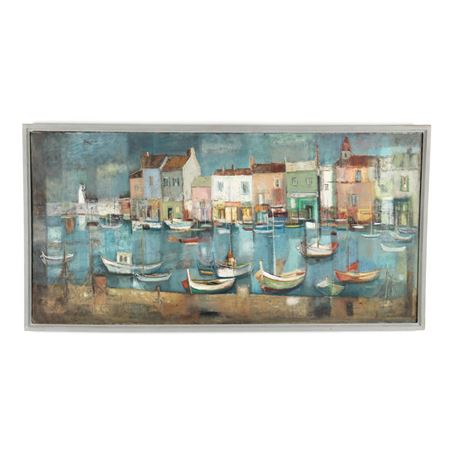
1921 Newton, North Carolina - 2001 Newton, North Carolina. Known for: Landscape, portrait, abstraction.
The following is from Julie Cline, Paul Whitener Foundation Steering Committee Chair. A- Retrospective Exhibit: August 21 - September 8, 2002, The Blowing Rock Art and History Museum, Blowing Rock,... Read full biography
The following is from Julie Cline, Paul Whitener Foundation Steering Committee Chair. A- Retrospective Exhibit: August 21 - September 8, 2002, The Blowing Rock Art and History Museum, Blowing Rock, NC. B- Philip Moose died in 2001. C- Philip Moose was a native of Newton, NC. He taught art at... Read full biography
The following is from Julie Cline, Paul Whitener Foundation Steering Committee Chair. A- Retrospective Exhibit: August 21 - September 8, 2002, The Blowing Rock Art and History Museum, Blowing Rock, NC. B- Philip Moose died in 2001. C- Philip Moose was a native of Newton, NC. He taught art at Davidson College and at Queens College in North Carolina. Among his awards are the 1947 Pulitzer Award for Art Fulbright scholarships, and a Tiffany award. Moose not only painted landscapes and portraits in... Read full biography
The following is from Julie Cline, Paul Whitener Foundation Steering Committee Chair. A- Retrospective Exhibit: August 21 - September 8, 2002, The Blowing Rock Art and History Museum, Blowing Rock, NC. B- Philip Moose died in 2001. C- Philip Moose was a native of Newton, NC. He taught art at Davidson College and at Queens College in North Carolina. Among his awards are the 1947 Pulitzer Award for Art Fulbright scholarships, and a Tiffany award. Moose not only painted landscapes and portraits in his native region and country, but also painted abstracts as well as scenes from his lifelong world travels. He painted in Europe, the Mediterranean, Iran, Afghanistan, India, Nepal, Singapore, Bali, Tahiti, China, Japan, the Caribbean, South... Read full biography
The following is from Julie Cline, Paul Whitener Foundation Steering Committee Chair. A- Retrospective Exhibit: August 21 - September 8, 2002, The Blowing Rock Art and History Museum, Blowing Rock, NC. B- Philip Moose died in 2001. C- Philip Moose was a native of Newton, NC. He taught art at Davidson College and at Queens College in North Carolina. Among his awards are the 1947 Pulitzer Award for Art Fulbright scholarships, and a Tiffany award. Moose not only painted landscapes and portraits in his native region and country, but also painted abstracts as well as scenes from his lifelong world travels. He painted in Europe, the Mediterranean, Iran, Afghanistan, India, Nepal, Singapore, Bali, Tahiti, China, Japan, the Caribbean, South America, New Zealand among other locations. His summer/retirement home in the small mountain resort of Blowing Rock, N... Read full biography
Artist Biography
Biography page for Philip Moose ((1921 - 2001)), known for Landscape, portrait, abstraction. Showing 3 biographical entries and 0 sample artworks.
Philip Moose - Artist Info
About Philip Moose
Biography from the Archives of askART
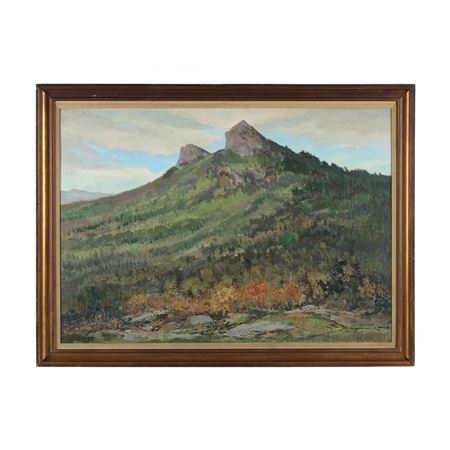 The following is from Julie Cline, Paul Whitener Foundation Steering Committee Chair.
A- Retrospective Exhibit: August 21 - September 8, 2002, The Blowing Rock Art and History Museum, Blowing Rock, NC
B- Philip Moose died in 2001.
C- Philip Moose was a native of Newton, NC. He taught art at Davidson College and at Queens College in North Carolina. Among his awards are the 1947 Pulitzer Award for Art Fulbright scholarships, and a Tiffany award.
Moose not only painted landscapes and portraits in his native region and country, but also painted abstracts as well as scenes from his lifelong world travels. He painted in Europe, the Mediterranean, Iran, Afghanistan, India, Nepal, Singapore, Bali, Tahiti, China, Japan, the Caribbean, South America, New Zealand among other locations.
His summer/retirement home in the small mountain resort of Blowing Rock, NC was a gathering place for artists. Other artists lived in this area known as Artists' Alley. The contemporary 1960 home was designed to accommodate his studio and informal exhibitions.Biography from The Johnson Collection
PHILIP ANTHONY MOOSE (1921-2001)
World traveler Philip Anthony Moose felt that “the mood and feeling of a place” was important above all else. In his landscapes and streetscapes of many diverse locations, he achieved this goal.
Moose was born in Newton, North Carolina, where he attended local schools. A second-grade teacher recognized his aptitude for art, and he first exhibited a painting when he was fifteen. In high school, he was class president for both his junior and senior years and was the art editor of the yearbook. He graduated with honors in 1938. The following summer, he went to the William Lester Stevens Art School of Design in Rockport, Massachusetts. Though abstraction was becoming more popular during this time, Moose tended after his instructor, Stevens, who practiced the traditional impressionistic style popular in the Boston School.
In 1940, Moose was awarded a Tiffany Foundation fellowship to study at the National Academy of Design in New York, where Sidney Dickinson was one of his instructors. He was an assistant in the art gallery there, often helping to install exhibitions. He spent World War II in the Army Air Corps and between 1942 and 1945 was stationed at Bury St Edmunds, England. Moose studied further at Columbia University with Henry Varnum Poor, who likely suggested Moose attend the Skowhegan School of Painting and Sculpture in Maine, as Poor was one of its founders. In 1948, Moose received a Pulitzer Prize for his art and went on to receive two Fulbright Scholarships. He used one to spend a year studying at the Academy of Fine Arts in Munich, Germany, with a month break in Taiwan. Moose also studied at the Taxco School of Art in Taxco, Mexico.
Turning to teaching in North Carolina, Moose taught first at Davidson College from 1951 to 1953, followed by a longer stint at Queens College (now Queens University) in Charlotte, 1956 to 1967. He was involved in two organizations located in his birthplace, Newton—as a co-founder of the Catawba County Library and as a member of the Catawba County Historical Society. In 1952, he provided illustrations for a History of Catawba County. In 1958, he purchased property south of Blowing Rock in an area known as Artists Alley, a neighborhood community of creatives who opened their studios annually. There, Moose built a contemporary home and studio that he used as a summer residence until his retirement and the house’s completion in 1960. He illustrated the publication Exploring the North Carolina Mountains in 1977.
In 1967, Moose went on an extensive trip that included stops in Puerto Rico, the Dominican Republic, Haiti, the Bahamas, Mexico, Costa Rica, Panama, Guatemala, the Balkans, Europe, the Greek islands, Turkey, Morocco, Egypt, India, Sri Lanka, New Zealand, Tahiti, Fiji, and more. He wrote: “For many years, my aim in painting has been to record in paint the many and varied aspects of nature—landscapes, street scenes, etc.—which appealed to my senses for their picturesqueness, well-balanced arrangement, line, and color. To record these in clear, clean, and colorful terms, suggesting details rather than painting each object microscopically, has not always been easy or successful.”
The Johnson Collection, Spartanburg, South Carolina
thejohnsoncollection.orgBiography from Leland Little Auctions
Born in Newton, North Carolina in 1921, Philip Moose knew he wanted to be an artist from the age of ten. He went up to New York City in 1940 to study at the National Academy of Design. After serving in the army during WWII, Moose returned to North Carolina. He taught at Davidson College and Queens College during the 1950s and 1960s, before settling in Blowing Rock and devoting his time to painting and traveling. Moose's paintings have been exhibited widely and are in numerous public collections including the Mint Museum in Charlotte, NC; the North Carolina Museum of Art in Raleigh; the Hickory Museum of Art in Hickory, NC; and the High Museum in Atlanta, GA.